
Tummy Tuck10 min read
How to Reduce Tightness After Tummy Tuck?
By Alluring Editorial TeamUpdated
How do you reduce tightness after a tummy tuck?
Tightness comes from muscle repair, the closed skin and swelling, and eases as they heal. Walk bent at the waist for 7 to 10 days, wear your garment as directed, usually 4 to 6 weeks, and stretch only once your surgeon clears it. Swelling keeps easing until about 3 months (Cindy Wu, MD, on the ASPS website).
- Typical recovery: About 2 weeks to non-strenuous work
- 4.7 · 87 Google reviews
Which one are you?

How do you reduce tightness after a tummy tuck?
After undergoing a Tummy Tuck, many patients experience tightness that results from muscle repair, skin removal, and swelling. It eases as they heal, and swelling keeps going down until about 3 months after surgery, according to Cindy Wu, MD, on the ASPS website.
To reduce this post-tummy tuck tightness, we recommend wearing compression garments as your surgeon directs, usually for 4 to 6 weeks (Cindy Wu, MD), staying hydrated, and incorporating gentle walks from the day of surgery if your surgeon agrees (Cindy Wu, MD), to promote circulation.
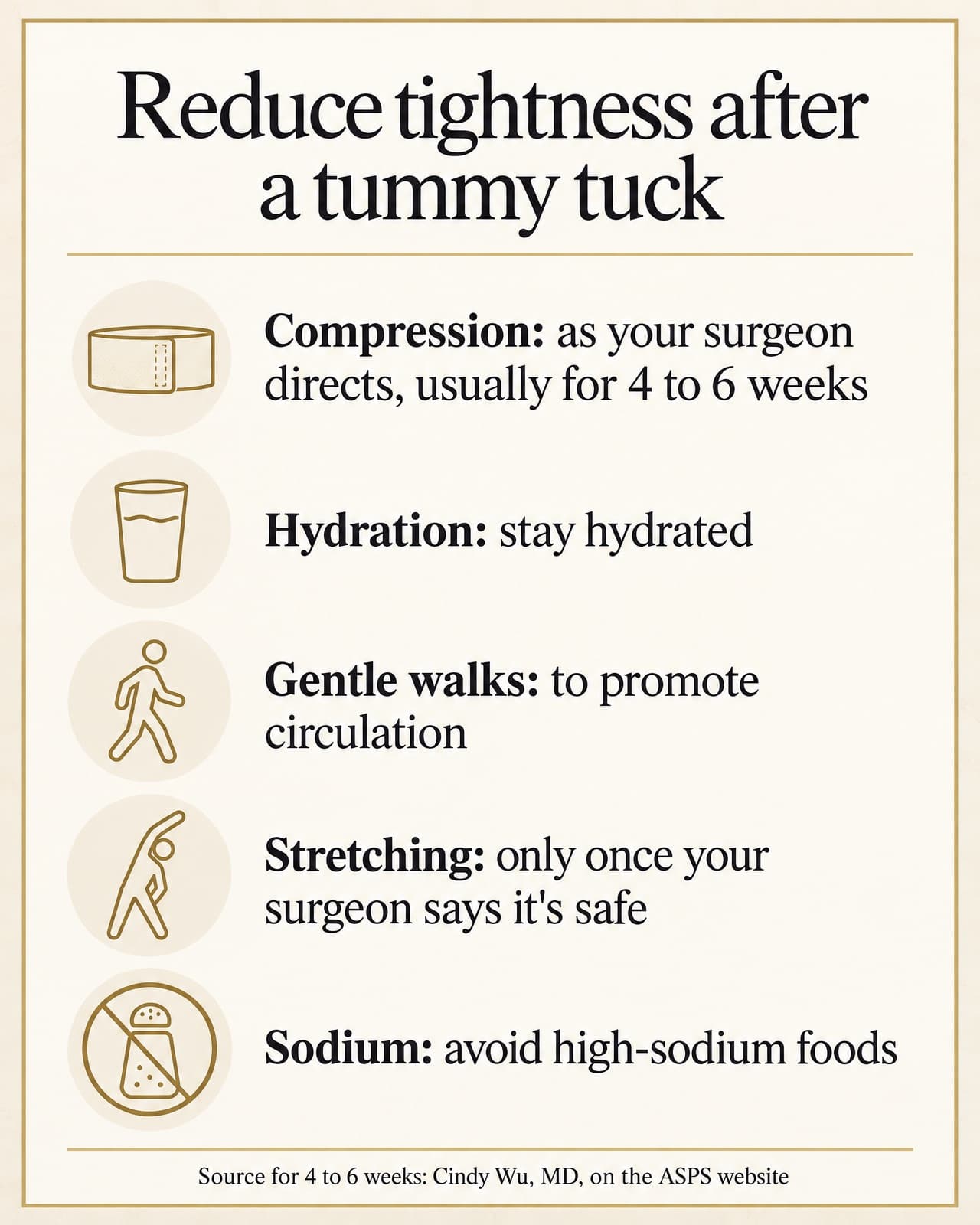
Hold off on stretching until your surgeon says it's safe, usually 4 to 8 weeks after surgery, according to Cleveland Clinic. Avoiding high-sodium foods can help limit fluid retention.
What Causes Tightness After a Tummy Tuck?
When you undergo a tummy tuck, or abdominoplasty, the tightness you'll experience afterward stems from several interconnected surgical modifications to your abdominal region.
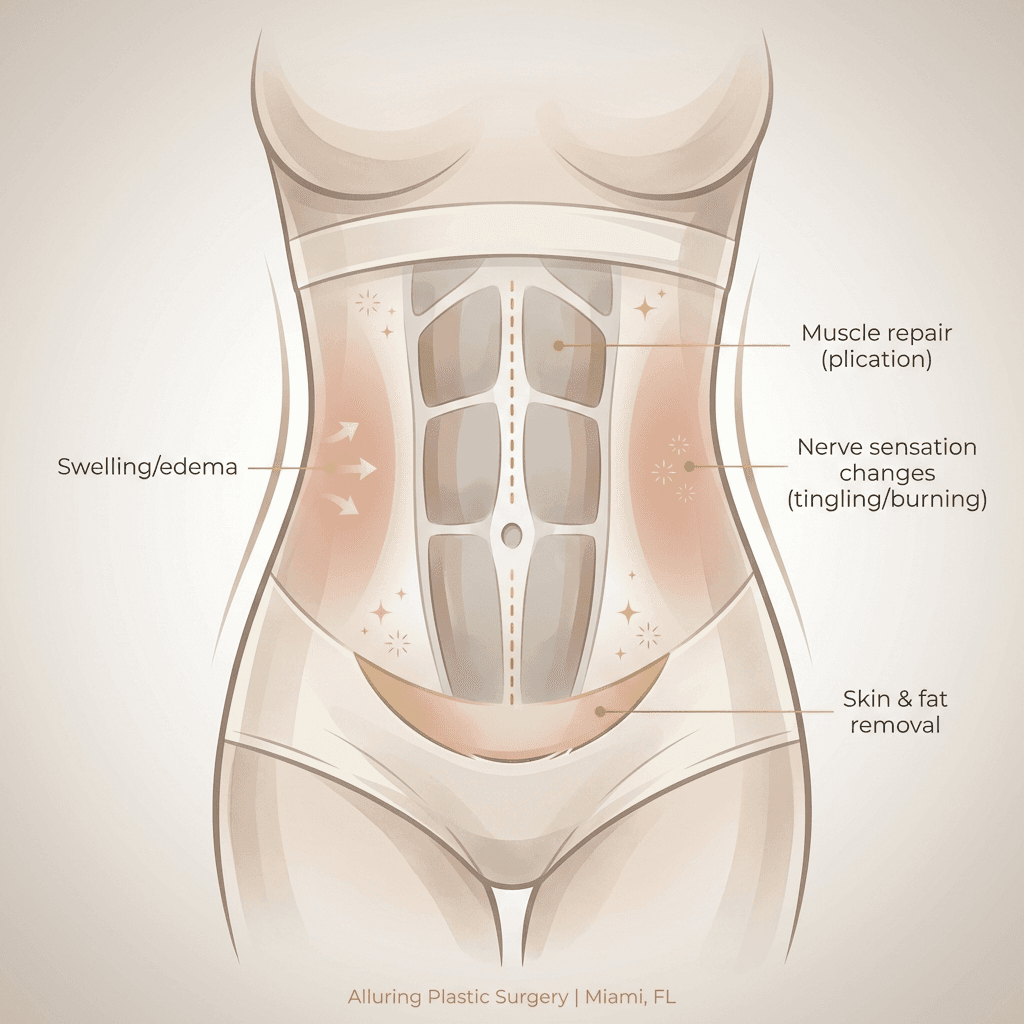
During tummy tuck procedures, surgeons remove excess skin and fat and, in most cases, tighten weakened or separated abdominal muscles, as ASPS describes, creating a natural feeling of tightness and constriction. The suturing process addresses conditions like diastasis recti by pulling separated muscles together, which intensifies the sensation.
Post-operative swelling compounds this discomfort, as fluid accumulation adds pressure throughout your abdomen. Compression garments can initially contribute to the restrictive sensation.
Nerve disruption during incisions may cause altered sensations, including tingling or burning alongside tightness. Although this tightness is considered a normal part of recovery, the degree of tightness can vary significantly.
Understanding that this feeling represents a typical phase of healing helps manage expectations during your recovery process.
How Long Does Tightness Last After a Tummy Tuck?
Tightness often eases over weeks or months. No source we read times tightness itself, but Cleveland Clinic says a tightness or pulling sensation goes away as you heal, and Shahram Salemy, MD, on the ASPS website says a pulling sensation can last for weeks or months and often fades with time.
Tummy tuck recovery varies among patients, so here is what the sources do time.
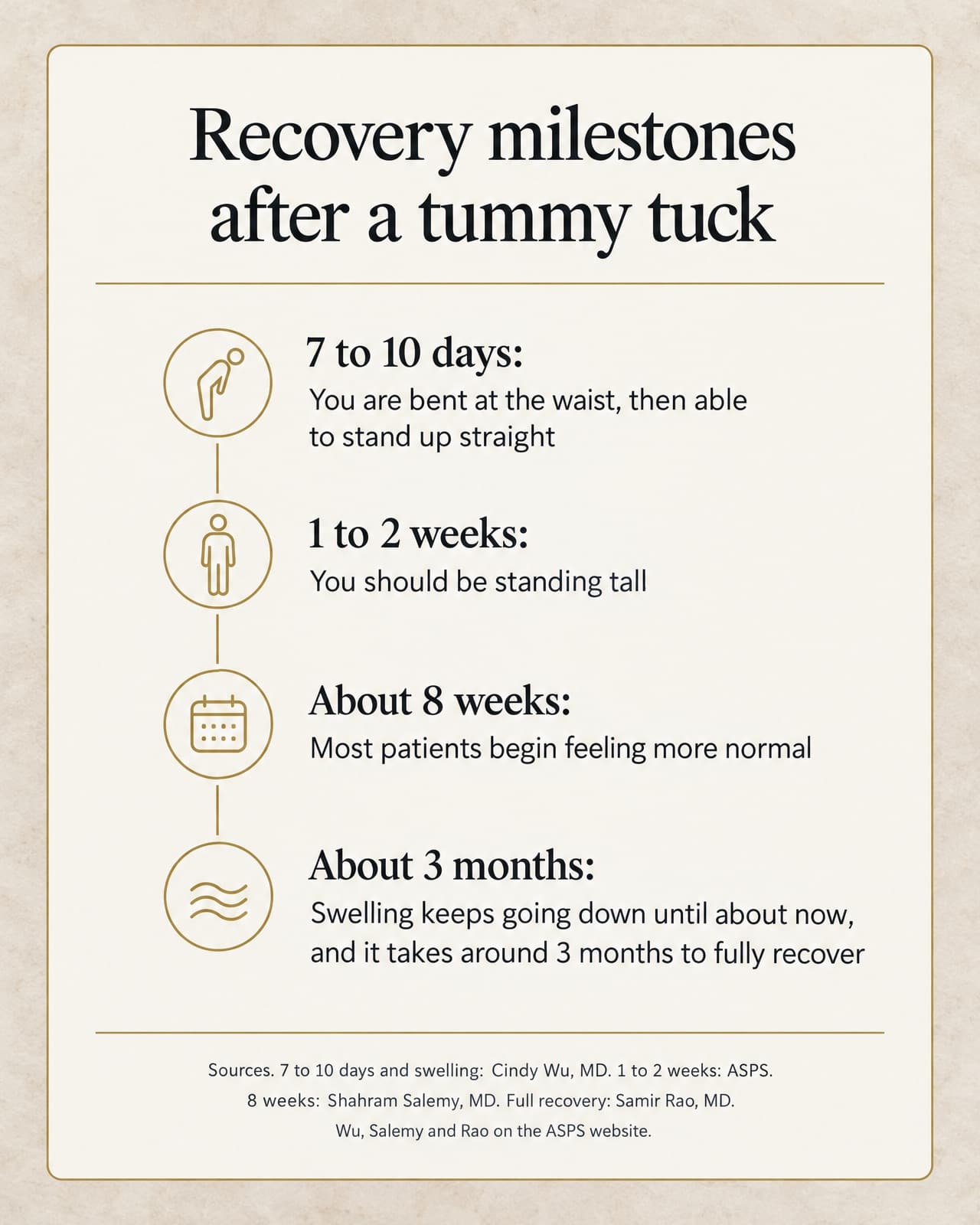
| When | What the sources say |
|---|---|
| 7 to 10 days | You are bent at the waist, then able to stand up straight (Cindy Wu, MD) |
| 1 to 2 weeks | You should be standing tall (ASPS) |
| About 8 weeks | Most patients begin feeling more normal (Shahram Salemy, MD) |
| About 3 months | Swelling keeps going down until about now (Cindy Wu, MD), and it takes around 3 months to fully recover (Samir Rao, MD, on the ASPS website) |
The recovery timeline involves managing post-operative swelling: Cindy Wu, MD, says a compression garment is worn for 4 to 6 weeks to help with reducing swelling. No source we read says it reduces tightness itself. For the full timeline, see how long tummy tuck recovery takes.
During recovery following abdominoplasty, we recommend gentle movement as your surgeon approves it. The Aesthetic Society says it is important to walk to discourage swelling and to prevent blood clots in the legs.
Most patients notice gradual improvement throughout the recovery process, though individual timelines may vary.
If persistent tightness intensifies rather than diminishes, immediate consultation with your surgeon becomes essential for proper evaluation and potential intervention.
Why does my stomach feel hard?
In the first weeks, swelling and healing tissue can make your abdomen feel firm, and any repaired muscles add to it. Even firmness that softens over time is usually part of healing.
Call your surgeon right away about a hard area that grows, feels warm or sits on one side only, because it may be a seroma, a pocket of fluid under the skin, or a hematoma, a collection of blood. A 2019 review of studies covering 14,061 patients found a seroma in 4.1% (Xia and colleagues, Aesthetic Plastic Surgery). If pain is your bigger worry, see how tummy tuck pain compares with a BBL.
How Do Compression Garments Help After a Tummy Tuck?
Compression garments are worn after abdominoplasty to reduce swelling and support the skin as it tightens, according to The Aesthetic Society.
Shahram Salemy, MD, on the ASPS website, says an abdominal support garment or wrap helps with swelling and discomfort during recovery.
During the healing process, wear compression garments for as long and as often as your surgeon directs. Many garments feature adjustable components, so ask your surgeon how snug yours should be.
We emphasize maintaining garment cleanliness and proper fit to get the full benefit throughout your recovery.
Planning your tummy tuck?
Your price and recovery plan, in writing.
Many of our patients fly in from other states. We confirm your surgery and follow-up dates in writing, and tell you how many nights to stay in Miami.
Alluring patient care
What should I wear after a tummy tuck?
Wear your compression garment as your surgeon directs, usually for 4 to 6 weeks (Cindy Wu, MD, on the ASPS website), with loose, comfortable clothes over it. These are practical choices, not rules from a study:
- Tops: ones that open at the front, so you don't have to pull anything over your head
- Bottoms: soft, loose and high-waisted, so nothing presses on your incision
- Shoes: slip-ons you can put on without bending
What Exercises Help Relieve Tummy Tuck Tightness?
No source we read names an exercise that relieves tightness. Beyond wearing compression garments as directed, we recommend incorporating gentle movement, starting with walking, into your recovery plan as your surgeon approves it.
Cindy Wu, MD, on the ASPS website, says you can walk the day of surgery, and that most surgeons encourage it to improve blood circulation and keep the risk of blood clots in the legs to a minimum. Cleveland Clinic says stretching, heavy lifting and strenuous exercise wait until your surgeon says it's safe, usually 4 to 8 weeks after surgery.
Avoid any abdominal-targeted exercises unless cleared by your surgeon.
We emphasize following your surgeon’s specific timeline recommendations, as premature or excessive activity can compromise healing. For what comes back later, see exercise after a tummy tuck.
Can Massage Reduce Tightness After a Tummy Tuck?
No source we read measures whether lymphatic drainage massage eases tightness itself. This gentle technique utilizes light rhythmic strokes directed toward lymph nodes. A 2026 review of 7 studies of cosmetic surgery found moderate benefits for swelling and inconsistent effects on pain from manual lymphatic drainage, and called for better trials (Alsairefi and colleagues, Plastic and Reconstructive Surgery Global Open).
Begin these sessions only if and when your surgeon recommends them. However, massage may not be suitable for all patients if contraindicated due to complications—always follow your surgeon’s specific guidance.
What Should I Eat and Drink After a Tummy Tuck?
No source we read links food or water directly to tightness, but Cleveland Clinic says proper nutrition can help your body heal.
Hydration Requirements
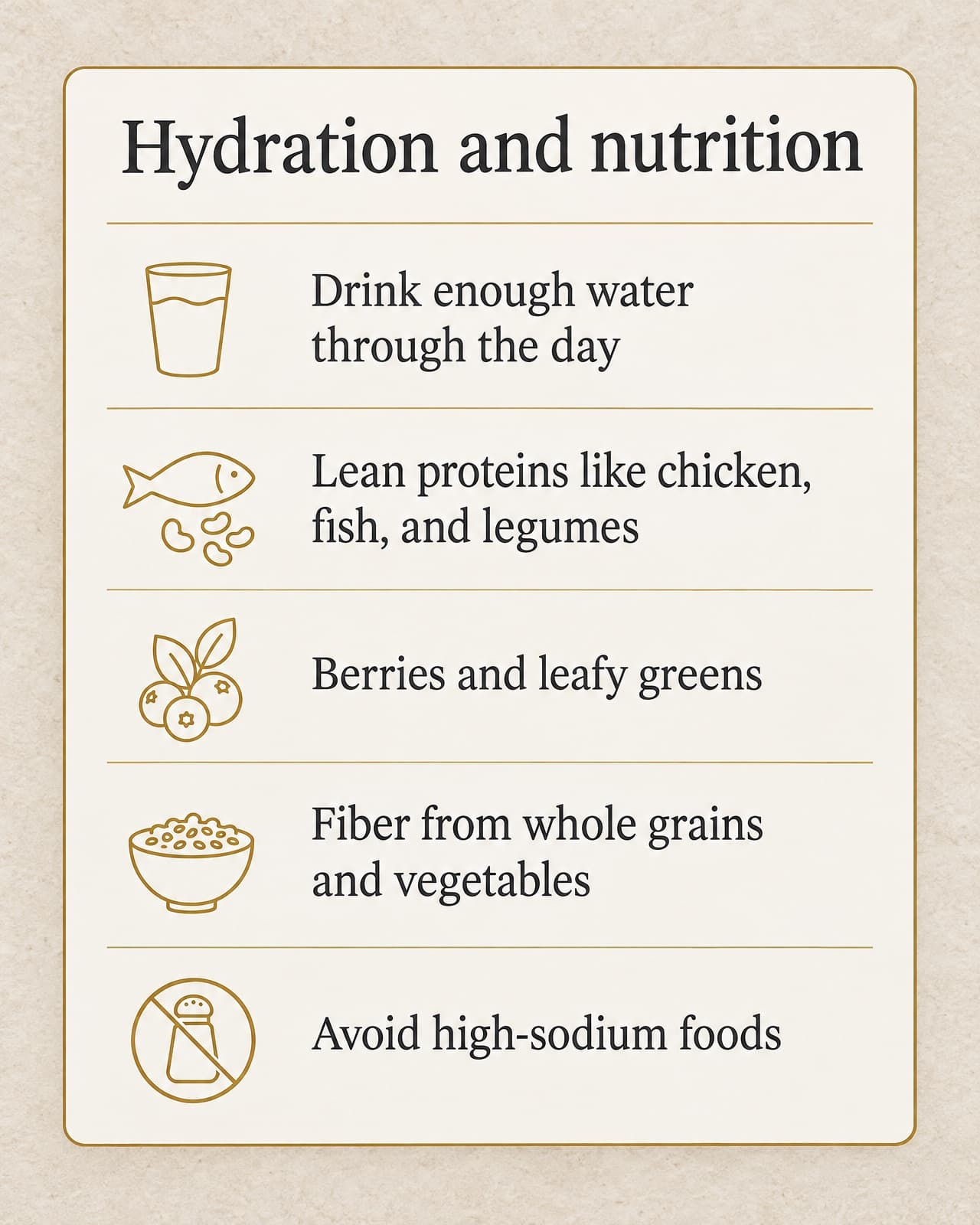
Cindy Wu, MD, on the ASPS website, says adequate hydration and walking are important to lower the risk of blood clots. We recommend drinking enough water through the day to support ideal recovery.
Essential Nutritional Components
Focus on lean proteins like chicken, fish, and legumes. Incorporate fruits and vegetables rich in vitamins and antioxidants, particularly berries and leafy greens. These food choices are common-sense, not findings from a study of tummy tuck patients.
Foods to Avoid
Limit high-sodium foods, which can increase fluid retention. Get adequate fiber intake through whole grains and vegetables to support healthy digestion and prevent constipation-related discomfort.
When Should I Worry About Tummy Tuck Tightness?
Although some degree of tightness after tummy tuck surgery is expected during the initial healing process, certain warning signs indicate you should contact your surgeon immediately for professional evaluation.
Critical Symptoms Requiring Immediate Contact
If you experience increased pain, unusual swelling, or persistent tightness that gets worse instead of better, call your surgeon right away. The Aesthetic Society says the same about bleeding, drainage, dizziness, nausea or vomiting. These symptoms may signal complications requiring professional intervention.
The Aesthetic Society also lists shortness of breath, chest pain and an unusual heartbeat as red flags. For chest pain or sudden shortness of breath, get emergency care right away. Call your surgeon right away about one swollen, painful calf, which can mean a blood clot.
Movement and Function Concerns
When persistent tightness interferes with daily activities or restricts normal movement, discuss these limitations with your healthcare provider to determine appropriate treatment options.
Signs of Infection
Contact your surgeon immediately if you notice redness, discharge, or fever, as these symptoms indicate potential infection requiring urgent medical management. Regular follow-up appointments remain essential for monitoring your recovery progress and addressing any concerning developments.
If you are still planning your surgery, you can see how the tummy tuck types and prices compare.
Frequently asked questions
Is it normal to still feel tight 3 months after a tummy tuck?
Some tightness can last that long. Swelling keeps going down until about 3 months (Cindy Wu, MD, on the ASPS website), a full recovery takes around 3 months (Samir Rao, MD, on the ASPS website) and a pulling sensation can last for weeks or months (Shahram Salemy, MD, on the ASPS website). If it is getting worse rather than better, or one area is swelling, see your surgeon.
Why is my stomach rock hard after a tummy tuck?
In the first weeks, swelling and healing tissue can make the abdomen feel firm, and any repaired muscles add to it. Even firmness that softens over time is usually part of healing. Call your surgeon right away about a hard area that grows, is warm, or sits on one side only, since it may be a seroma or hematoma.
When can I stand up straight after a tummy tuck?
You may be bent at the waist for 7 to 10 days, to protect the incision (Cindy Wu, MD, on the ASPS website), and ASPS says that within a week or two you should be standing tall. Let it happen gradually, and ask your surgeon before you push yourself to straighten up.
Does massage help tightness after a tummy tuck?
No source we read measures massage for tightness itself. A 2026 review found moderate benefits for swelling after cosmetic surgery (Alsairefi and colleagues), so wait until your surgeon approves it and follow the timing they give you. Walking and wearing your compression garment as directed are the steps the other sources recommend.
What clothes are easiest to wear after a tummy tuck?
Your compression garment comes first, usually for 4 to 6 weeks (Cindy Wu, MD, on the ASPS website), with loose clothes over it: tops that open at the front, soft high-waisted bottoms that do not press on the incision, and shoes you can slip on without bending.
Sources
- ASPS website, a post by Cindy Wu, MD: Answers to common tummy tuck questions (2019)
- ASPS: Tummy Tuck
- ASPS: What results can I expect from a tummy tuck?
- ASPS website, a post by Shahram Salemy, MD: What you need to know about your tummy tuck recovery (2019)
- ASPS website, a post by Samir Rao, MD: Understanding the different types of tummy tucks (2024)
- Cleveland Clinic: Tummy Tuck (Abdominoplasty)
- Cleveland Clinic: Tummy Tuck Scar
- The Aesthetic Society: Tummy Tuck Aftercare & Recovery
- Xia and colleagues, Aesthetic Plastic Surgery: Safety of Lipoabdominoplasty Versus Abdominoplasty (2019)
- Alsairefi and colleagues, Plastic and Reconstructive Surgery Global Open: Efficacy of Manual Lymphatic Drainage in Reducing Postoperative Complications After Cosmetic Plastic Surgery (2026)
What do real tummy tuck results look like?
These are photos of real Alluring patients after a tummy tuck, shared with their consent. Results differ from person to person, and your surgeon talks you through what is realistic for your body at your free consultation, before you decide anything.
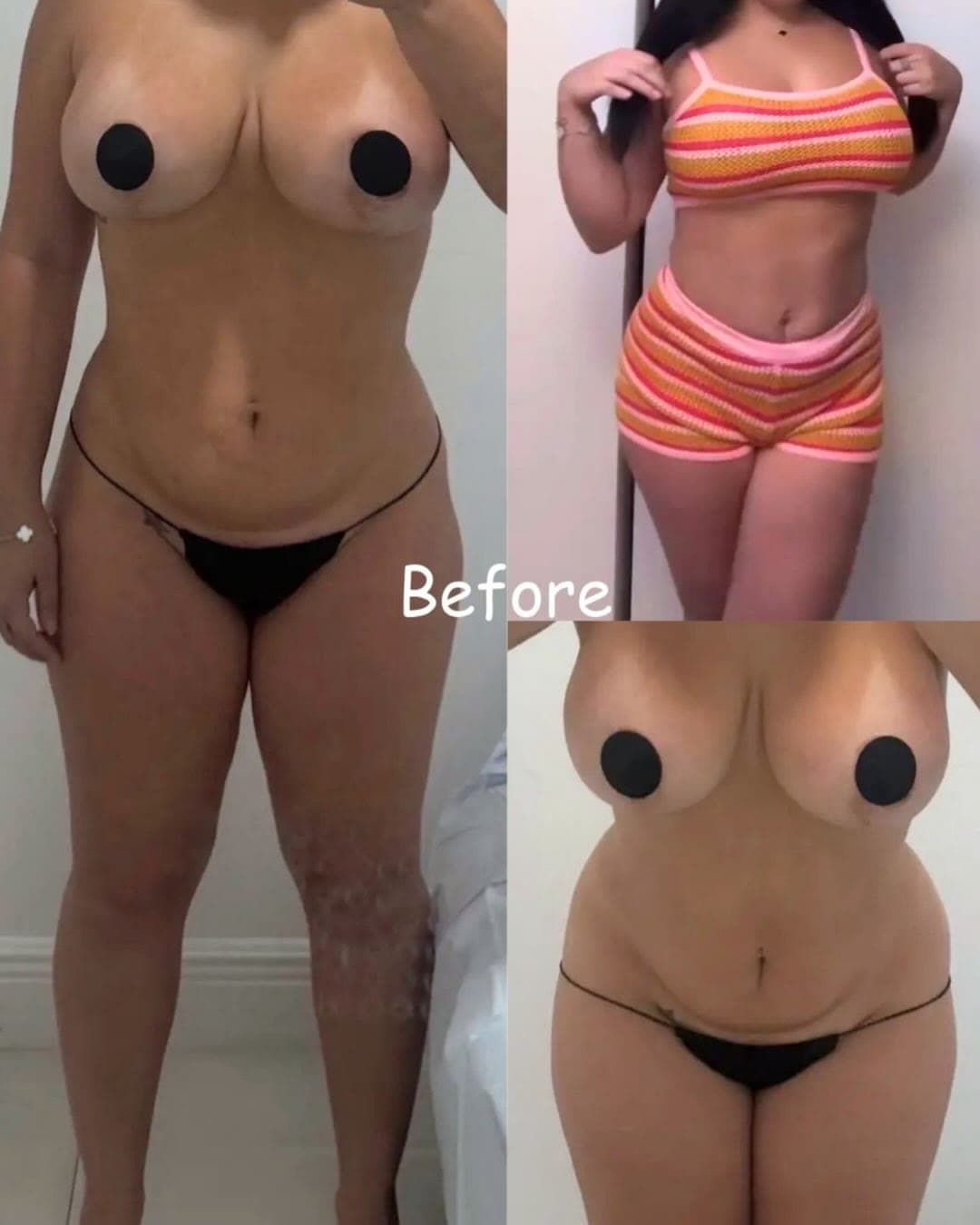
Before and after a tummy tuck 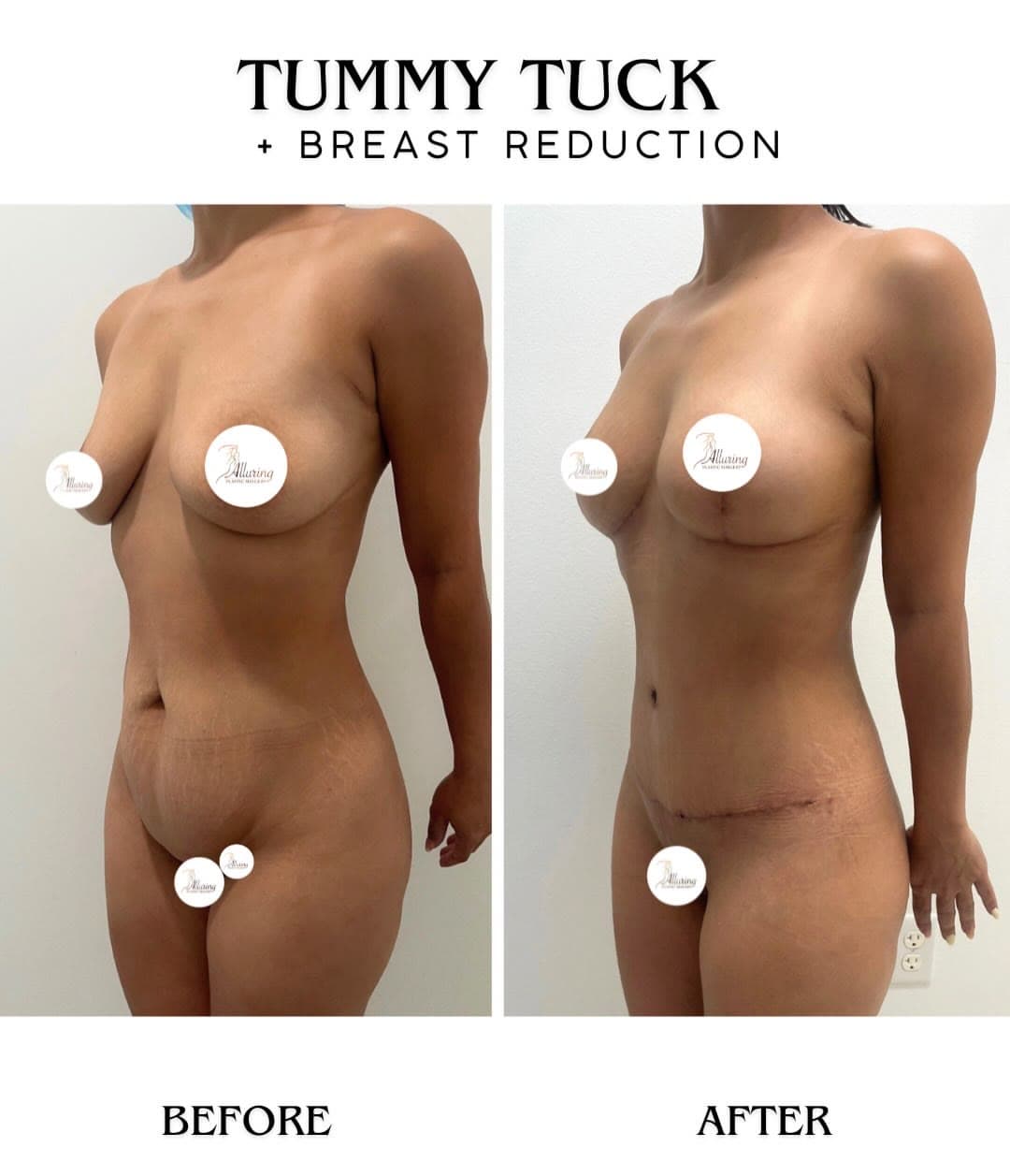
Before and after a tummy tuck 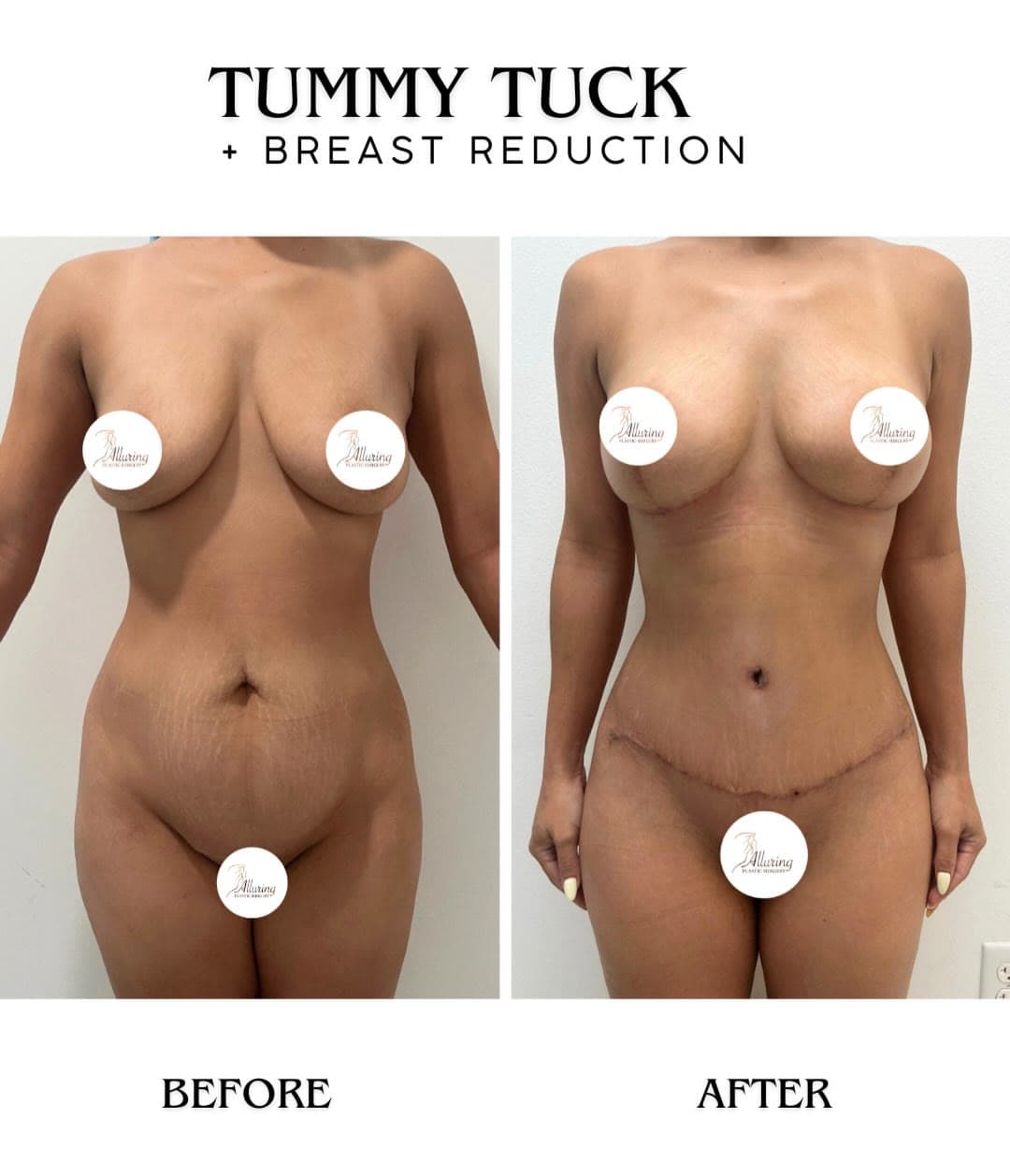
Before and after a tummy tuck 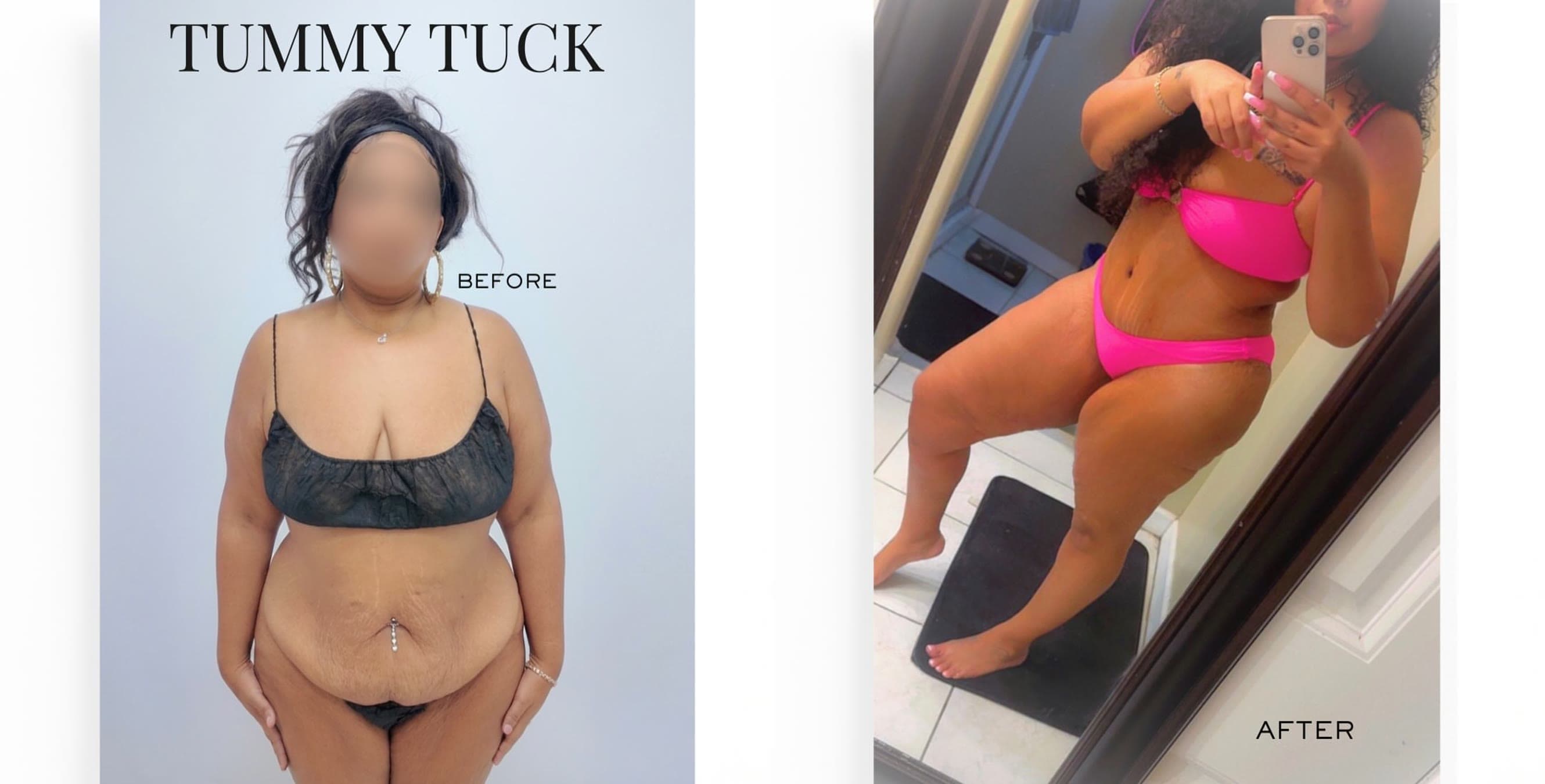
Before and after a tummy tuck 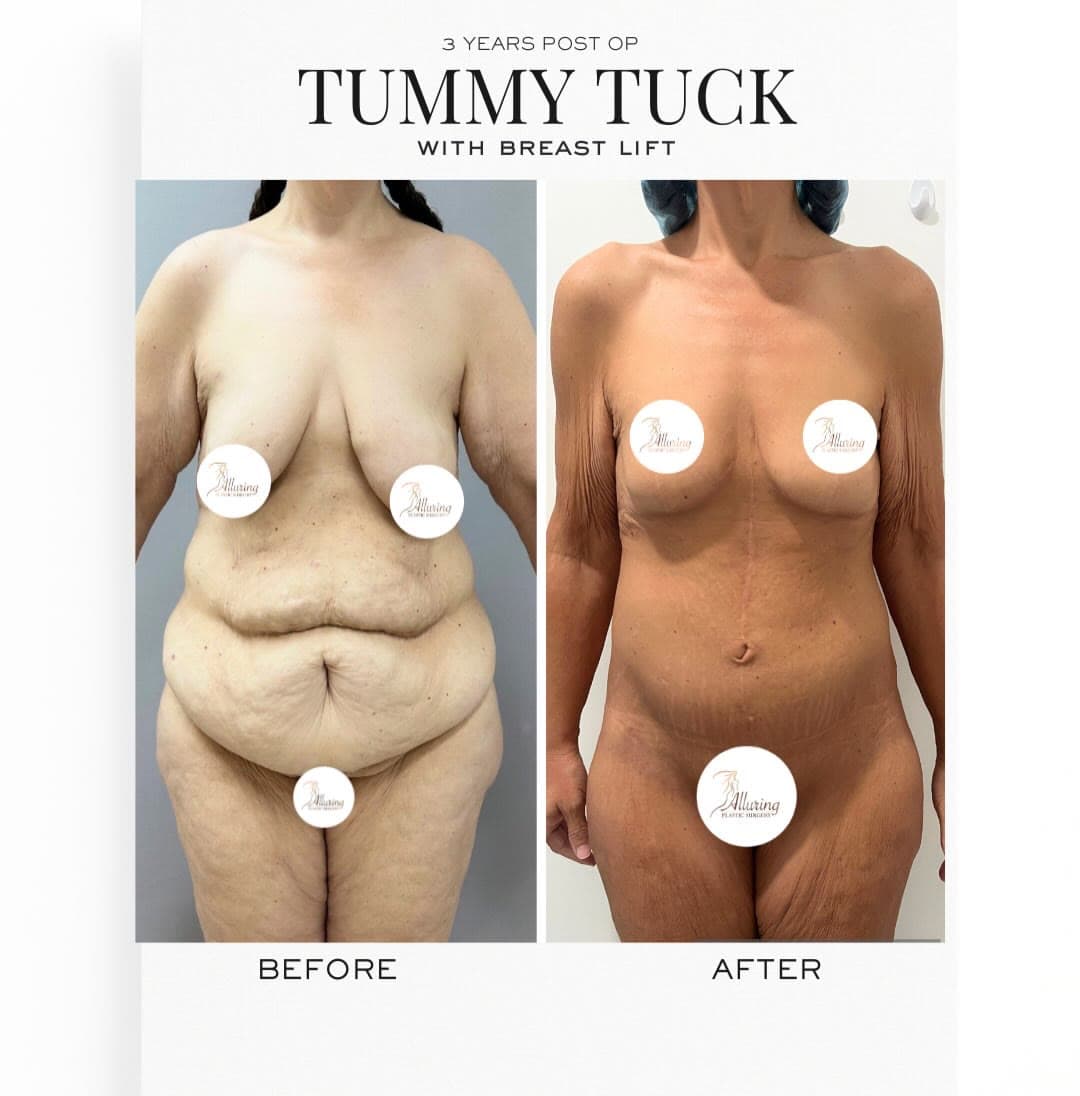
Before and after a tummy tuck 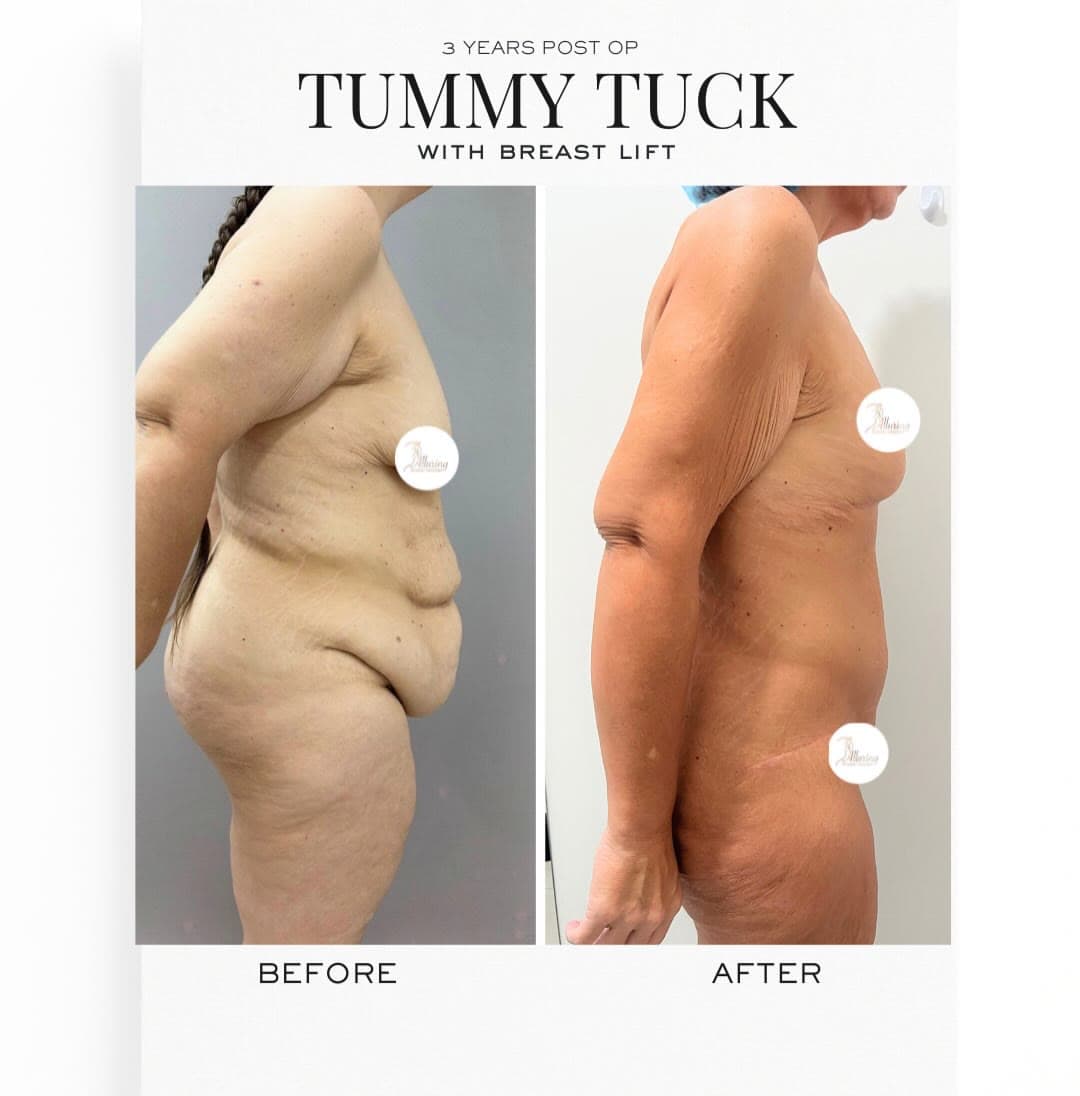
Before and after a tummy tuck
Photos in this section are real Alluring patients.
See every tummy tuck photo in the galleryMeet your surgeon

Check her credentials yourself
Each link opens her record on the issuing body's own site.
Licensed as a medical doctor by the Florida Department of Health.
Board certified in general surgery by the American Board of Surgery since 2008.
Fellow of the American College of Surgeons (FACS).
Certified in cosmetic surgery by the American Board of Cosmetic Surgery. The specialty recognition identified herein has been received from a private organization not affiliated with or recognized by the Florida Board of Medicine.
Start here
Personal care. Honest price.
Your price, surgery date and follow-up plan, in writing, before you book a flight.