Breast Augmentation5 min read
When Do Breast Augmentation Stitches Dissolve?
By Alluring Editorial TeamPublished
After Breast Augmentation surgery, patients often wonder when their stitches will dissolve. Your body typically begins...
- Typical recovery: 1 week to light activity
- 4.7 · 87 Google reviews

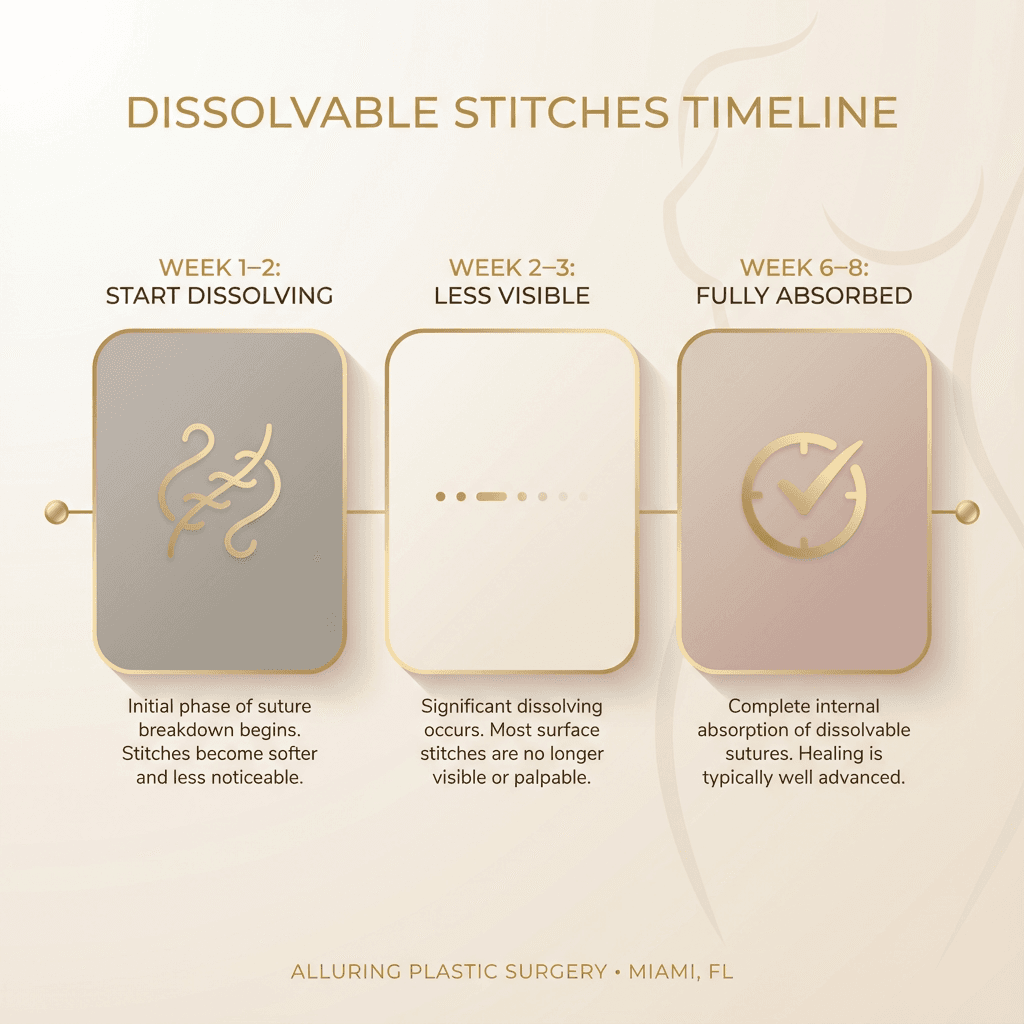
After Breast Augmentation surgery, patients often wonder when their stitches will dissolve. Your body typically begins absorbing breast augmentation sutures within 1-2 weeks after surgery, with visible stitches fading by weeks 2-3. Complete absorption often takes 6-8 weeks, although some patients may experience shorter or longer timelines depending on healing factors.
We recommend keeping incision sites clean and dry while wearing your surgical support bra continuously for six weeks. Proper healing signs include minimal inflammation and gradually flattening incision lines. The specific timeline varies based on your unique surgical approach and recovery process.
If you're unsure whether your recovery is progressing normally, it's important to understand what to expect during suture dissolution. Many patients worry if visible stitches mean something is wrong, or if discomfort signals a complication. Not knowing what's normal can add unnecessary stress to recovery.
For a personalized consultation, contact Alluring Plastic Surgery today at (786) 305-8649 or fill out our online contact form to schedule your consultation today.
When Do Breast Augmentation Sutures Start to Dissolve?
The dissolution of breast augmentation sutures follows a predictable timeline, though individual healing factors can influence the process. Most patients will notice their absorbable sutures beginning to dissolve within 1-2 weeks after surgery, with a significant reduction in visibility around weeks 2-3.
Your healing rate directly impacts the timeline. While surface stitches typically disappear faster, deeper sutures may take 6-8 weeks for full absorption, depending on the material used.
Your plastic surgeon will likely use different types of absorbable sutures based on the specific requirements of your procedure.
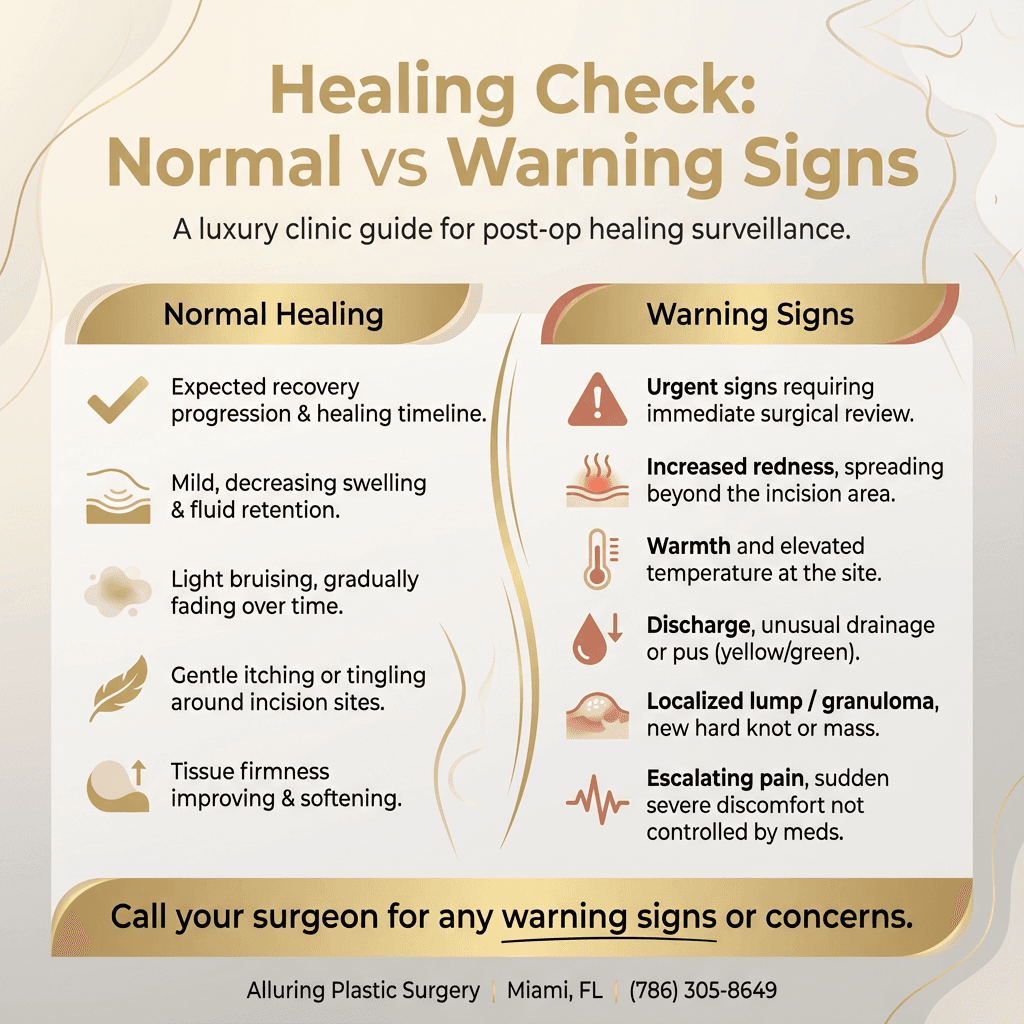
We recommend monitoring your incision sites for proper healing signs. If stitches remain visible beyond 8 weeks or you experience unusual discomfort, contact your surgeon immediately to rule out potential complications. Increased redness, warmth, or localized lumps may signal issues like suture granulomas or infection and should be promptly evaluated.
Which Stitches Are Used in Breast Augmentation?
Understanding the specific suture materials your surgeon selects provides insight into your healing process. In breast implant procedures, two primary types of stitches are used
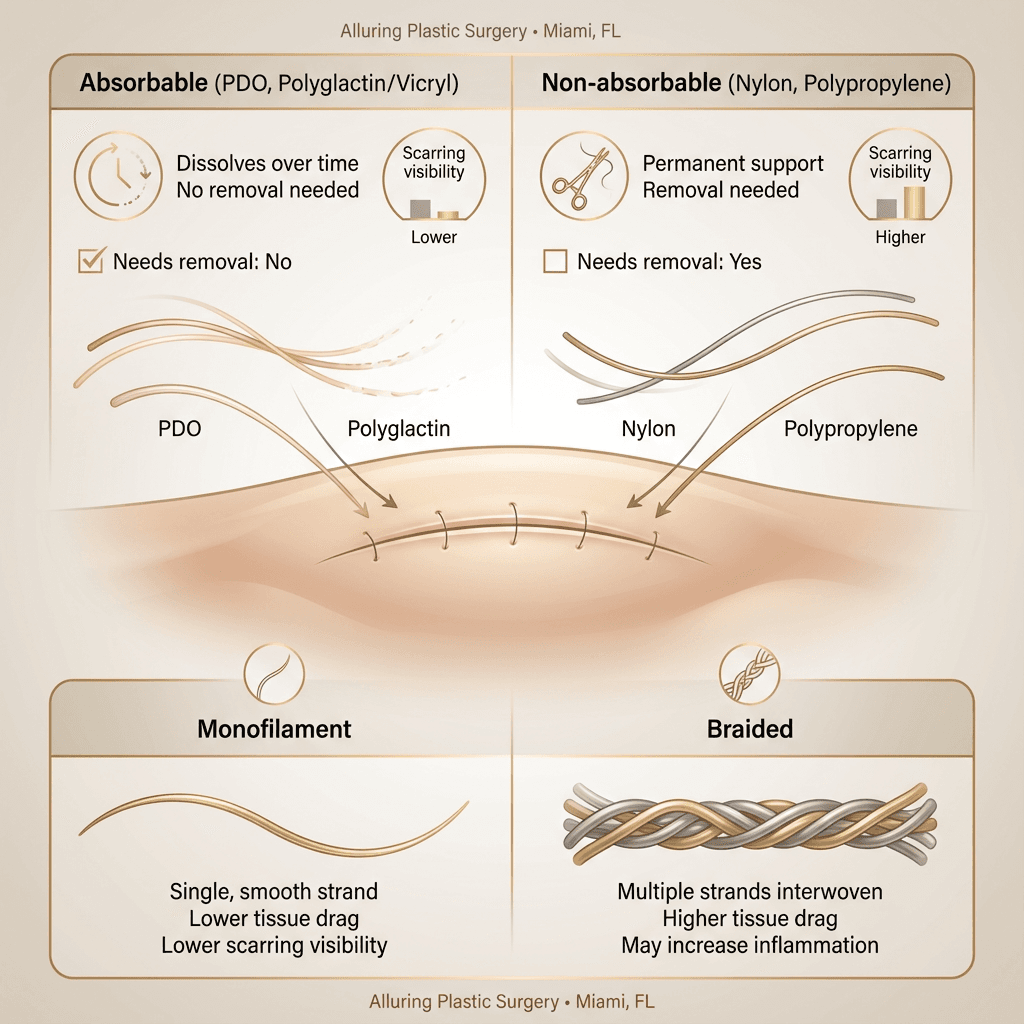
: absorbable sutures and non-absorbable stitches.
Absorbable sutures, typically made from PDO or polyglactin, dissolve naturally within 1-2 weeks post-surgery, with complete absorption occurring over 6-8 weeks. These eliminate the need for removal appointments and help maintain a clean surgical site during early recovery.
Non-absorbable stitches require professional removal and provide extended support in areas needing additional reinforcement during recovery.
Mono-filament sutures are frequently preferred in plastic surgery to minimize scarring, creating less visible marks than braided alternatives.
Your surgeon will select the appropriate types of stitches based on your specific anatomy, surgical technique, and desired aesthetic outcome.
Planning your breast augmentation?
Your price and recovery plan, in writing.
Many of our patients fly in from other states. We confirm your surgery and follow-up dates in writing, and tell you how many nights to stay in Miami.
Alluring patient care
Replies by text within 24 hoursHi! Let’s get your free consultation set up.
What are you thinking about doing?
Private. Only our patient coordinators see it, never a sales team.
What Affects How Fast Breast Stitches Dissolve?
Several biological and procedural variables can influence
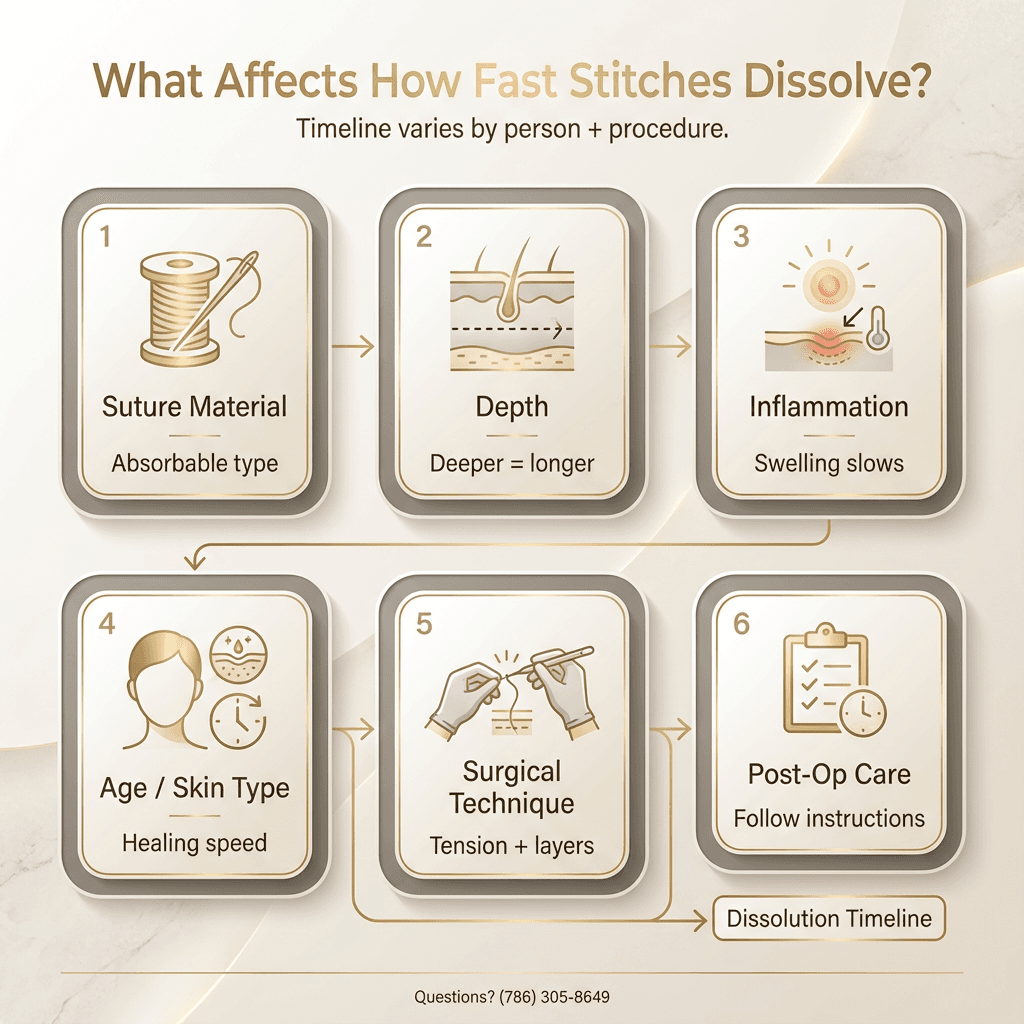
how quickly your breast augmentation stitches dissolve during recovery.
The sutures used play an important role, with absorbable sutures like PDO typically breaking down within 1-2 weeks after surgery. Your individual patient characteristics, including age and skin type, directly impact dissolution rates.
Surgical technique matters as well. Deeper stitches often dissolve more slowly than surface closures. Your body's natural healing response interacts with sutures throughout the recovery process.
An environment with minimal inflammation is ideal for faster absorption. We've observed that diligent post-operative care greatly affects how efficiently your body processes these materials.
How Do You Know If Breast Stitches Are Healing?
As your body begins its natural healing process following breast augmentation, recognizing positive recovery indicators can provide reassurance that your surgical sites are mending properly.
Dissolving stitches typically become less noticeable within 1-2 weeks, which marks proper healing progression. We look for minimal inflammation at the incision site, which indicates a healthy healing response.
The absence of discharge is particularly important, as it suggests the wound is closing appropriately and infection risk is reduced. As weeks pass, incision lines should gradually flatten and lighten in color.
Diligent monitoring of your stitches is essential. Persistent prominence or discomfort may signal complications requiring medical attention.
How Can You Help Stitches Dissolve After Surgery?
Proper care following breast augmentation directly influences how well your dissolving stitches absorb into the body.
We recommend keeping the surgical area clean and dry to prevent infection and promote the enzymatic breakdown of absorbable sutures. It's imperative to wear your surgical support bra continuously for the first six weeks, removing it only when showering.
This helps minimize strain on the stitches as they dissolve, typically beginning within 1-2 weeks post-surgery. Monitor your healing by checking for normal recovery signs: minimal redness, decreasing swelling, and absence of unusual discharge.
Most visible sutures fade by 2-3 weeks. Complete dissolution can take 6-8 weeks, depending on the specific material used. Following these post-operative care guidelines supports peak suture absorption and promotes a smoother breast augmentation recovery.
Learn More About Breast Augmentation in Miami
At Alluring Plastic Surgery in Miami, our board-certified surgeons combine artistic vision with technical expertise to deliver breast augmentation results that exceed expectations. Our Miami team specializes in personalized approaches to breast enhancement, ensuring natural-looking results that complement your unique body proportions. We pride ourselves on helping patients transform not just their appearance, but also their self-confidence through our meticulous surgical techniques and compassionate care.
Ready to start your journey? For a personalized consultation, contact Alluring Plastic Surgery today at (786) 305-8649 or fill out our online contact form to schedule your consultation.
Frequently asked questions
When do breast augmentation stitches start to dissolve?
Breast augmentation stitches usually begin to dissolve within 1-2 weeks after surgery, with most visible stitches fading by weeks 2-3. Complete absorption of sutures can take 6-8 weeks, depending on your body’s healing process and the materials used.
What types of stitches are used in breast augmentation surgery?
Breast augmentation surgeries commonly use absorbable sutures, which dissolve naturally within 1-2 weeks and are fully absorbed by 6-8 weeks. Some cases may use non-absorbable stitches that require professional removal and offer extra support during recovery.
How can I tell if my breast augmentation stitches are healing properly?
Signs of proper healing include minimal inflammation, gradually flattening incision lines, and the absence of discharge at the incision site. If your stitches remain prominent or you experience unusual discomfort, consult your surgeon to rule out complications.
What affects how quickly breast stitches dissolve after augmentation?
The rate of dissolution depends on the suture material, your individual healing characteristics (such as age and skin type), and the surgical technique used. Deeper stitches may take longer to dissolve than surface ones, and diligent post-operative care can also influence healing speed.
How should I care for my stitches after breast augmentation surgery?
Keep your incision sites clean and dry, and wear your surgical support bra continuously for six weeks, only removing it when showering. Following these post-operative care guidelines can help your stitches dissolve properly and support a smooth recovery.
Is it normal to still see stitches after a few weeks?
Yes, it is normal for some stitches to remain visible for up to 2-3 weeks after surgery, with deeper sutures sometimes taking up to 6-8 weeks to fully dissolve. If stitches are still visible beyond 8 weeks or you notice increased redness or discomfort, contact your surgeon.
What are signs of complications with dissolving stitches after breast augmentation?
Warning signs include persistent redness, warmth, localized lumps, or discharge at the incision site, which may indicate infection or suture granulomas. If you experience any of these symptoms, reach out to your plastic surgeon promptly for evaluation.
Can I do anything to help my breast stitches dissolve faster?
Maintaining a clean, dry surgical area and consistently wearing your support bra can aid the natural breakdown of absorbable stitches. Avoiding unnecessary strain on your chest and following all post-operative care instructions will also help support optimal healing.
What do real breast augmentation results look like?
These are photos of real Alluring patients after breast augmentation, shared with their consent. Results differ from person to person, and your surgeon talks you through what is realistic for your body at your free consultation, before you decide anything.
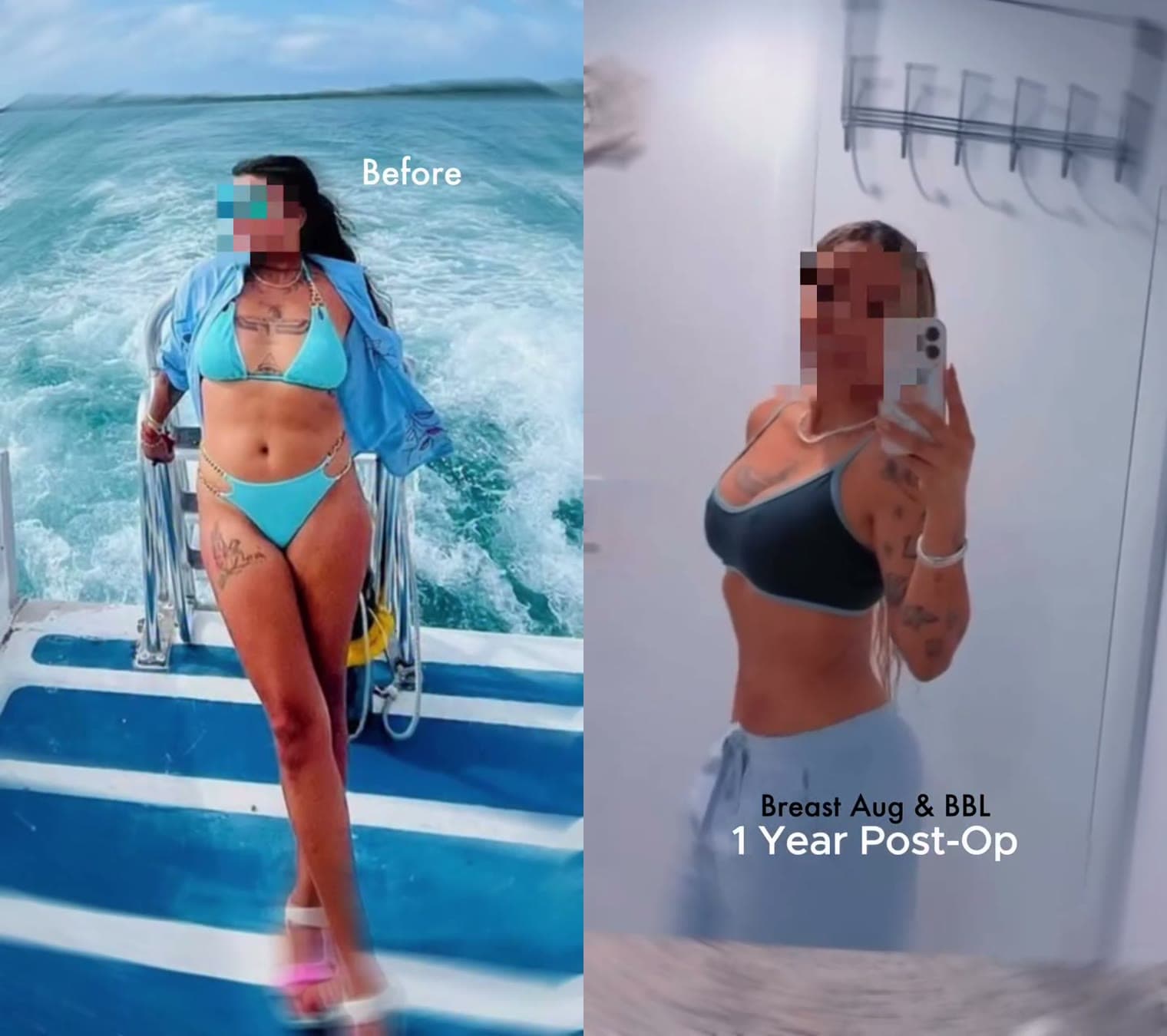
Before and after breast augmentation 
Before and after breast augmentation 
Before and after breast augmentation 
Before and after breast augmentation 
Before and after breast augmentation 
Before and after breast augmentation
Photos in this section are real Alluring patients.
See every breast augmentation photo in the galleryMeet your surgeon

Check her credentials yourself
Each link opens her record on the issuing body's own site.
Licensed as a medical doctor by the Florida Department of Health.
Board certified in general surgery by the American Board of Surgery since 2008.
Fellow of the American College of Surgeons (FACS).
Certified in cosmetic surgery by the American Board of Cosmetic Surgery. The specialty recognition identified herein has been received from a private organization not affiliated with or recognized by the Florida Board of Medicine.
Start here
Personal care. Honest price.
Your price, surgery date and follow-up plan, in writing, before you book a flight.