
Breast Augmentation Safety Miami: Risks & Prevention
Discover breast augmentation safety Miami: Risks like infection, capsular contracture, BII symptoms, BIA-ALCL & prevention tips. Expert Miami advice for safe results. Book now!
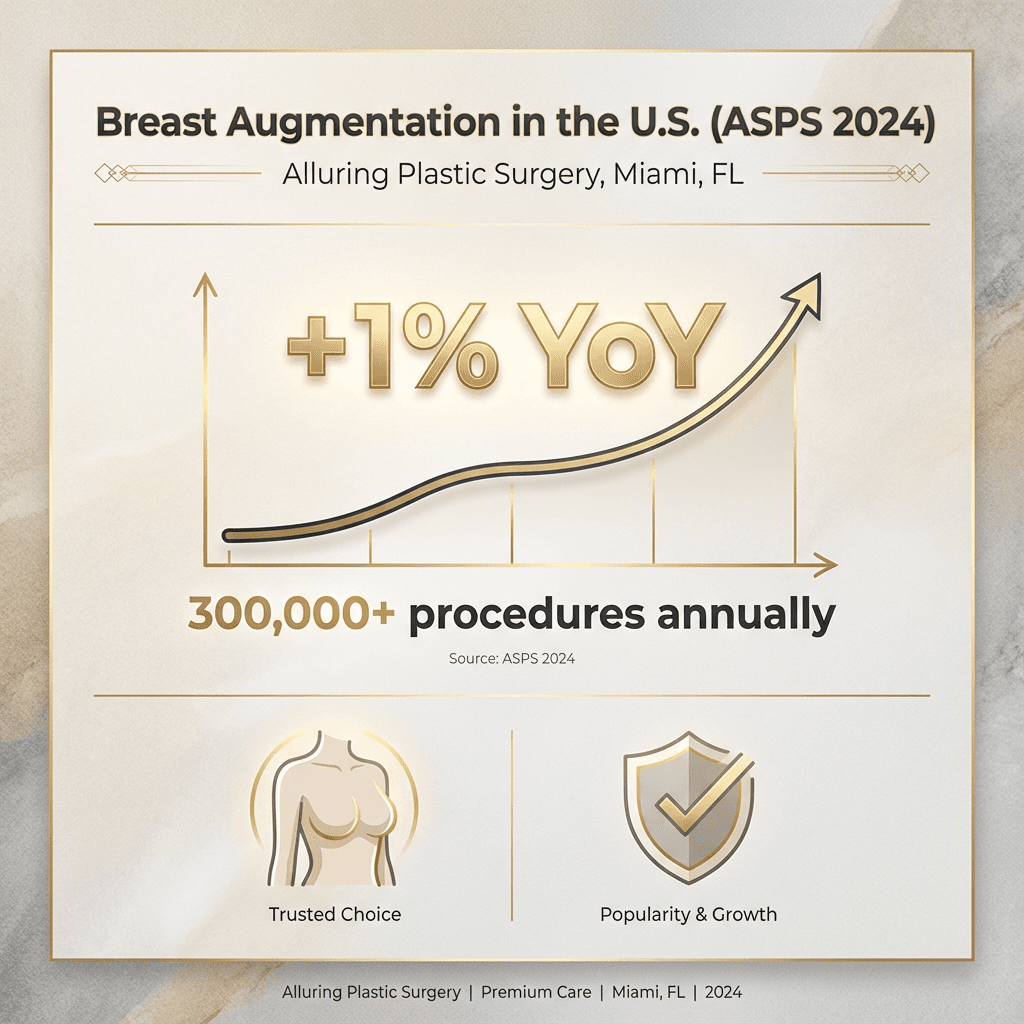
Breast augmentation remains one of the most sought-after cosmetic procedures. According to the American Society of Plastic Surgeons' 2024 statistics report, procedures increased by 1% that year, totaling over 300,000 annually.
When considering breast augmentation safety in Miami, patients want to understand real risks and how to minimize them. This focus on safety ensures your transformation aligns with both confidence and well-being.
In this guide, you'll discover:
- Key short- and long-term risks with sourced statistics
- Proven prevention strategies tailored to your needs
- Rare concerns like BII and BIA-ALCL explained clearly
- Tips designed for Miami's unique tropical environment
- Pathways to expert care at Alluring Plastic Surgery
What Are the Common Short-Term Risks of Breast Augmentation?
Short-term risks occur in the days and weeks after surgery. With proper protocols, they're manageable and typically resolve quickly. Understanding what to watch for helps you feel prepared and confident.
Infection affects a small percentage of patients. It's often linked to surgical site care and responds well to antibiotics when caught early. Your surgeon's sterile techniques play a huge role in prevention.
Bleeding or hematoma formation requires intervention in roughly 0.5% to 2% of cases.
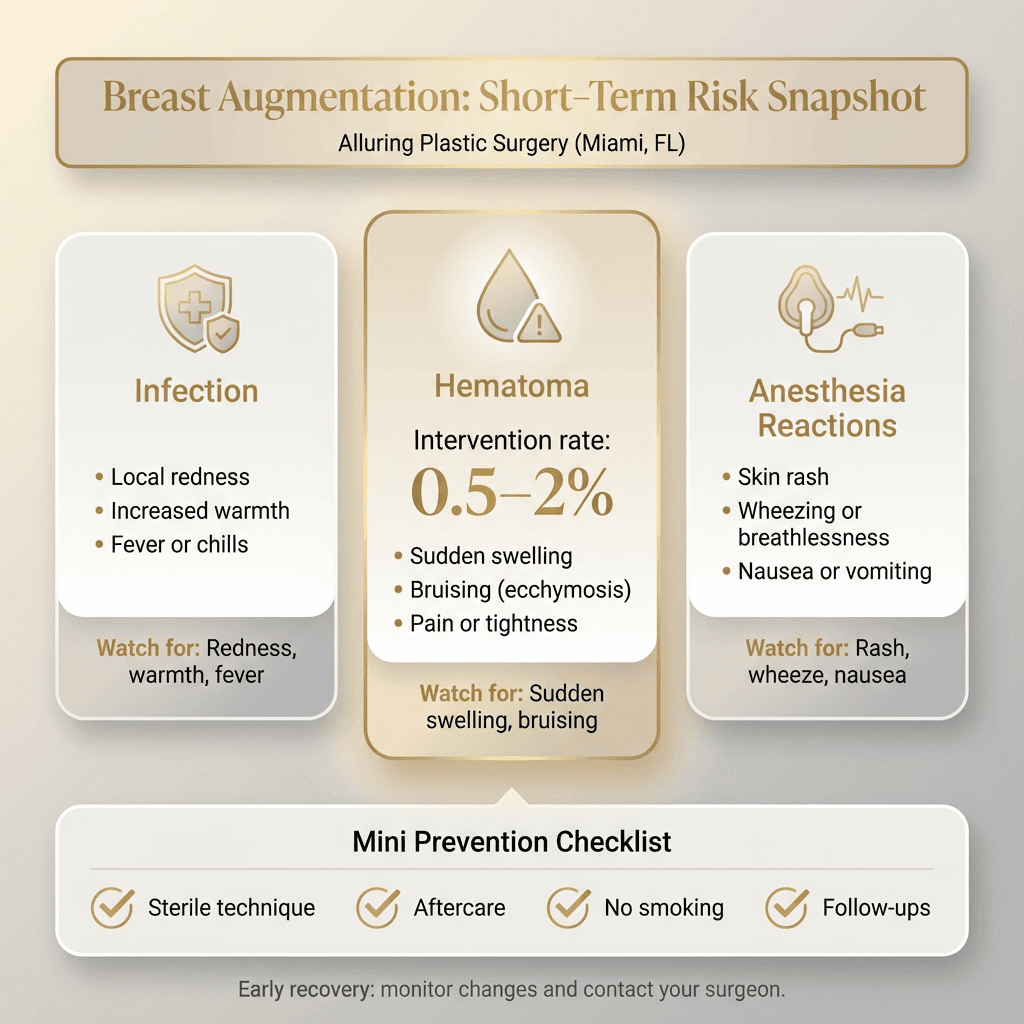
This happens when blood collects near the implant site. Wearing compression garments and avoiding strenuous activity reduces this risk significantly.
Anesthesia reactions are rare but screened for during your preoperative evaluation. Your medical history helps the anesthesia team customize your care. Overall complication rates vary in the literature, ranging from under 1% to around 6% depending on the study and patient population.
Prevention starts with choosing board-certified surgeons who use sterile techniques and prophylactic antibiotics. You'll also play an active role by following aftercare instructions carefully.
- Keep incisions clean and dry to minimize infection risk
- Wondering about swelling? Compression garments help reduce hematoma formation
- Don't skip follow-up visits—early detection makes all the difference
Individual results vary, but diligent aftercare lowers these risks substantially. The FDA's guide to breast implant risks offers comprehensive information on proactive measures that enhance outcomes.
How Do Long-Term Complications Develop After Breast Augmentation?
Long-term issues can develop over months or years. Capsular contracture is the most commonly discussed concern. Your body naturally forms scar tissue around any implant—that's normal. But sometimes this tissue tightens excessively, causing firmness or discomfort.
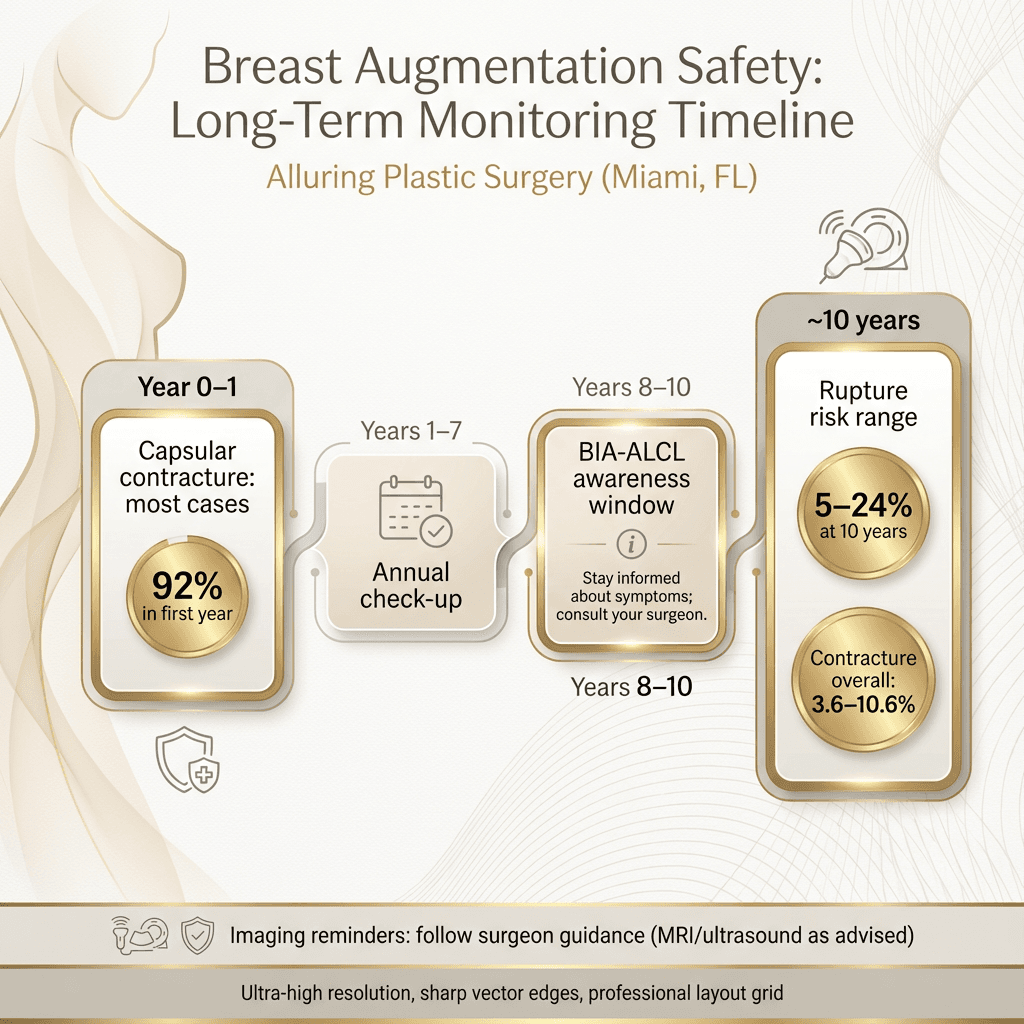
Capsular contracture affects roughly 3.6% to 10.6% of patients overall, or about 1 in 6 women according to ASPS data. Research published in plastic surgery journals shows that most cases—around 92%—appear within the first year after surgery.
Catching it early means simpler treatment options.
Implant rupture risk increases over time. Studies show rupture rates ranging from 5% to 24% at the 10-year mark, depending on implant type and manufacturer. Silicone ruptures can be "silent," meaning you won't notice without imaging. That's why regular check-ups matter.
Changes in nipple sensation occur in some patients, ranging from increased sensitivity to numbness. Most sensation changes improve over 6 to 12 months, though some may be permanent. Implant displacement can also happen, altering position or symmetry over time.
Good news? Surgical techniques significantly impact these outcomes. Textured implants show lower contracture rates compared to smooth (OR=0.37). Submuscular placement also reduces contracture risk (OR=0.35). Regular imaging helps monitor silicone implants for silent ruptures.
- Subpectoral placement offers lower contracture risk—ask if it's right for you
- Gentle massage as directed post-surgery can help maintain soft results
- Annual check-ups catch issues early, when they're easiest to address
Your consultation will help determine which implant type and placement best suits your anatomy and goals.
What Should You Know About BII and BIA-ALCL?
These rare conditions deserve attention, even though they affect a small percentage of patients. Being informed helps you monitor your health and seek care promptly if needed.
Breast Implant Illness (BII) involves systemic symptoms some patients report after getting implants. These include chronic fatigue, joint pain, brain fog, rashes, and sleep disturbances. The FDA tracks over 50 potential symptoms associated with BII reports.
The exact cause remains under study. Theories include chronic inflammation, biofilm formation, or individual immune responses. What we do know: many patients report symptom improvement after explantation. If you experience unexplained systemic symptoms, discuss them with your surgeon.
BIA-ALCL (Breast Implant-Associated Anaplastic Large Cell Lymphoma) is a rare cancer of the immune system—not breast cancer. It's primarily associated with textured implants. The incidence ranges from 1 in 355 to 1 in 30,000 patients, depending on the study and implant type. No confirmed cases exist with smooth implants.
Risk typically rises after 8 to 10 years post-implantation. The most common sign is late-onset fluid collection (seroma) around the implant. Early detection and treatment—usually complete capsule and implant removal—yields excellent outcomes. Research published in oncology journals confirms over 90% survival rates with prompt intervention.
- Notice new fatigue or autoimmune-like symptoms? Track them and discuss with your doctor
- Concerned about BIA-ALCL? Smooth implants eliminate this specific risk
- Late-onset swelling or pain warrants prompt evaluation—don't wait
These conditions remain exceedingly rare. Awareness simply helps you stay proactive about your health.
Why Does Breast Augmentation Safety in Miami Require Special Considerations?
Miami's tropical climate creates unique factors for surgical recovery.
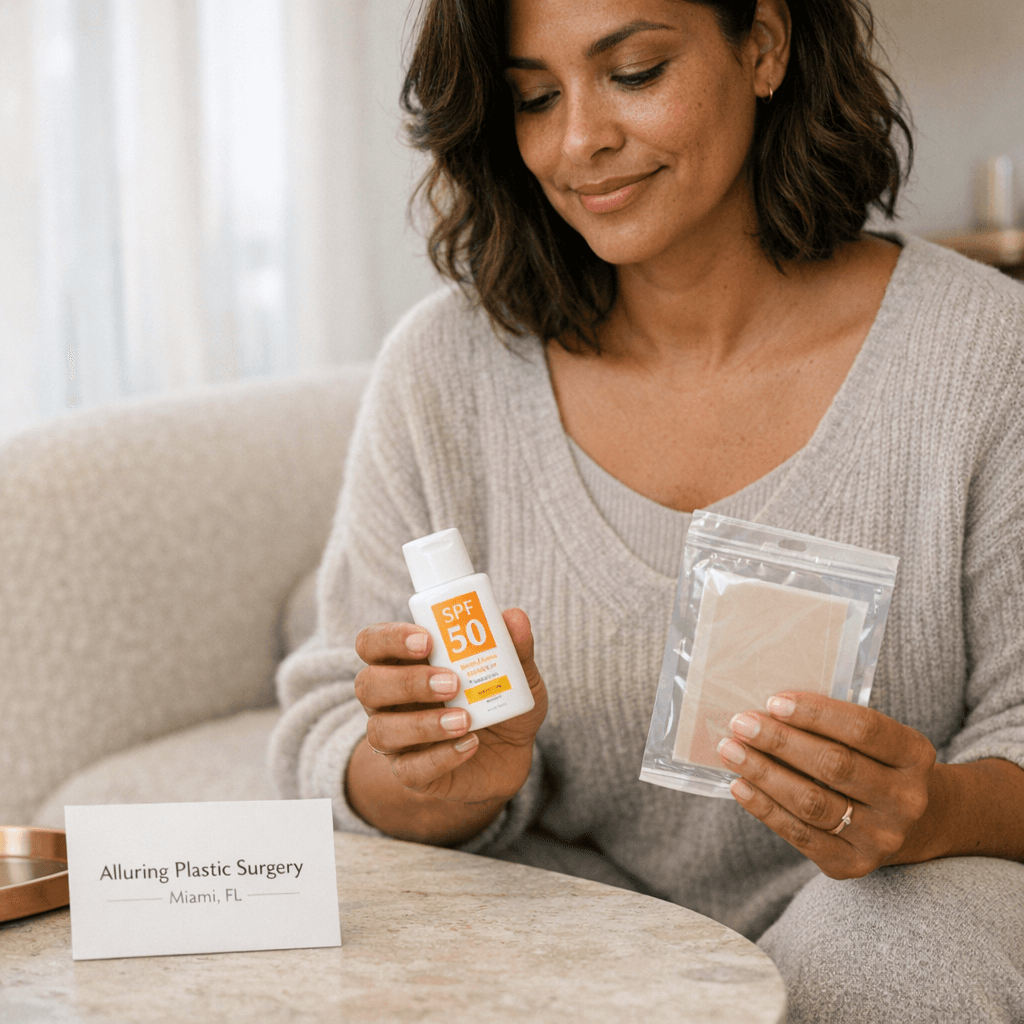
Understanding these helps you prepare for optimal healing and long-lasting results.
Humidity and heat can increase infection risk if you're not careful. Sweat and moisture near incision sites create environments where bacteria thrive. Rigorous sterile protocols during surgery and diligent wound care afterward are essential. Keep incisions clean and dry, especially during those humid summer months.
Sun exposure poses another challenge. Miami sunshine feels amazing, but UV rays can cause hyperpigmentation on healing scars. This darkening can be permanent if you're not careful. Broad-spectrum SPF 50+ becomes your best friend once incisions have closed. Silicone scar sheets also help protect and flatten scars.
Choosing the right facility matters here. AAAASF-accredited surgical centers like Alluring Plastic Surgery maintain the highest safety standards. These accreditations require rigorous protocols for sterility, emergency preparedness, and staff training.
Board-certified surgeons experienced in Miami's environment understand these challenges. Dr. Victoria Karlinsky, double board-certified with over 15 years of experience, has refined techniques specifically suited to tropical conditions. Her team provides bilingual support for medical tourists navigating recovery in an unfamiliar city.
- Apply silicone sheets and sunscreen daily once incisions heal—Miami sun won't fade those scars without protection
- Stay hydrated to support healing in humidity
- Choose surgeons who understand local environmental factors
Custom plans address these Miami-specific considerations for results that last. Visit our breast augmentation procedure page for detailed information about our approach.
When Should You Consider Alternatives or Revision Surgery?
Not everyone wants implants, and that's perfectly valid. Understanding your options helps you make the best choice for your body and goals.
Fat transfer breast augmentation offers natural enhancement without implants. Your surgeon harvests fat from areas like the abdomen or thighs, then injects it into the breasts. It's ideal for modest volume increases—typically one cup size or less. The results look and feel natural since it's your own tissue.
The tradeoff? Fat transfer requires enough donor fat and may need multiple sessions. Some transferred fat gets reabsorbed, so results can be less predictable than implants. But for patients wary of implants, it's an excellent option worth discussing.
Revision surgery becomes necessary when complications arise or aesthetic goals change. Common reasons include capsular contracture, implant rupture, asymmetry, or simply wanting a different size. Some patients seek revision after experiencing BII symptoms.
Revision procedures can be more complex than primary augmentation. They may involve capsule removal, implant exchange, or complete explantation. Recovery timelines vary based on what's needed. An experienced revision surgeon evaluates your situation and recommends the best approach.
- Fat grafting works well for subtle, natural volume enhancement
- Revision addresses confirmed complications like displacement or contracture
- Experiencing symptoms? Explantation may provide relief
Explore all options during your consultation. The right choice depends on your anatomy, goals, and comfort level.
What Does Your Investment in Safe Breast Augmentation Include?
Pricing reflects your unique goals, implant type, surgical technique, and any combined procedures. Quality and safety features—like advanced imaging and accredited facilities—add value to your investment.
At Alluring Plastic Surgery, transparent pricing means no surprises. Your consultation yields a detailed quote covering surgeon fees, anesthesia, facility costs, implants, and follow-up care. We believe you deserve to understand exactly what you're paying for.
Financing makes transformation accessible:
- Cherry – Plans starting at 0% APR with credit approval
- CareCredit – Promotional financing designed for medical procedures
- United Credit – Budgets tailored to your transformation goals
View all financing options to find what works for your situation. This investment supports your confidence for years to come.
Why Choose Alluring Plastic Surgery for Breast Augmentation Safety in Miami?
With over 5,000 patients served and 15+ years of experience, our 4.9-rated team excels in safe, beautiful transformations. Dr. Karlinsky's double board-certification in plastic surgery ensures precision and expertise you can trust.
AAAASF accreditation means our facility meets the highest safety standards in the industry. We don't cut corners on sterility, equipment, or emergency preparedness. Comprehensive aftercare includes Miami-tailored scar protocols and accessible follow-up appointments.
Patients consistently praise their experiences—from initial consultation through final results. See what to expect during healing in our Breast Augmentation Recovery Time Miami guide.
Frequently Asked Questions
What are the most common complications associated with breast augmentation?
Short-term issues like hematoma (0.5-2%) and infection top the list. Long-term, capsular contracture affects 3.6-10.6% of patients. Board-certified techniques and proper aftercare minimize these risks significantly. Discuss your specific concerns during consultation with our team.
How can I prevent capsular contracture after breast augmentation?
Submuscular placement and certain implant choices reduce risk significantly. Gentle massage as directed and attending all follow-ups help too. Early intervention matters if firmness develops—schedule regular check-ups to catch changes early.
What are breast implant illness symptoms?
Fatigue, joint pain, brain fog, rashes, and sleep problems are commonly reported. The FDA tracks these symptoms, and removal often resolves them. Our experts can guide you through evaluation if you're experiencing unexplained systemic symptoms.
What is the risk of BIA-ALCL with breast implants?
The risk ranges from 1 in 355 to 1 in 30,000 for textured implants. No cases have been confirmed with smooth implants. Monitor for swelling after 8 years and seek prompt evaluation if it occurs.
How safe is breast augmentation overall?
Complication rates remain low—typically under 6%—with qualified surgeons in accredited facilities. Advances in technique and implant technology continue improving outcomes. Miami expertise and proper patient selection elevate results further.
What factors contribute to breast augmentation safety?
Surgeon certification, facility accreditation, and your compliance with aftercare instructions all matter. Techniques like the no-touch insertion method lower contamination risks. Choosing an experienced, board-certified surgeon is the single most important factor.
Safety defines your breast augmentation journey, blending low risks with high satisfaction. From short-term vigilance to monitoring for rare conditions, informed choices yield confidence. In Miami, Alluring Plastic Surgery—led by Dr. Victoria Karlinsky, double board-certified with 15+ years of experience—delivers exceptional care in our AAAASF-accredited facility.
Ready for guidance suited to your goals? Schedule your free consultation in Miami today or call (786) 305-8649. Your transformation awaits.
Not Sure Which Procedure Is Right for You?
Take our free 2-minute quiz to get personalized recommendations based on your goals, lifestyle, and budget.
Take the QuizStart Your Journey Today
Leave your name and phone number. We'll call you within 24 hours to discuss your goals.
Or call us directly
+1 (786) 305-8649Related Articles
Continue reading with these related posts

When Can I Sleep Without a Bra After Breast Augmentation?
Many patients wonder when they can sleep without a bra after Breast Augmentation This typically occurs six to eight weeks...
When Can I Sleep on My Side After Breast Augmentation?
One of the most common concerns after Breast Augmentation isn’t just about the implants — it’s about sleep. Patients often...

5 Weeks Post Op Breast Augmentation What to Expect
Patients recovering from Breast Augmentation often wonder what to expect at the 5-week post-operative mark. This phase...

Breast Augmentation Recovery Time Miami: Week-by-Week Guide
Discover breast augmentation recovery time in Miami: week-by-week guide tailored for humid climate. Manage swelling, pain, and return to exercise with Dr. Karlinsky's expert tips.

Breast Augmentation Before & After: Miami Natural Results
Discover breast augmentation before and after transformations from real Miami women. Natural 2026 trends, humidity-proof recovery, emotional journeys to confidence. Book your consult!

Breast Augmentation Miami: Natural Post-Pregnancy Boost
Breast augmentation Miami: Natural post-pregnancy restoration with expert recovery tips for humid climates. Costs $6K-$12K, financing options. Learn from 5K+ patients!
Related Procedures
Explore the procedures discussed in this article

Breast Augmentation Miami
Achieve the fuller, more balanced look you desire with natural-looking breast enhancement. Silicone, saline, and fat transfer options with flexible financing.

Breast Lift Miami
Lift and reshape your breasts to restore a more youthful, perky appearance without implants using advanced mastopexy techniques.
Breast Reduction Miami
Reduce discomfort and achieve better proportions with breast reduction surgery that relieves chronic pain and enhances your quality of life.
More Breast Augmentation Articles

Breast Implant Size Guide: Perfect CC Chart
Discover the perfect breast implant size guide: CC charts, profiles, and tips for natural results. Learn sizing factors, popular sizes, and consultation advice for your ideal augmentation.

Breast Implants Drop and Fluff: Timeline & Tips
Learn when breast implants drop and fluff with our detailed recovery timeline. From initial swelling to full settling in 2-3 months. Speed up healing with massage, support bras & Miami humidity tips.

Breast Implant Illness: Symptoms, Risks & Prevention
Discover breast implant illness symptoms like fatigue, brain fog, and joint pain, plus risks such as capsular contracture and rupture. Learn expert tips to minimize breast augmentation complications.