
Breast Reduction7 min read
When Can I Sleep on My Side After Breast Reduction?
By Alluring Editorial TeamPublished
After undergoing Breast Reduction surgery, many patients are unsure about when it’s safe to return to their preferred...
- Typical recovery: 1-2 weeks to work
- 4.7 · 87 Google reviews

After undergoing Breast Reduction surgery, many patients are unsure about when it’s safe to return to their preferred side-sleeping position. Is it after a few days, weeks, or longer? The uncertainty around sleep positions during recovery can feel overwhelming, especially when rest is vital for healing.
Improper sleeping posture can cause discomfort, disrupt healing, and even compromise your results. So, how do you know when the time is right to make the switch?
You may be able to start side sleeping four to six weeks after surgery
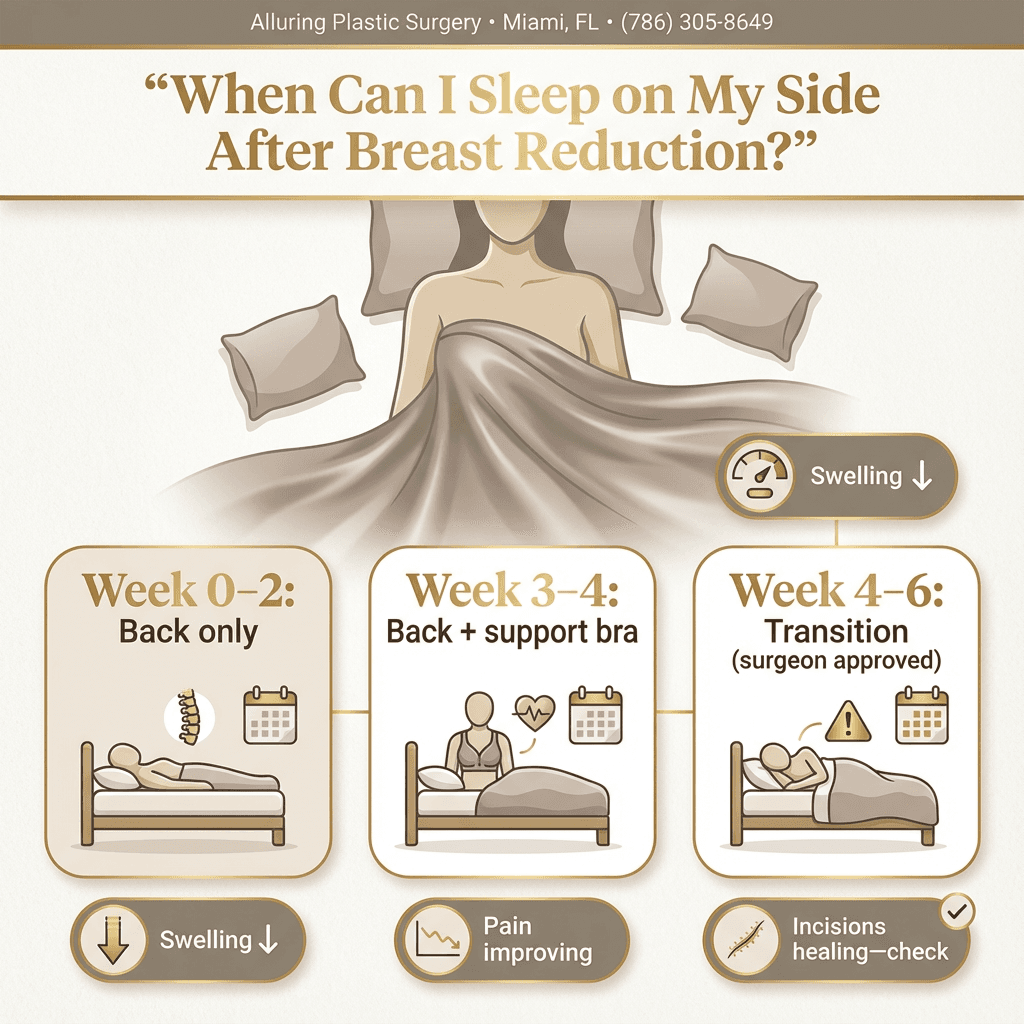
, but individual healing timelines vary based on the extent of tissue removal and overall health.
We recommend maintaining back sleeping during the initial recovery period to eliminate pressure on surgical sites, reduce bleeding risks, and promote proper blood circulation to healing tissues. Your board-certified plastic surgeon will assess your readiness during follow-up appointments by evaluating pain levels, swelling reduction, and incision healing progress before approving position changes.
For a personalized consultation, contact Alluring Plastic Surgery today at (786) 305-8649 or fill out our online contact form to schedule your consultation today.
TL;DR
- Most patients can resume side sleeping 4–6 weeks after breast reduction surgery, depending on individual healing progress.
- Back sleeping is essential during initial recovery to protect surgical sites, reduce swelling, and prevent complications.
- Watch for signs of readiness: reduced pain, decreased swelling, and comfortable arm movement before transitioning.
- Always consult your board-certified surgeon at follow-up appointments before changing sleep positions.
What Is the Recovery Timeline After Breast Reduction?
Although breast reduction surgery offers substantial physical and emotional benefits, grasping your recovery timeline becomes vital for achieving ideal healing outcomes.
We'll guide you through the essential phases that directly impact when you can safely resume side sleeping.
The initial recovery period spans four to six weeks, during which your sleeping position plays a critical role in proper healing. Your surgeon will likely recommend sleeping on your back, wearing your surgical bra consistently, and monitoring swelling levels throughout this time.
Healing progress varies based on the amount of tissue removed and your overall health. Adjusting your recovery expectations can help you better serve your family's needs while prioritizing your own healing during this important phase.
Why Is Back Sleeping Crucial Post-Surgery?
While side sleeping might feel natural and comfortable, back sleeping becomes your primary healing position during the crucial first month after surgery.
This posture eliminates pressure on surgical sites, significantly reducing the risks of bleeding and swelling. It also improves blood circulation, ensuring vital oxygen and nutrients reach healing tissues.
Back sleeping minimizes strain on incisions, helping prevent scar complications that could alter your results. Most importantly, it protects the shape and placement of your surgical results during the early recovery period.
Following your surgeon’s guidance on sleep positioning isn’t just comfort advice. It’s critical medical guidance that supports your healing and long-term success.
How Do You Know You're Ready to Side Sleep?
How can you tell when your body is ready to switch from back sleeping to your usual side position? Watch for a few key signs that signal healing progress.
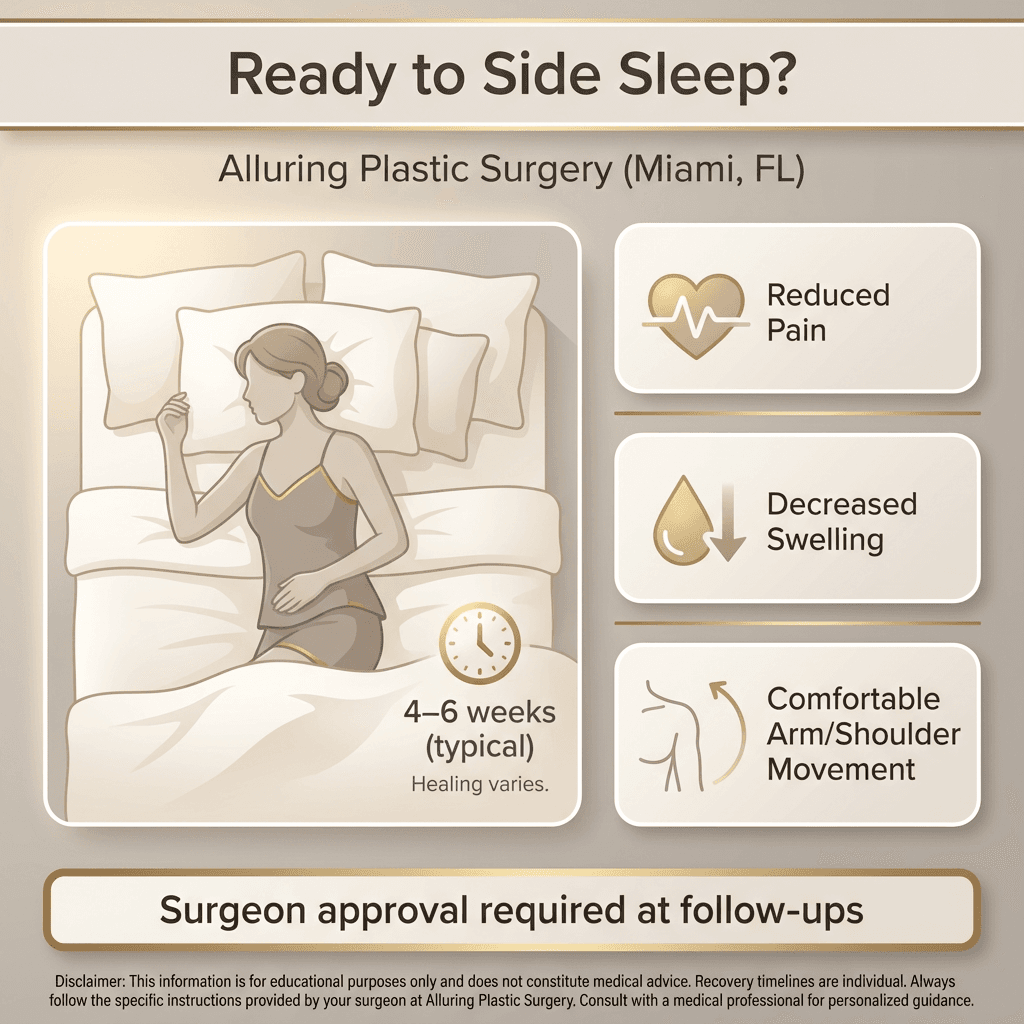
You'll likely notice reduced pain and swelling around four to six weeks post-surgery. If tenderness has decreased, and you can comfortably move your arms and shoulders, these are strong indicators that your body is healing well.
During your follow-up appointments, your surgeon will assess whether you’re ready for a sleep position change.
Stay alert for unusual symptoms such as increased swelling or discomfort when trying to sleep on your side—these may indicate you need more time before transitioning.
Consider Sarah, who attempted side sleeping at just three weeks despite ongoing tenderness. She experienced increased swelling and delayed healing—a reminder that rushing this change can have real consequences.
Planning your breast reduction?
Your price and recovery plan, in writing.
Many of our patients fly in from other states. We confirm your surgery and follow-up dates in writing, and tell you how many nights to stay in Miami.
Alluring patient care
Replies by text within 24 hoursHi! Let’s get your free consultation set up.
What are you thinking about doing?
Private. Only our patient coordinators see it, never a sales team.
How Can You Safely Start Side Sleeping?
Once your body shows signs of recovery, transitioning to side sleeping should be done with care and patience.
Begin by sleeping on your back with supportive pillows placed on one side to create a slight lateral incline

. This intermediate position helps your body adjust without placing direct pressure on the surgical sites.
Start by lying on your side for 15–20 minutes, then return to your back to rest. Gradually extend side-sleeping time over several nights as you continue to heal.
Strategic pillow placement is essential during this transition. Place one pillow between your knees and another across your chest for additional support and alignment.
As always, consult your surgeon before changing your sleep position, as healing timelines can vary significantly.
How Can You Optimize Your Sleep Setup Post-Surgery?
Your sleep environment plays a key role in promoting comfort and optimal healing after breast reduction.
Use multiple supportive pillows to maintain proper positioning, and keep your head and knees elevated to help reduce swelling. A wedge pillow can add stability for back sleeping
by minimizing movement and pressure on the chest.
Add pillows beneath your arms to prevent rolling and maintain the recommended sleep position overnight. Practicing this setup before your procedure can make the transition easier after surgery.
A cool, dark bedroom helps promote restorative sleep, which is essential for tissue repair and recovery.
What Post-Surgery Warning Signs Should You Watch For?
Even with the right sleep setup and positioning, it’s crucial to stay alert for complications that can affect your recovery.
Watch for increased swelling, redness, or persistent pain near your incisions. If pain doesn’t improve with medication, contact your surgeon.
Be aware of unusual discharge—a potential sign of infection—especially if accompanied by foul odors. Difficulty breathing, elevated heart rate, or other sudden symptoms should prompt immediate medical evaluation.
These physical and emotional changes during recovery should not be ignored. While side sleeping is a goal, it must never come at the cost of your health or surgical success.
When Can I Sleep on My Side After Breast Reduction We've outlined the essential steps to help you shift to side sleeping safely after breast reduction surgery.
From understanding the recovery timeline to recognizing key healing signs and setting up a supportive sleep environment, each phase plays a role in protecting your results.
Take your time, listen to your body, and always follow your surgeon’s guidance. If you're unsure or experience symptoms, don’t hesitate to reach out to your care team.
Learn More About Breast Reduction Surgery in Miami
At Alluring Plastic Surgery in Miami, our board-certified surgeons specialize in breast reduction procedures that deliver life-changing results. Our expert team combines advanced surgical techniques with personalized care to help patients reduce discomfort and achieve the proportionate, balanced figure they desire. Patients throughout Miami and beyond trust our surgeons not just for their technical excellence, but for their compassionate approach to helping women regain confidence and comfort in their bodies.
Ready to start your journey? For a personalized consultation, contact Alluring Plastic Surgery today at (786) 305-8649 or fill out our online contact form to schedule your consultation.
Frequently asked questions
When can I safely sleep on my side after breast reduction surgery?
Most patients can safely resume side sleeping 4 to 6 weeks after breast reduction surgery, depending on individual healing progress. Always wait for your surgeon’s approval before making this change to ensure your incisions have healed properly and swelling has decreased.
Why is back sleeping recommended after breast reduction surgery?
Back sleeping is recommended during the initial recovery period to reduce pressure on the surgical sites, minimize bleeding and swelling, and promote proper blood circulation. This position helps protect your incisions and ensures the best possible healing and results.
What are the signs that I’m ready to transition to side sleeping?
You may be ready to transition when you notice reduced pain and swelling, comfortable arm and shoulder movement, and your surgeon approves the change during a follow-up appointment. It's important to avoid switching positions if you still experience tenderness or significant discomfort.
How can I make transitioning to side sleeping safer after surgery?
Begin by sleeping on your back with supportive pillows to create a slight incline, then gradually increase the time spent on your side in short intervals. Use pillows between your knees and across your chest to maintain alignment and support, and always consult your surgeon before making the switch.
What should my sleep setup look like during recovery from breast reduction?
A comfortable sleep setup should include multiple supportive pillows to keep you on your back, elevate your head and knees, and prevent rolling. A wedge pillow can offer extra stability, and keeping your bedroom cool and dark can promote restorative sleep.
What warning signs should I watch for during post-surgery recovery?
Watch for increased swelling, redness, persistent pain, unusual discharge or foul odors, and difficulty breathing. If you experience any of these symptoms, contact your surgeon immediately as they could indicate complications or infection.
How long is the initial recovery period after breast reduction surgery?
The initial recovery period typically lasts four to six weeks, during which back sleeping and wearing a surgical bra are crucial. Healing times can vary based on the extent of tissue removal and your overall health, so always follow your surgeon’s guidance.
Can I get personalized advice for my recovery after breast reduction?
Yes, it’s important to consult with your board-certified plastic surgeon for personalized advice based on your healing progress. Scheduling regular follow-up appointments will help ensure your recovery stays on track and you get individualized recommendations for returning to side sleeping and other activities.
What do real breast reduction results look like?
These are photos of real Alluring patients after a breast reduction, shared with their consent. Results differ from person to person, and your surgeon talks you through what is realistic for your body at your free consultation, before you decide anything.

Before and after a breast reduction 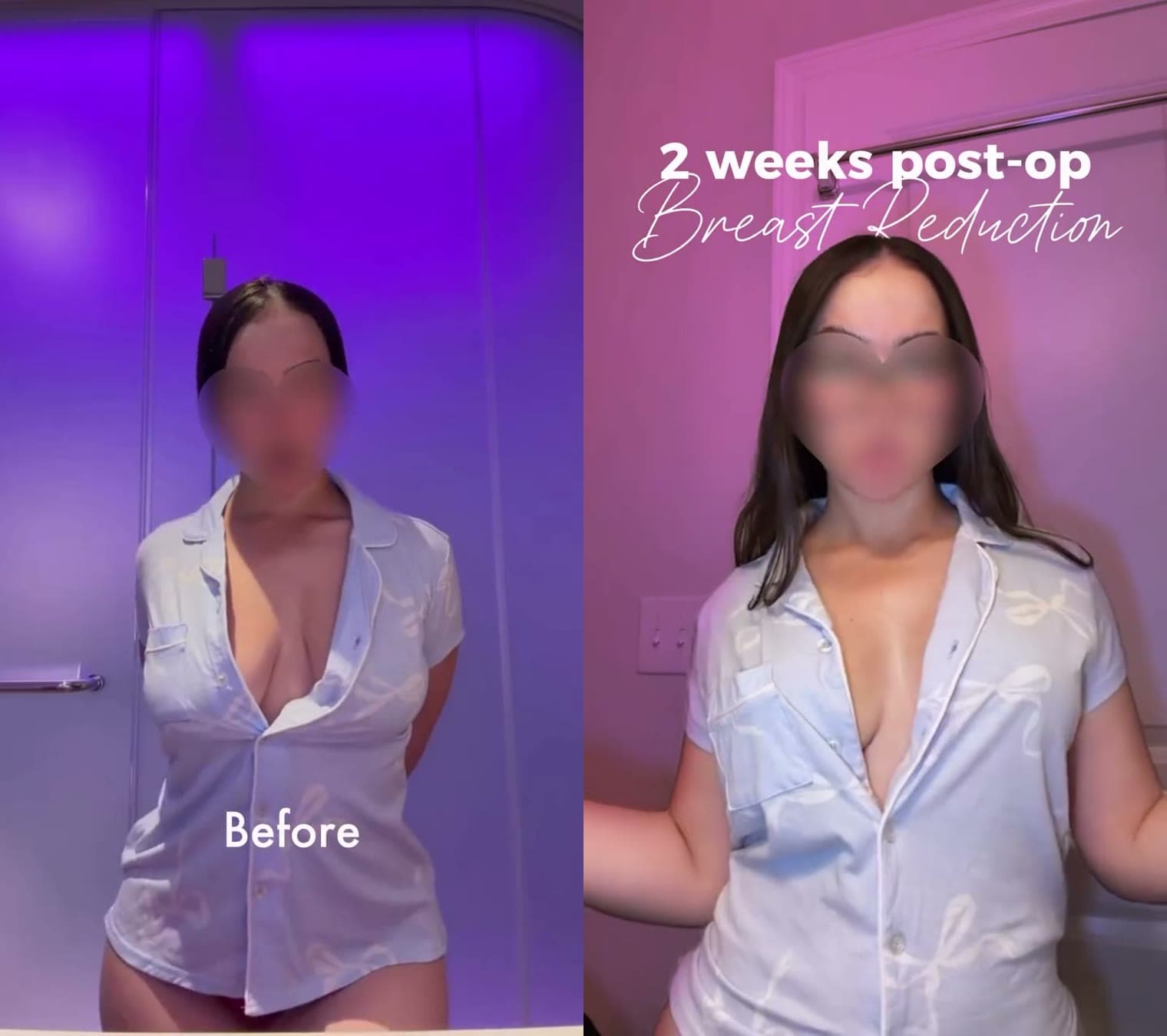
Before and after a breast reduction 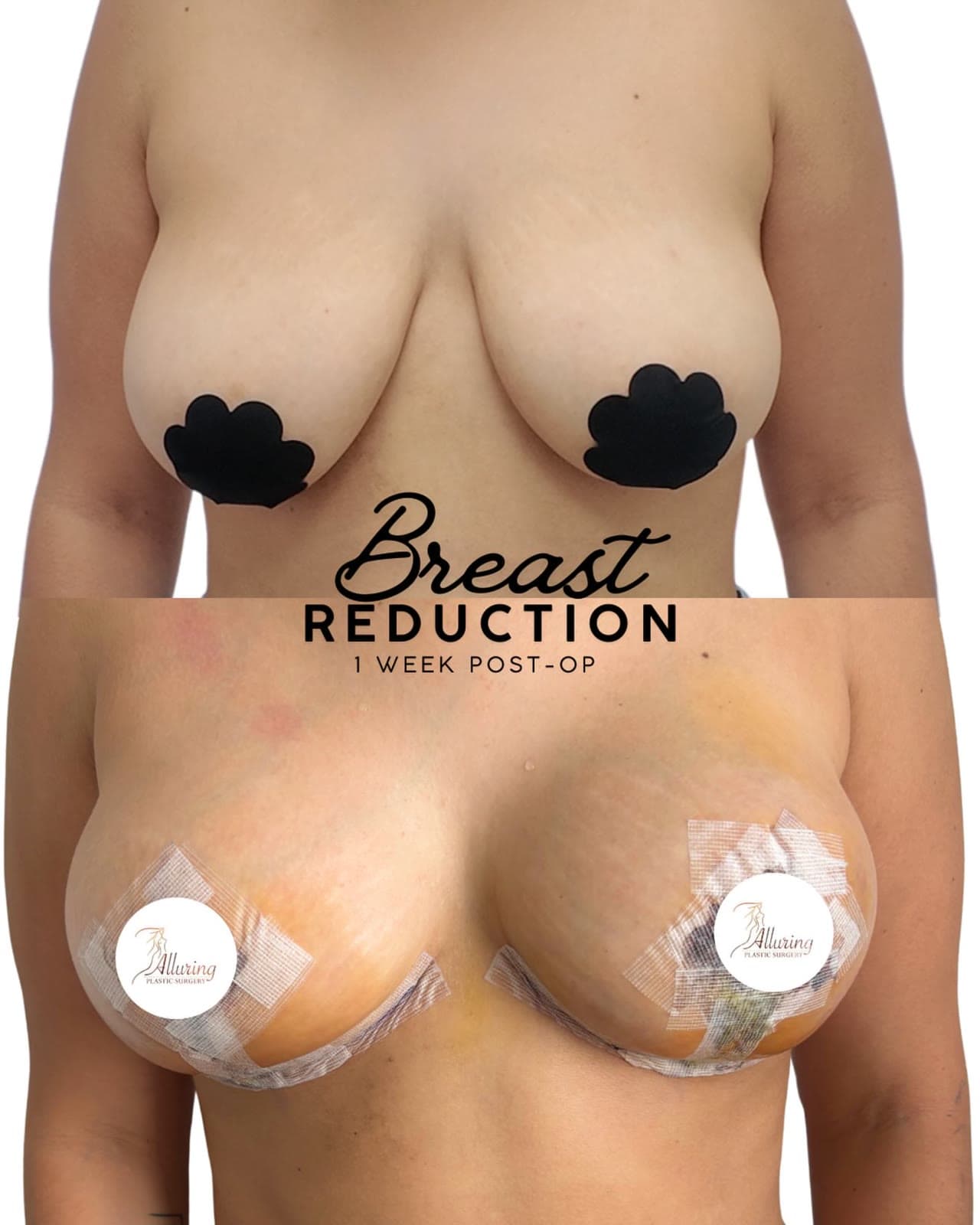
Before and after a breast reduction 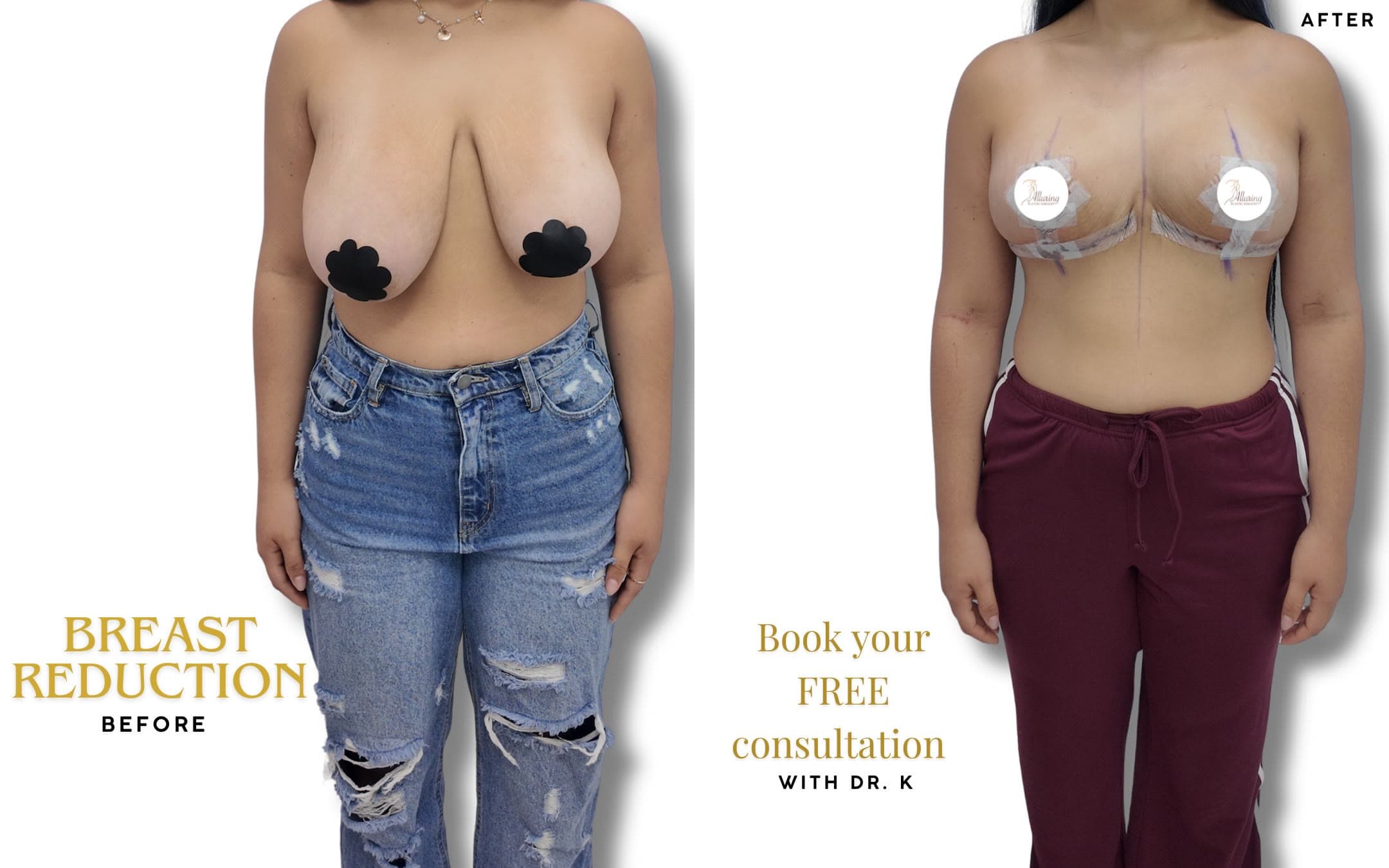
Before and after a breast reduction 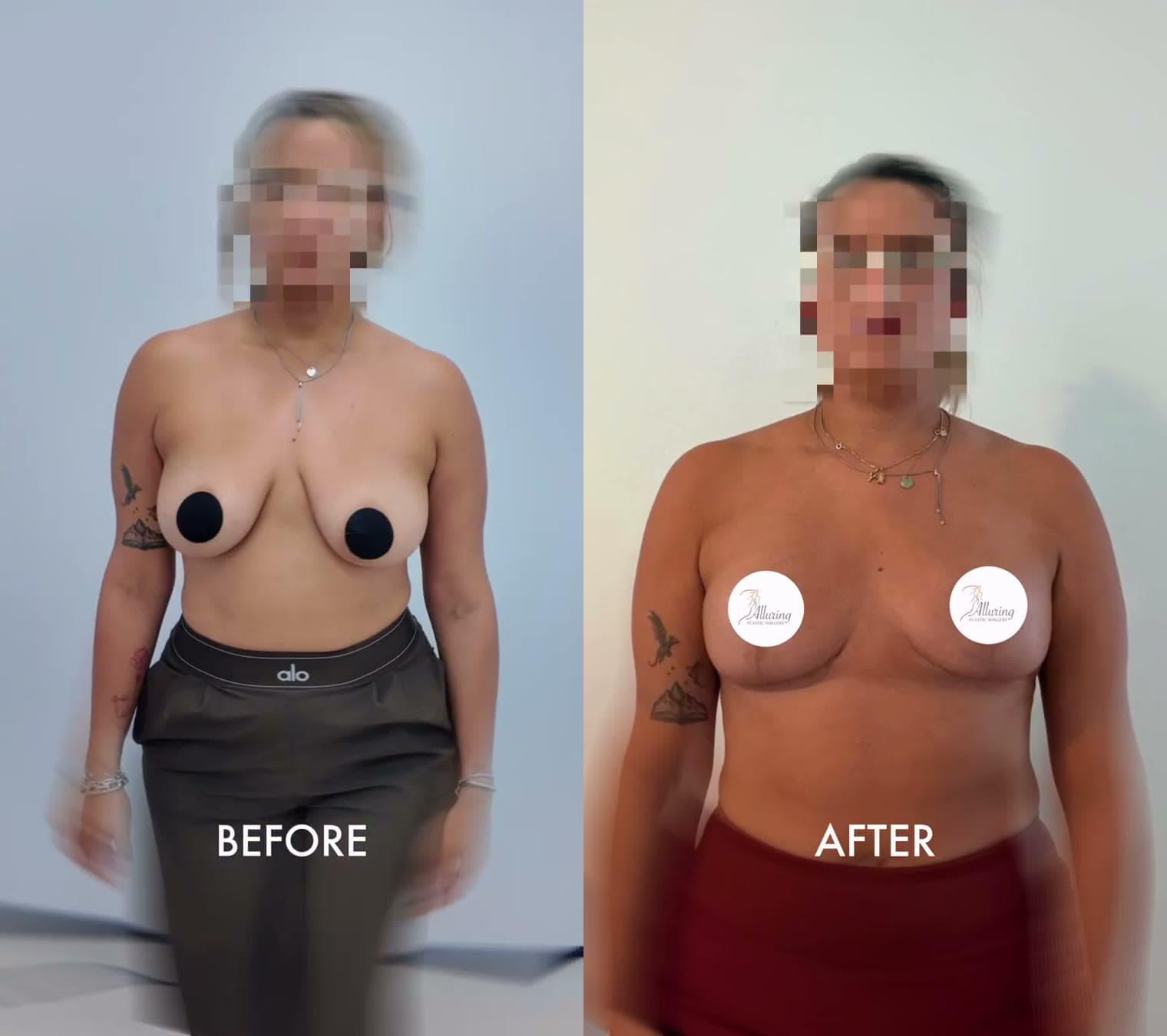
Before and after a breast reduction 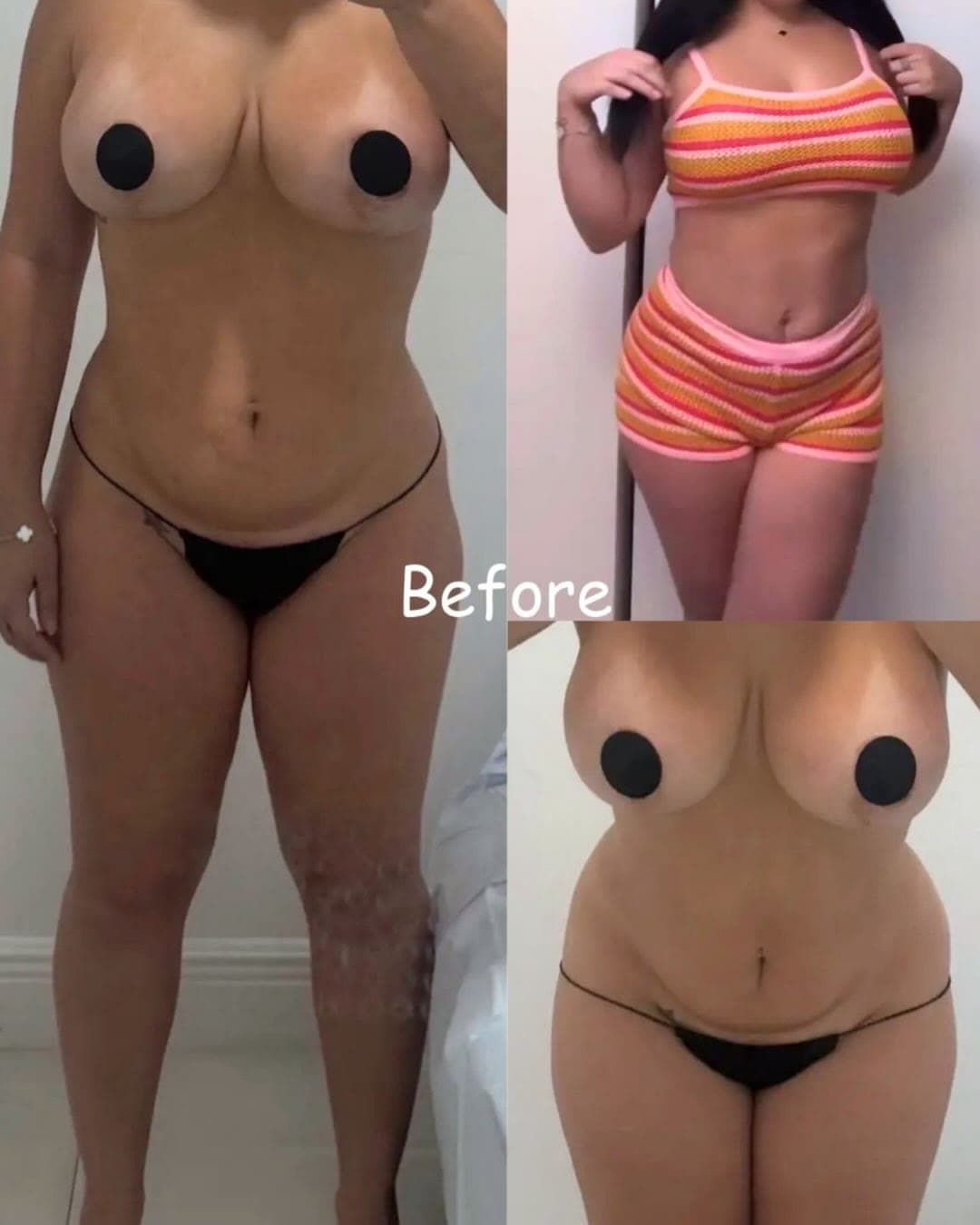
Before and after a breast reduction
Photos in this section are real Alluring patients.
See every breast reduction photo in the galleryMeet your surgeon

Check her credentials yourself
Each link opens her record on the issuing body's own site.
Licensed as a medical doctor by the Florida Department of Health.
Board certified in general surgery by the American Board of Surgery since 2008.
Fellow of the American College of Surgeons (FACS).
Certified in cosmetic surgery by the American Board of Cosmetic Surgery. The specialty recognition identified herein has been received from a private organization not affiliated with or recognized by the Florida Board of Medicine.
Start here
Personal care. Honest price.
Your price, surgery date and follow-up plan, in writing, before you book a flight.