Breast Lift10 min read
Types of Breast Lift: Crescent, Donut, Lollipop, Anchor
By Alluring Editorial TeamPublished
What are the types of breast lift?
There are four main types, named for their incisions: crescent, donut, lollipop and anchor. The Aesthetic Society matches them to minor, mild, moderate and severe sagging. More lift usually means more scar, so the anchor lifts most and scars most. Your surgeon recommends one after looking at your skin, shape and sagging.
- Typical recovery: About 1 week to a desk job
- 4.7 · 87 Google reviews

What are the types of breast lift?
The four main types of breast lift are crescent, donut, lollipop and anchor, each named for the shape of its incision. ASPS lists the last three as the common patterns, and The Aesthetic Society and Cleveland Clinic add the less common crescent. StatPearls describes the same four.
| Type and other names | Incision | Scar | Typical sagging | Source |
|---|---|---|---|---|
| Crescent | Half-moon above the areola | Short, at the top edge of the areola | Minor sagging | The Aesthetic Society; StatPearls |
| Donut (periareolar, circumareolar, Benelli) | Ring around the areola | A ring at the areola's border | Mild sagging | The Aesthetic Society; Cleveland Clinic |
| Lollipop (vertical, keyhole) | Ring, then down to the crease | The ring, plus a line on the lower breast | Moderate sagging | The Aesthetic Society; Cleveland Clinic |
| Anchor (inverted T, Wise pattern) | Lollipop, plus along the crease | The lollipop scar, plus a line in the crease | Severe sagging | The Aesthetic Society; StatPearls |
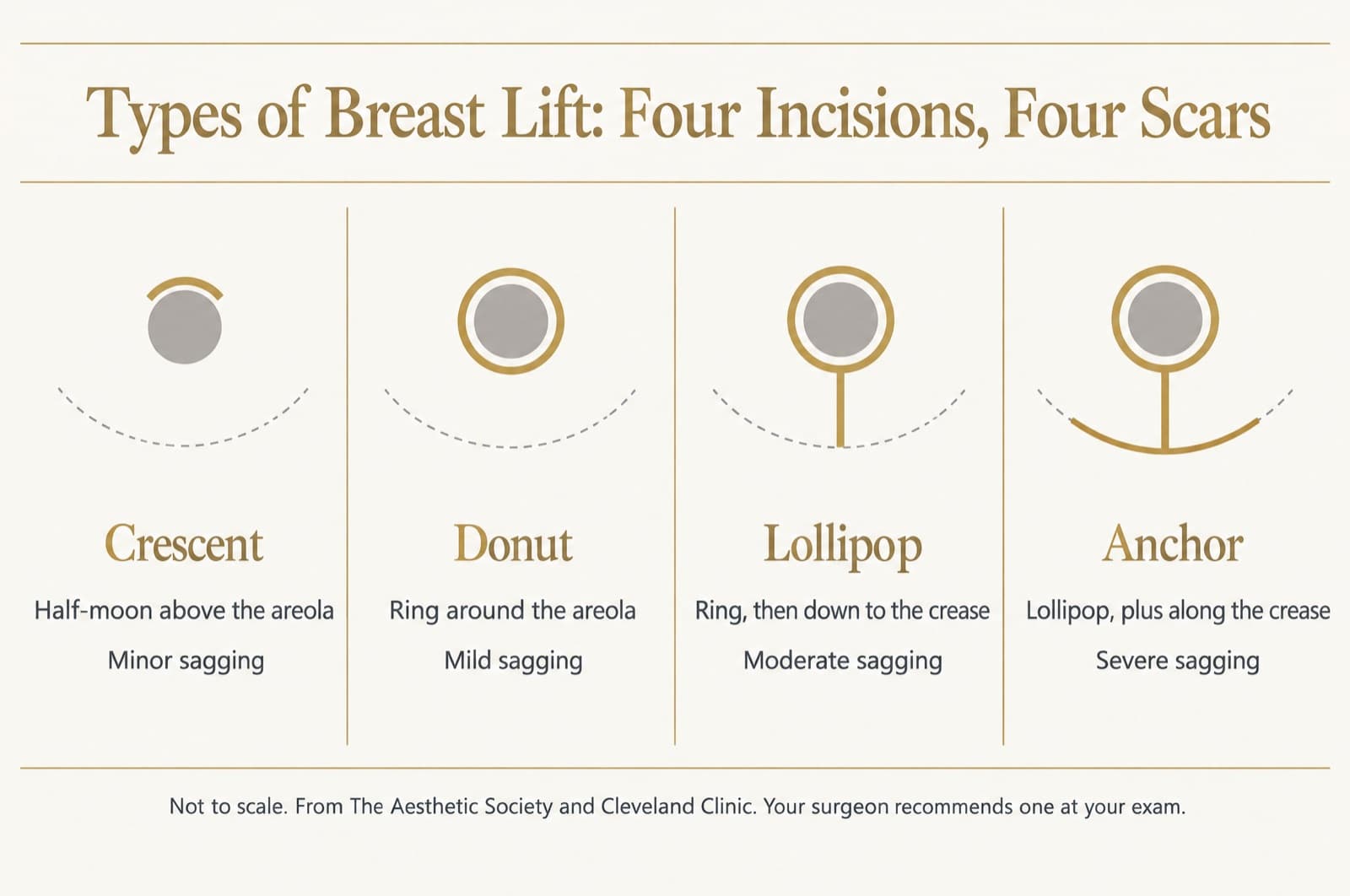
Names aren't standard. "Keyhole" means the lollipop at The Aesthetic Society but the anchor at Cleveland Clinic's surgery center, so if a name is new to you, ask your surgeon to draw the incision. You can also see the four lift patterns, drawn.
What is a crescent breast lift?
A crescent lift removes a small half-moon of skin above the areola, and it lifts only slightly. The Aesthetic Society calls it less common and says you won't get the same degree of lifting as with other incisions. The Aesthetic Society suggests it for minor sagging or with augmentation; Cleveland Clinic says it's usually used only with augmentation in women with little sagging.
StatPearls calls it an option only for very minimal lifts. The scar is short and hidden at the areola's border, and nipple sensation typically doesn't change. The drawback is the shape of the areola, which can become elongated or misshapen because the pull comes from the top alone.
What is a donut (periareolar) breast lift?
A donut lift, also called a periareolar or Benelli lift, removes a ring of skin around the areola and leaves a scar only at the areola's border. The Aesthetic Society suggests it for mild sagging or uneven areolas and says it leaves the least scarring. It can also make a stretched areola smaller.
The limit is how far it can lift. StatPearls recommends it for patients who need less than 2 cm of lift, and a 2014 review says it is useful only for very minor sagging. That review lists the complaints: a distorted areola, a wider scar and a flatter breast. A 1990 paper set limits on how much skin to remove, to prevent poor scarring or over-flattening, so a donut has limits if you have more skin to remove.
What is a lollipop (vertical) breast lift?
A lollipop lift, also called a vertical lift, adds a straight line from the areola down to the breast crease, so the surgeon can lift further and tighten the skin. The Aesthetic Society suggests it for moderate sagging. The 2014 review says it is used for mild to moderate sagging and needs good-quality, elastic skin.
Its appeal is having no scar along the crease. Its costs, per StatPearls, are a more apparent vertical line and a possible increase in the distance from nipple to crease, which can throw off the breast's proportions. The 2014 review adds that the breast can look "bunched-up" and too high at first, then settle over time.
What is an anchor (inverted T) breast lift?
An anchor lift, also called an inverted T or Wise pattern lift, adds a line along the breast crease to the lollipop, and it gives the most lift and the most scar. The Aesthetic Society suggests it for severe sagging or a lift with a reduction. Cleveland Clinic's surgery center calls it the most common incision pattern used, and the 2014 review says it suits severely sagging breasts and poor-quality skin.
StatPearls says the crease scar is usually well hidden, but there is more scarring overall and a chance of healing problems where the lines meet. The 2014 review says the larger scar is worth weighing if you tend to form keloids or raised scars. Our guide to how breast lift scars fade covers what happens next.
How do surgeons choose the type of breast lift?
Surgeons choose by how far the breast has dropped, how much loose skin there is, and how much scar you are willing to accept. ASPS lists breast size and shape, the size and position of the areolas, the degree of sagging, and skin quality, elasticity and extra skin. The Aesthetic Society adds a simple rule: in general, the more incisions, the more the surgeon can change the breast.
| Type | How much lift | The main trade-off |
|---|---|---|
| Crescent | Very slight | A small scar, but the areola can lose its shape |
| Donut | Less than 2 cm | A scar only at the areola, but it can widen and the breast can look flatter |
| Lollipop | More, with tighter skin | No crease scar, but a more apparent vertical line |
| Anchor | The greatest | The most scar, with possible healing problems where the lines meet |
A smaller scar isn't always the kinder choice. ASPS says many women want the smallest scar possible, and warns against demanding an incision that isn't right for you, because it can diminish your result. One way to look at that trade: in a 2021 study of 200 patients of one surgeon, satisfaction rose with both short-scar and inverted T lifts, and the short-scar group scored higher on breast appearance and on comfort unclothed. The abstract doesn't say the groups were matched, and its background is about lifts with implants, so patients with less sagging may have scored higher for that reason. It is one surgeon's patients, so treat it as a question to ask, not a verdict.
Good questions for your exam: Which incision would you use, and can you draw it? What would a smaller scar cost me in lift or shape? You can also look through real breast lift before and after photos.
Breast lift at Alluring
Get your breast lift price, in writing.
Many of our patients fly in from other states. We confirm your surgery and follow-up dates in writing, and tell you how many nights to stay in Miami.
Alluring patient care
Replies by text within 24 hoursHi! Let’s get your free consultation set up.
What are you thinking about doing?
Private. Only our patient coordinators see it, never a sales team.
Which types of breast lift work with implants?
The sources describe implants with several incisions, and they don't fully agree.
- Crescent. The Aesthetic Society suggests it for minor sagging or with augmentation; Cleveland Clinic says it's usually used only with augmentation in women with little sagging.
- Donut. Surgeons in a 2019 paper describe it in 85 patients with mild to moderate sagging and little extra skin on the lower breast.
- Lollipop. The Aesthetic Society suggests it when you don't want implants, yet StatPearls describes placing an implant through the vertical incision.
- Anchor. The sources we read say little about implants with an anchor specifically. StatPearls says severe sagging, a large implant, poor elasticity or a lot of skin removal typically do better with two surgeries.
ASPS says implants can go in at the same time or in a second procedure, depending on the surgeon's experience. Our guides to a breast lift with implants and a breast lift without implants go through who suits each.
Which type of breast lift do I need?
Only an exam can settle it, but you can get a rough idea at home from where your nipple sits against the breast crease. Our guide to the pencil test and ptosis grades shows how to check, and the breast lift page explains who a lift suits. If you are considering a lift at Alluring in Miami, Dr. Victoria Karlinsky, MD, FACS, recommends the type at your exam: book a consultation, or if you live in another state, start with a virtual consultation.
Frequently asked questions
Which type of breast lift is most common?
It depends on who is counting. Cleveland Clinic's surgery center calls the anchor the most common incision pattern used, while Cleveland Clinic's health library calls the donut and lollipop common too. ASPS names those three as the common patterns, and The Aesthetic Society calls the crescent less common. We found no recent count by type, so treat "most common" loosely.
Which breast lift leaves the smallest scar?
The crescent and the donut. A crescent covers only the top of the areola, The Aesthetic Society says the donut leaves the least scarring, and the 2014 review calls the periareolar pattern the shortest possible scar pattern. Both suit small lifts: that review limits nipple movement with a periareolar lift to 2 cm.
What is a Benelli lift?
It is another name for a donut, or periareolar, lift, used by Cleveland Clinic's surgery center. The name comes from a 1990 paper by Benelli describing a "round block" technique, with a permanent stitch around the areola to hold the scar and the aim of keeping the scar around the areola only.
Can I have a smaller scar if I have a lot of sagging?
Usually not. The smaller incisions are described for mild sagging, and a donut is limited to about 2 cm of lift. The Aesthetic Society says some patients may avoid the longer incisions with a modified technique, without saying which. Ask what a smaller scar would change.
Is there a breast lift without scars?
No surgical lift avoids a scar. The Aesthetic Society lists a least common option for minimal sagging and says these options all "require incisions of some sort", with less lift and results that are not as long-lasting. Our guides to non-surgical options and scars cover the details.
How long does each type of breast lift last?
No source we read gives a number of years for any type. Cleveland Clinic says results should last for several years, and ASPS calls them long-lasting, though breasts keep changing with aging and gravity. Pregnancy and weight changes can affect the result, and our guide to timing after pregnancy goes further.
Does the type of lift affect sensation or breastfeeding?
It can. The Aesthetic Society says the nipple and areola stay attached to underlying tissue to preserve sensation and the ability to breastfeed, but Cleveland Clinic lists inability to breastfeed among the risks. StatPearls says crescent lifts typically leave sensation unchanged, donut lifts can change it, and nerve injury, though rare, happens more with the anchor and with implants. Ask your surgeon how your type affects this.
Which type is used with a breast reduction?
Often the anchor. The Aesthetic Society and Cleveland Clinic both tie it to a lift done with a reduction, though the 2014 review says vertical patterns are common for smaller reductions. A lift alone doesn't significantly change size, ASPS says, so if you want smaller breasts, see our comparison of a breast lift and a reduction.
Sources
- ASPS: Breast lift (mastopexy)
- ASPS: Breast lift procedure steps
- ASPS: Breast lift risks and safety
- ASPS: Breast lift results
- The Aesthetic Society: Detailed procedure information
- Cleveland Clinic: Breast Lift (Mastopexy)
- Cleveland Clinic surgery center: Breast Lift
- StatPearls: Mastopexy (Breast Lift)
- PRS Global Open: Mastopexy and reduction mammoplasty patterns (Wong, 2014)
- Plastic and Reconstructive Surgery: Guidelines in concentric mastopexy (Spear, 1990)
- Aesthetic Plastic Surgery: The round block technique (Benelli, 1990)
- Aesthetic Surgery Journal: Periareolar augmentation-mastopexy (Austin, 2019)
- Aesthetic Surgery Journal: Inverted-T and short-scar mammaplasty (Pontes, 2021)
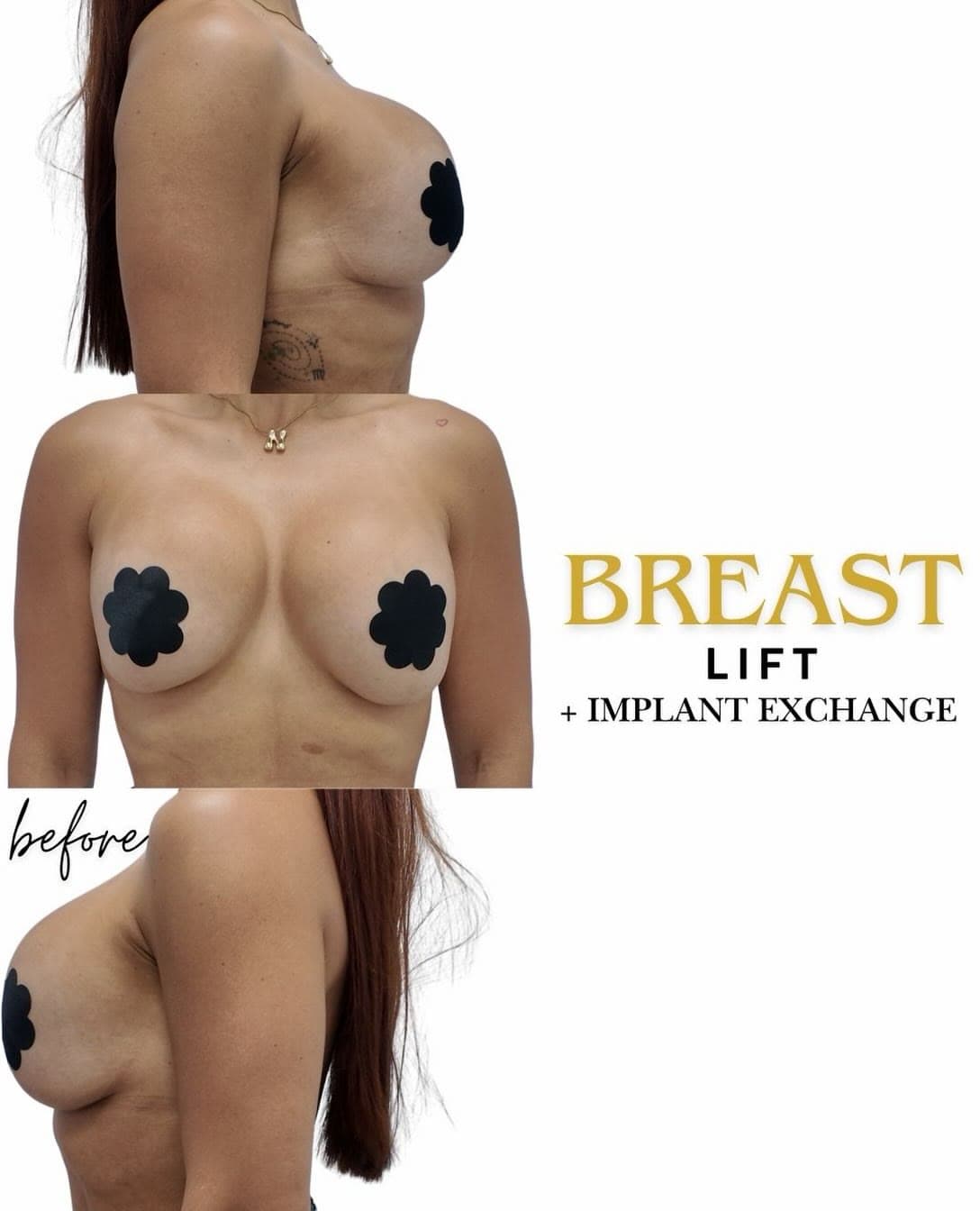
What do real breast lift results look like?
These are photos of real Alluring patients after a breast lift, shared with their consent. Results differ from person to person, and your surgeon talks you through what is realistic for your body at your free consultation, before you decide anything.
Before and after a breast lift 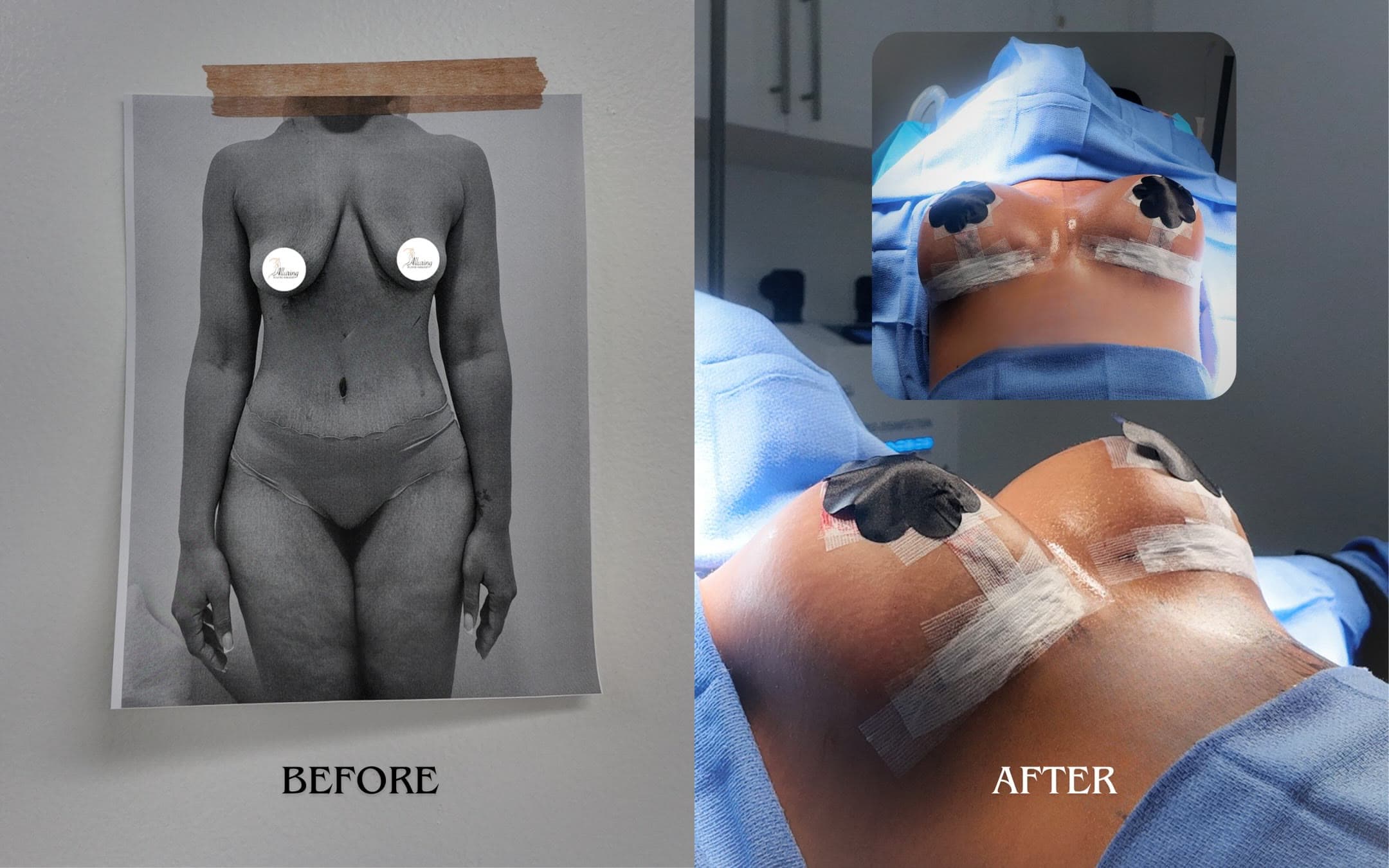
Before and after a breast lift 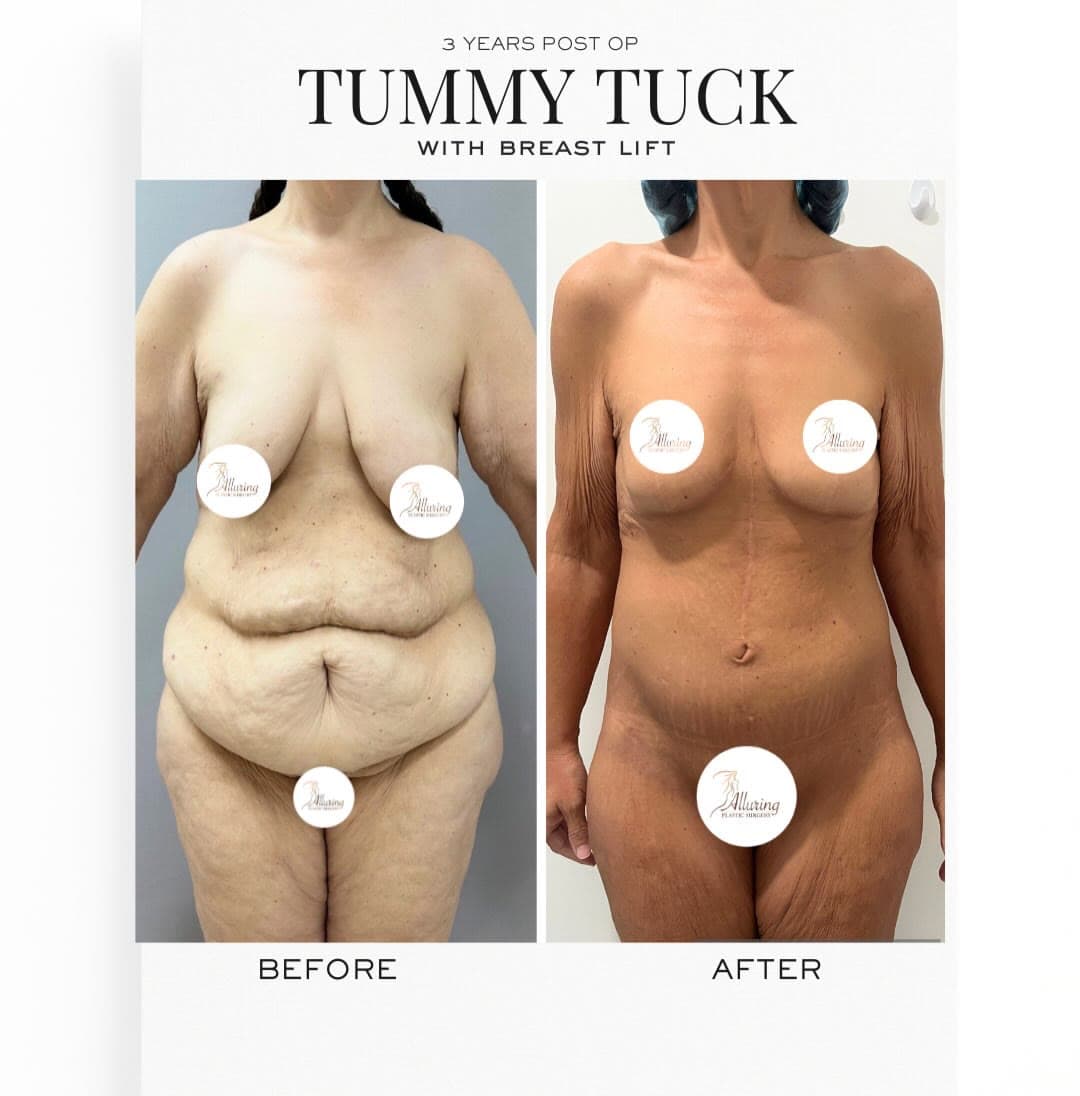
Before and after a breast lift 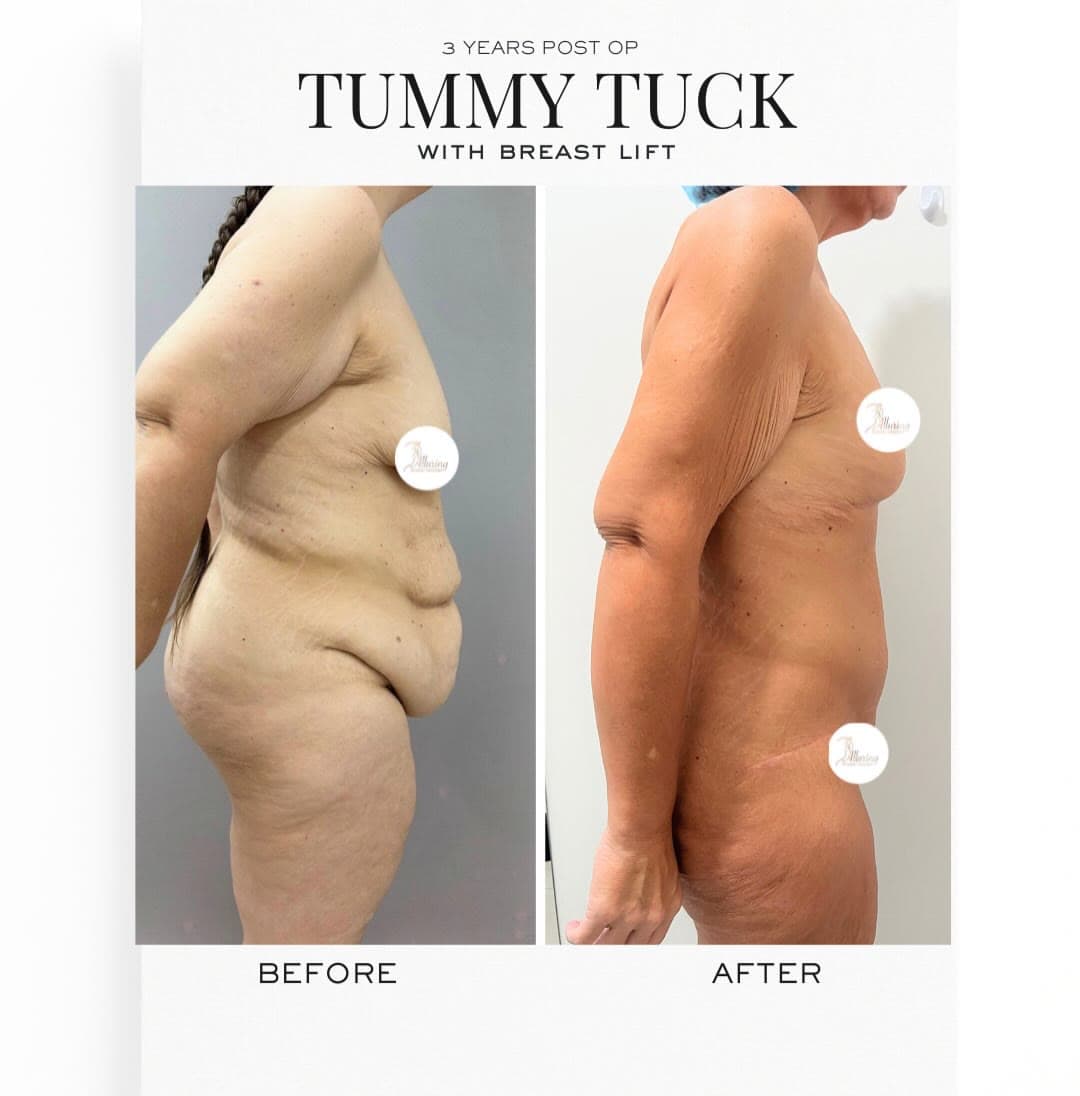
Before and after a breast lift 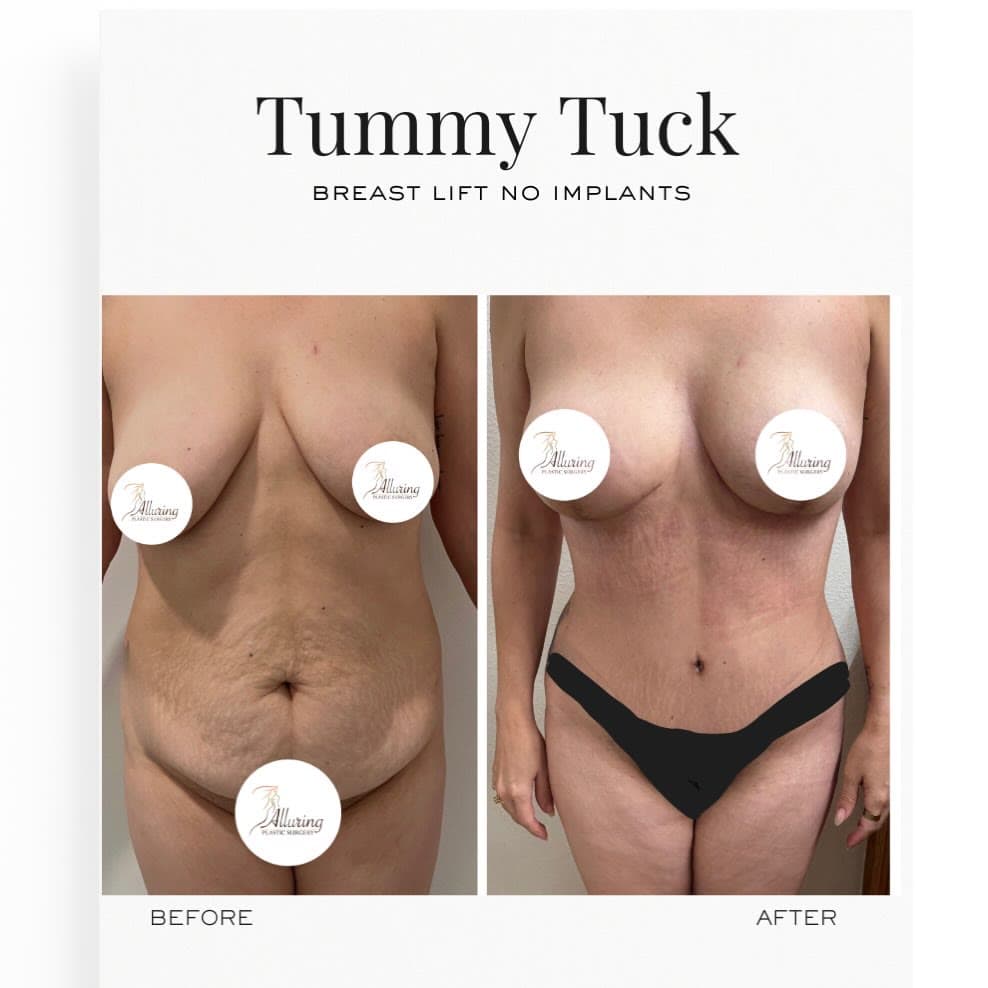
Before and after a breast lift 
Before and after a breast lift
Photos in this section are real Alluring patients.
See every breast lift photo in the galleryMeet your surgeon

Check her credentials yourself
Each link opens her record on the issuing body's own site.
Licensed as a medical doctor by the Florida Department of Health.
Board certified in general surgery by the American Board of Surgery since 2008.
Fellow of the American College of Surgeons (FACS).
Certified in cosmetic surgery by the American Board of Cosmetic Surgery. The specialty recognition identified herein has been received from a private organization not affiliated with or recognized by the Florida Board of Medicine.
Start here
Personal care. Honest price.
Your price, surgery date and follow-up plan, in writing, before you book a flight.