
Blepharoplasty Scars Miami: Proven Tips to Minimize
Learn how to minimize blepharoplasty scars in Miami against intense UV rays and humidity. Discover recovery timeline, nutrition, PRP tips, and post-op care for flawless, invisible results.
Blepharoplasty Scars Miami: Proven Tips to Minimize
Learn how to minimize blepharoplasty scars in Miami against intense UV rays and humidity. Discover recovery timeline, nutrition, PRP tips, and post-op care for flawless, invisible results.
According to the American Society of Plastic Surgeons, most blepharoplasty patients feel presentable to the public in 10-14 days, with scars continuing to fade over months. Busy professionals in Miami often worry that blepharoplasty scars Miami might disrupt their fast-paced lives. The good news? Strategic care leads to subtle, natural healing that fits your schedule.
This guide shares the precise timeline, local challenges like intense UV exposure, and actionable tips for blepharoplasty recovery Miami. Whether you're scheduling surgery around board meetings or client presentations, you'll find practical advice to keep your recovery on track.
You'll discover:
- A week-by-week breakdown of eyelid surgery scars maturation
- Miami-specific strategies to counter sun and humidity
- Daily routines to minimize blepharoplasty scars
- When advanced care enhances results
What Are Blepharoplasty Scars?
Blepharoplasty, or eyelid surgery, removes excess skin and fat to rejuvenate the eyes. The procedure addresses drooping upper lids, under-eye bags, and puffiness that can make you look tired or older than you feel. For busy professionals, these changes often translate to a more alert, refreshed appearance in meetings and video calls.
Incisions hide in natural creases for optimal concealment.
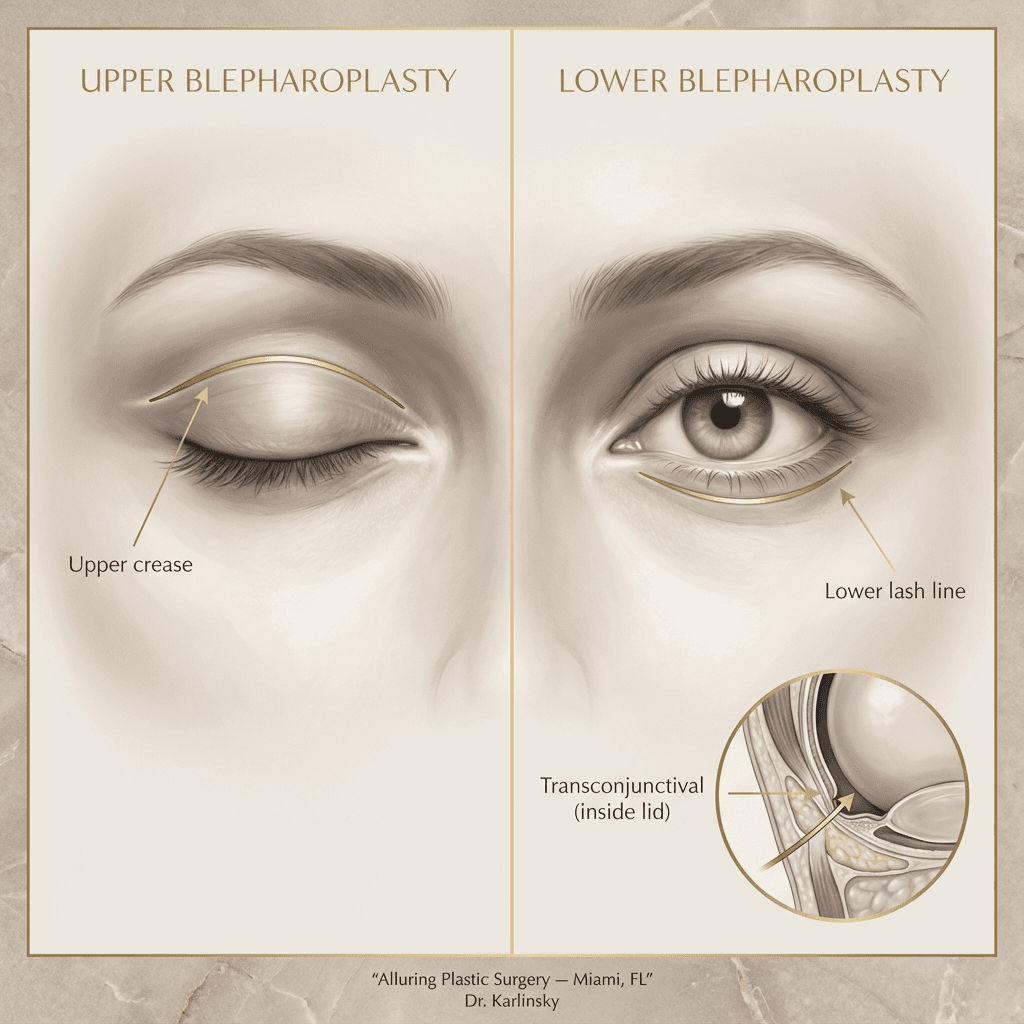
Upper lid incisions follow the natural fold, while lower lid incisions sit just below the lashes or inside the lid. This strategic placement makes eyelid surgery scars highly inconspicuous in facial procedures. The thin eyelid skin heals efficiently when properly cared for.
Scars start red and slightly raised due to initial inflammation. Over the following weeks and months, they gradually flatten and fade. According to Cleveland Clinic's blepharoplasty guide, full healing takes months, with individual factors like age and skin type influencing visibility.
At Alluring Plastic Surgery, Dr. Victoria Karlinsky places incisions precisely within natural creases for optimal fading. Her technique accounts for your unique anatomy and skin characteristics.
How Long Do Blepharoplasty Scars Take to Heal in Miami?
Healing follows predictable phases, though Miami's climate adds specific considerations.
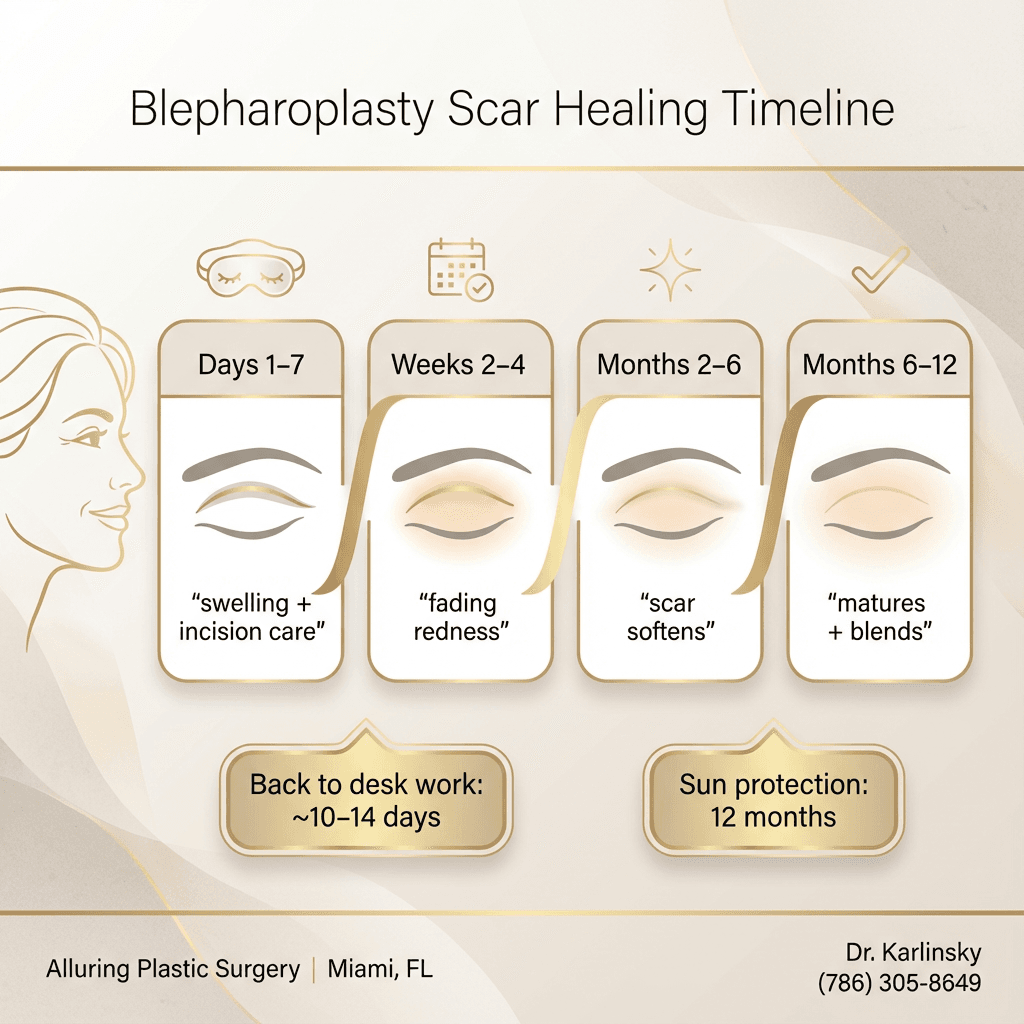
Understanding this timeline helps you plan around work commitments and social events. Most professionals find they can return to desk work within two weeks.
Days 1-7: Initial Recovery
Swelling and redness peak during this first week. Cold compresses help reduce puffiness, and you should keep your head elevated. Sutures typically come out around day five to seven. Most patients notice significant improvement by suture removal. Avoid strenuous activity and screen time when possible.
Weeks 2-4: Visible Improvement
Bruising resolves during this phase, and scars transition from red to pink. You can typically apply makeup after 10-14 days to cover any remaining discoloration. This is when most professionals feel comfortable returning to in-person meetings. The incision lines continue to heal beneath the surface.
Months 2-6: Continued Fading
Scars progressively fade to pale lines during this period. Any residual swelling fully subsides. You'll notice continued improvement in scar appearance month over month. This is also when the final results of your procedure become apparent.
Months 6-12: Mature Results
Mature scars blend with your natural skin tone and texture. For most patients, scars become virtually invisible within the eyelid crease. The thin eyelid skin completes its remodeling process during this time.
Follow your surgeon's protocol for optimal blepharoplasty healing Miami. Patients typically return to desk work in 10-14 days, making this procedure ideal for professionals with demanding schedules.
How Does Miami's Climate Affect Blepharoplasty Scars?
Miami's year-round sun creates unique challenges for blepharoplasty scars Miami recovery.
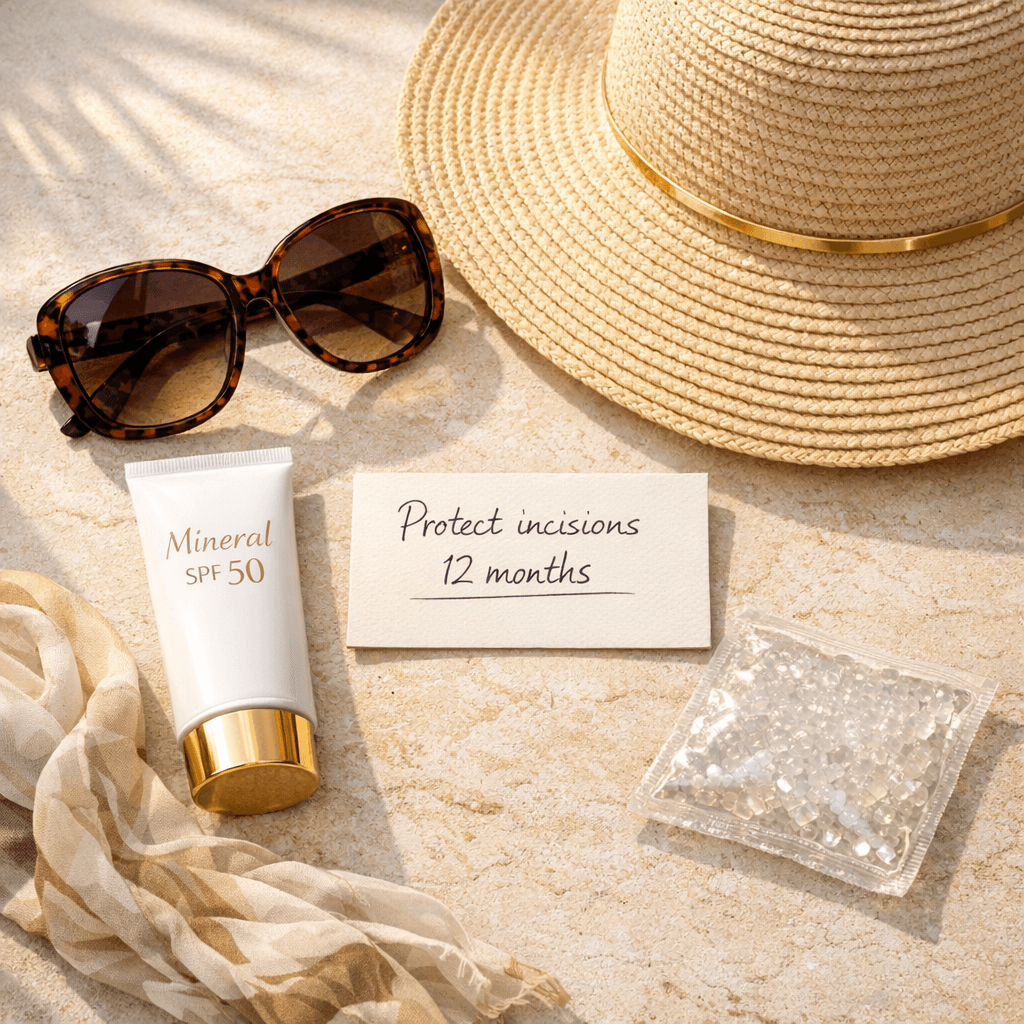
Understanding these factors helps you protect your investment and achieve the best possible results.
UV Exposure Concerns
UV rays pose the biggest threat to healing scars. Sun exposure triggers hyperpigmentation, which can darken fresh incisions and slow the fading process. Miami's intense sunshine means you need extra vigilance compared to patients in cloudier climates. Even brief outdoor exposure during peak hours can affect healing.
Humidity Factors
High humidity may prolong moisture around the eyes, potentially causing irritation at incision sites. While moisture generally supports healing, excessive humidity can create challenges. Keep the area clean and dry, and follow your surgeon's instructions for wound care.
Skin Tone Considerations
Miami's diverse population includes many patients with darker skin tones. Research published in Aesthetic Plastic Surgery confirms that darker skin tones face higher risks of post-inflammatory hyperpigmentation. Dr. Karlinsky tailors her approach for each patient's skin type and provides customized aftercare recommendations.
Protective Strategies
Protect your scars for the first year with these Miami-specific measures:
- Apply SPF 30+ broad-spectrum sunscreen daily around the eyes
- Wear wide-brimmed hats when outdoors
- Avoid peak sun hours between 10 a.m. and 4 p.m. when possible
- Use UV-blocking sunglasses that cover the entire eye area
This local focus ensures blepharoplasty scars Miami patients achieve optimal results despite the challenging climate.
Proven Tips to Minimize Blepharoplasty Scars
Consistent care transforms your healing experience.
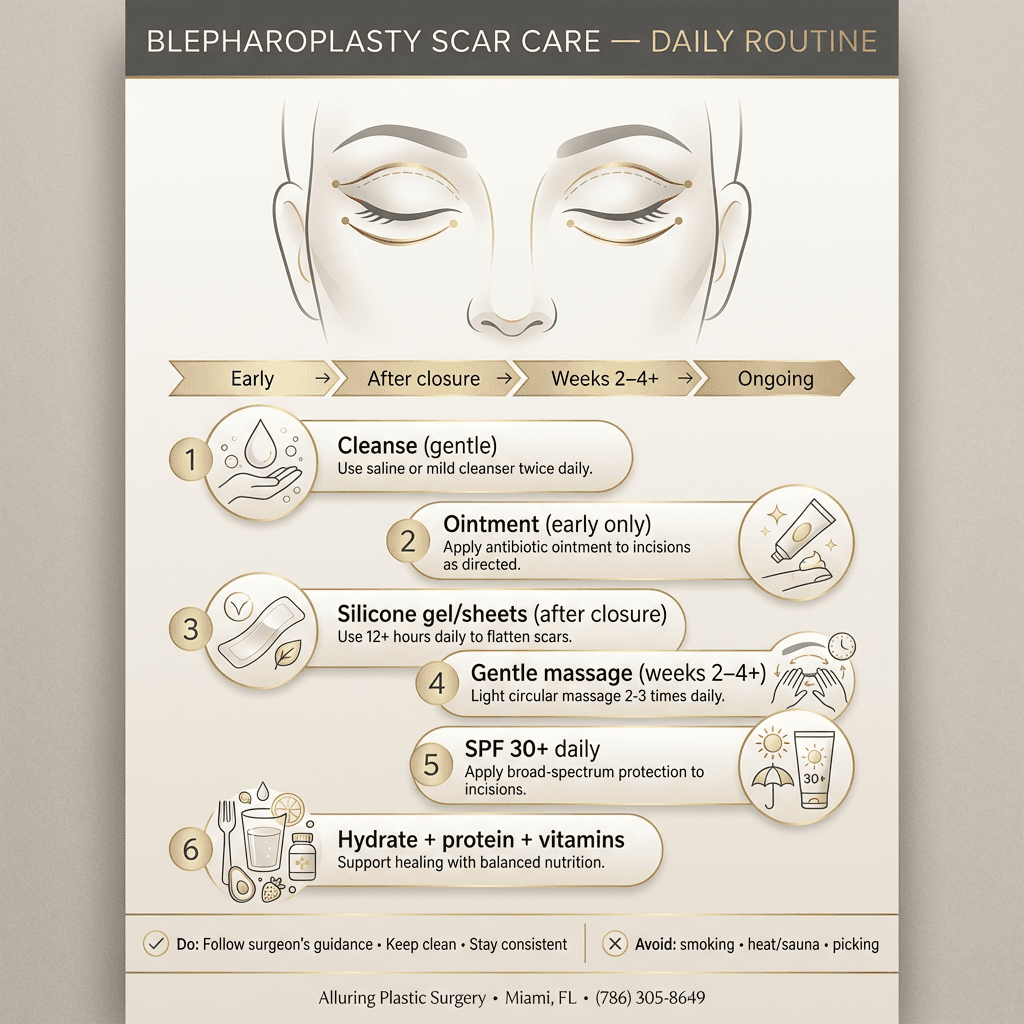
Start with gentle cleansing and prescribed ointments to prevent crusting and support the healing process. These daily habits make a real difference in your final results.
Silicone Products
Silicone sheets or gels hydrate and flatten scars once the incisions have closed. Studies in the Journal of Cutaneous and Aesthetic Surgery confirm silicone's effectiveness for scar management. Apply as directed by your surgeon, typically starting a few weeks post-procedure.
Gentle Massage
Begin gentle massage around weeks two to four, once your surgeon approves. Use soft circular motions to improve blood flow and break up scar tissue. This technique helps scars flatten and fade more quickly. Be patient and consistent with your massage routine.
Sun Protection
Daily SPF eye cream is essential for minimize blepharoplasty scars results. Reapply often, especially after swimming or sweating. Consider mineral-based formulas that provide physical UV blocking. This single habit has the biggest impact on long-term scar appearance.
Nutrition and Hydration
Stay well-hydrated and eat a balanced diet rich in vitamins and minerals that support healing. Foods containing vitamin C and zinc may help support collagen production. Avoid alcohol and excessive sodium, which can increase swelling.
Lifestyle Modifications
Avoid heat exposure and smoking during recovery. Both increase inflammation and slow healing. Elevate your head while sleeping to reduce swelling. These adjustments support faster, cleaner healing.
Link these practices to your blepharoplasty preparation tips for comprehensive care before and after surgery.
Advanced Options for Scar Optimization
If scars linger beyond expected timelines, professional treatments can help after initial healing completes.
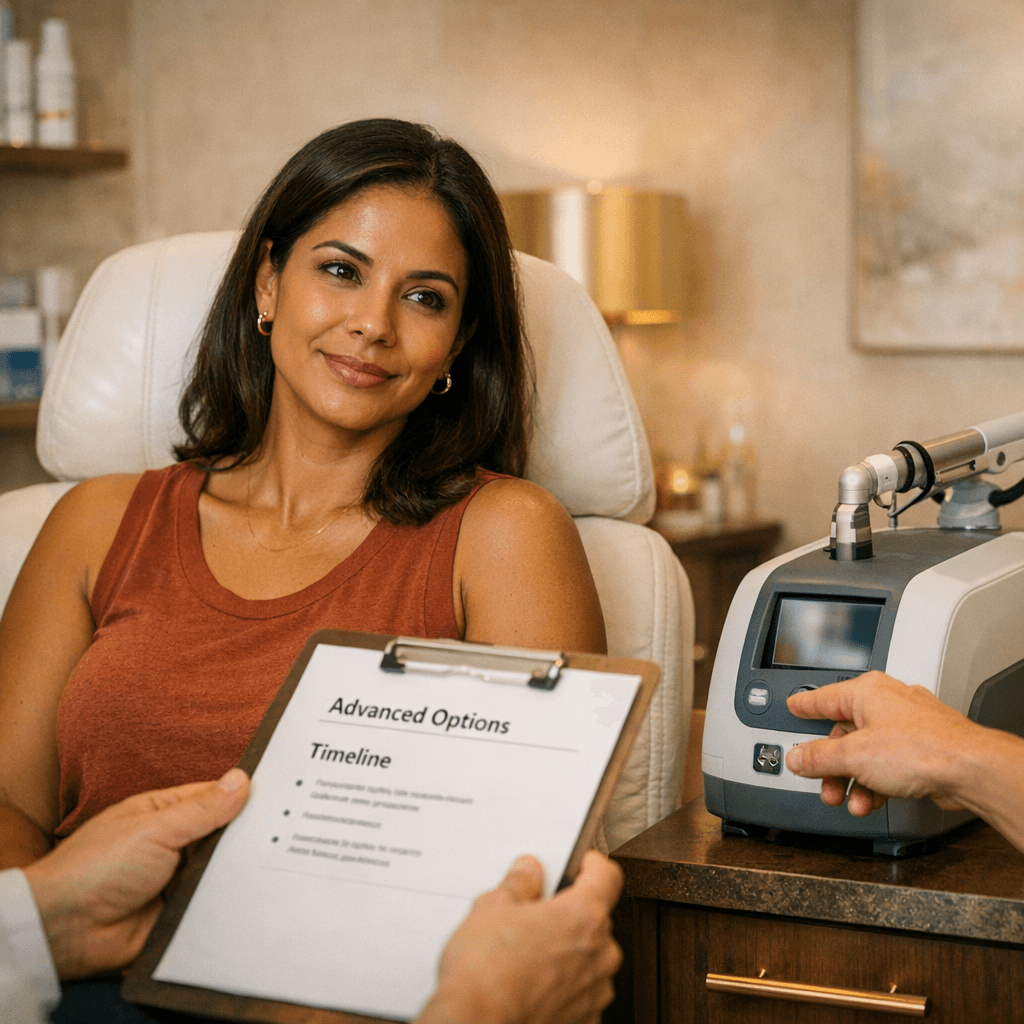
These options address specific concerns that home care alone cannot resolve.
Laser Resurfacing
Laser treatments smooth texture and even skin tone around healed incisions. Your surgeon may recommend starting laser therapy after the initial healing phase, typically around three months or later. Timing varies based on individual healing and scar characteristics.
Steroid Injections
For raised or thickened scars, steroid injections can reduce excess tissue. These treatments flatten prominent scars and reduce redness. Multiple sessions may be needed for optimal results.
Combination Approaches
Dr. Karlinsky discusses all options during follow-up appointments and recommends treatments based on your specific healing pattern. Combine these insights with our Miami blepharoplasty candidacy checklist for comprehensive planning.
Why Choose Alluring Plastic Surgery for Blepharoplasty Recovery Miami
Dr. Victoria Karlinsky, double board-certified, leads our AAAASF-accredited facility with over 15 years of experience. Our Miami protocol integrates UV defense strategies and scheduled follow-ups for smooth blepharoplasty recovery Miami. See common blepharoplasty myths for additional reassurance about the procedure.
Explore our Blepharoplasty (Eyelid Surgery) Miami page for detailed procedure information.
Financing Your Procedure
Pricing for blepharoplasty reflects the specific procedure scope, including upper lids, lower lids, or combination approaches. At Alluring Plastic Surgery, we offer flexible financing through Cherry, CareCredit, and United Credit. Visit our financing page for details.
Frequently Asked Questions
How can I speed up the healing of blepharoplasty scars?
Gentle massage after week two, silicone products, and proper nutrition all support faster healing. Avoid sun exposure and follow your surgeon's care instructions closely. Consult Dr. Karlinsky for personalized timeline guidance.
What are the best practices for caring for blepharoplasty scars?
Clean the area gently, moisturize as directed, use SPF 30+ daily, and keep your head elevated while sleeping. Avoid rubbing the eyes during early healing. Most patients see significant fading by three to six months with consistent care.
Are there non-surgical treatments to improve blepharoplasty scars?
Laser therapy and steroid injections can refine scars after the initial healing period, typically starting around three months. Silicone gels work well for daily home care. Discuss options with our team for safe integration into your recovery plan.
How noticeable are blepharoplasty scars after a year?
Mature scars blend into the natural eyelid creases, often becoming invisible. The thin eyelid skin heals efficiently with proper care. Consistent UV protection throughout the first year minimizes long-term visibility.
Can makeup conceal blepharoplasty scars during healing?
Yes, you can typically apply makeup after 10-14 days once incisions have closed. Use mineral-based, non-irritating formulas to avoid disrupting the healing process. Most patients resume their normal routines quickly.
How does sun exposure affect blepharoplasty scars in Miami?
UV exposure causes darkening and can lead to thicker, more visible scars. Apply SPF religiously for 12 months after surgery. Miami's intense sun requires extra vigilance, but our tailored protocols help you achieve excellent results.
Blepharoplasty scars Miami patients achieve excellent outcomes with diligent care and proper sun protection. While Miami's climate demands extra vigilance, the timeline shows quick social return—typically 10-14 days for most professionals. Trust the expertise of Dr. Karlinsky at our AAAASF-accredited center, where patients consistently rate their experience 4.9 stars.
Ready for your transformation? Book a free consultation in Miami or call (786) 305-8649. Luxury results, designed for your lifestyle.
Start Your Journey Today
Leave your name and phone number. We'll call you within 24 hours to discuss your goals.
Or call us directly
+1 (786) 305-8649Related Articles
Continue reading with these related posts
When Can I Sleep on My Side After Breast Reduction?
After undergoing Breast Reduction surgery, many patients are unsure about when it’s safe to return to their preferred...
BBL Smell Explained: Why Do BBL Stink and How to Prevent It
Many patients wonder why BBL surgery produce unpleasant odors during recovery. This common concern stems from...
How Long to Recover Tummy Tuck?
Discover your tummy tuck recovery timeline—from initial healing to final results. Get expert tips and guidance from Miami's board-certified surgeons.