
How to Sleep After Liposuction: Positions and Your Garment
Many people sleep most comfortably on their back, slightly raised, in their compression garment; after Lipo 360 your surgeon may prefer another position. Here is whether you can sleep without the garment, when side and stomach sleeping come back, and which night-time signs mean calling your surgeon.
Last updated:
How should you sleep after liposuction?
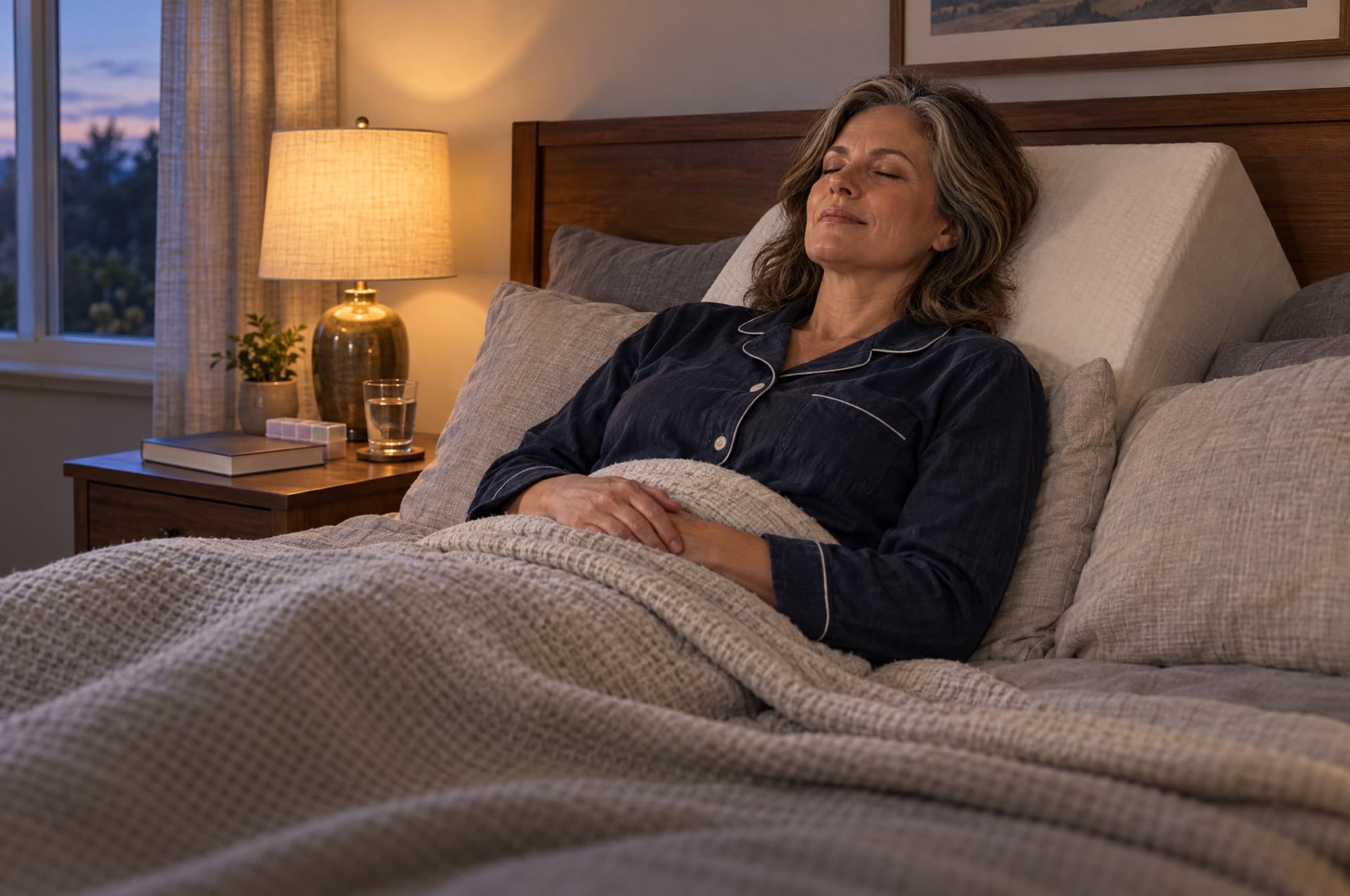
Wear your compression garment and sleep in the position your surgeon recommends, with pillows so you can't roll onto treated areas. Many people sleep on their back, slightly raised; after Lipo 360, which often treats the back, your surgeon may prefer you well propped or on your side. The Aesthetic Society advises resting and elevating the treated area at first.
How should you sleep after liposuction?
Sleep in the position your surgeon recommends, wearing your compression garment, with pillows placed so you can't roll onto a treated area. For many people that is on their back, propped up a little; if your back was treated, as it often is in Lipo 360, your surgeon may prefer you well propped with pillows or on your side. Keep weight off the treated areas for as long as your surgeon asks. The first nights are the hardest; sleep usually gets easier as the swelling and soreness ease.
The Aesthetic Society advises that for the first few days after surgery you "rest and elevate the affected body part if possible." That is the whole idea behind the position: less pressure on treated areas, and less fluid pooling in them.
Can you sleep without your compression garment after lipo?
Not in the early weeks, unless your surgeon tells you that you can. The Aesthetic Society says you wear a compression garment over the treated areas for 4 to 6 weeks. It doesn't say whether that includes nights, so that part comes from your surgeon's instructions.
In an ASPS article on compression after surgery, one surgeon writes that the garment "should be worn day and night (with the exception of showering or bathing) for anywhere between one to three weeks," and that after your surgeon approves it, "you can expect to wear the garment at night for several weeks." Surgeons differ on when part-time wear begins and which part of the day it covers, so ask yours which applies to you, and when.
Why nights matter: you lie still for hours, and the garment is what keeps pressure on the treated areas while you do. A surgeon quoted in another ASPS article on liposuction recovery puts it this way: "Without the compression, your tissues will take their time contracting and it will take longer to see a visible result."
The research on garments is thinner than the confidence around them. A 2023 review in Plastic and Reconstructive Surgery Global Open found no randomized or comparative studies of compression after body contouring. That is a reason to follow your surgeon's plan, not a reason to drop the garment.
If the garment makes sleep impossible:
- Check the fit. The ASPS article says a garment should be snug "but should not be so tight that it is uncomfortable or restricts breathing." If yours is, call your surgeon. You may need a different size.
- Smooth out folds and rolled edges before you lie down. A crease you lie on for hours is what leaves deep marks.
- Ask about a second garment so you can change into a dry, clean one at night instead of going without.
- If you slept without it by accident, put it back on in the morning and mention it at your next check. One night is not a disaster; weeks without it are what your surgeon wants to avoid.
If you also wear foam or boards at night, our guide to lipo foam and boards explains how to keep them flat while you sleep.
How long do I have to sleep on my back after lipo?
Until your surgeon clears you to change position. No society or study sets a number of days, and it depends on which areas were treated. An ASPS article on sleep after surgery notes that "most plastic surgery procedures require a modified sleeping position for at least the first few days of your recovery."
The same article suggests practicing your sleep position before surgery, so it feels less strange on the first night.
A general starting point, not a rule: your surgeon decides which position suits the areas you had treated.
| Areas treated | Often easiest | Keep weight off until cleared |
|---|---|---|
| Abdomen and flanks | Back, upper body slightly raised | Stomach, then sides |
| Back and bra line | Side, with a pillow behind you | Lying flat on your back |
| Thighs | Back, with a pillow between the knees | Side, on the treated leg |
| Arms | Back, arms resting on pillows | Side, on the treated arm |
| Lipo 360 | Back, well propped with pillows, or side-lying, as your surgeon directs | Stomach |
When can I sleep on my side after liposuction?
When your surgeon says so, which is often sooner if your sides weren't treated and later if they were. There is no published day for it. Side sleeping presses on the flanks, the outer thighs and the arm underneath, so it depends on where your fat was removed.
When you are cleared, start with the less sore side, put a pillow between your knees and another along your back, and change sides during the night rather than lying on one side for hours. If it hurts, go back to your back and try again in a few nights.
When can I sleep on my stomach after liposuction?
Usually last, and only once your surgeon clears it. After stomach liposuction, lying face down puts your full weight on the treated abdomen and can push foam and garment folds into swollen skin. Again, no source sets a day, so this is your surgeon's call at a follow-up visit.
How to sleep after stomach liposuction
Sleep on your back with your upper body raised on a wedge pillow or in a recliner, which takes pressure off the abdomen and makes getting up easier. After body contouring that tightens the abdomen, ASPS says you may be told to "sleep with pillows elevating your knees." A pillow under your knees can also ease the pull on the belly after stomach liposuction; ask whether your surgeon wants it.
How to sleep after Lipo 360
After Lipo 360, fat is removed from all the way around your midsection, often including the back, so no position keeps pressure off every treated area. Your surgeon will tell you which to use: often on your back, well propped with pillows or a wedge so your weight isn't pressing flat on the treated back, or on your side, changing sides during the night. Either way, tuck pillows along your sides so you can't roll, and put a waterproof pad under you.
Things that help after Lipo 360 in particular:
- Protect the bed. The Aesthetic Society notes that liposuction incisions "may be leaky or drain fluids for several days." Incisions on your back will leak onto the sheets, so use absorbent pads or an old towel for the first nights.
- Recline rather than lie flat. If you sleep on your back, a recliner or a wedge keeps you from lying flat on the treated back and makes getting up easier. The ASPS sleep article suggests a recliner for people who must keep their head raised: "This helps ensure you stay on your back and your head remains elevated."
- Use pillows as walls. The ASPS article suggests "additional pillows that will help prevent you from rolling over."
- Sleeping with drains. If you have drains, secure the bulbs to your garment or a lanyard before you lie down so they can't pull, and keep the tubing out from under you. Your surgeon or nurse will show you how.
Sleeping after a BBL with Lipo 360
If you had a BBL with Lipo 360, the rules change: protecting the transferred fat comes first, so you likely won't be sleeping on your back. The Aesthetic Society's butt lift aftercare page, in its general advice for every type of butt lift, says your surgeon "may instruct you to lie on your stomach or side while sleeping." That means lying on areas that were suctioned, so the foam, garment and pillow setup matters even more. Our guide to how to sleep after a BBL covers the combined procedure.
Set up your bed before surgery
Sleep is easier when everything is ready before you get home. The ASPS sleep article also suggests sleeping alone at first: "it may be a good idea to sleep without your significant other, child or pets."
- Wedge pillow or recliner. Raise your upper body, and have a few firm pillows for your sides and knees.
- Waterproof or absorbent pads on the mattress for the first nights.
- Within arm's reach: water, your medicines and their schedule, your phone and charger, lip balm, and a spare garment.
- A clear, lit path to the bathroom. You will get up at night, often while groggy.
- A cool, dark, quiet room. The ASPS article notes that "if your room is too hot, it may be difficult to sleep," and a snug garment adds warmth.
- Pain medicine on schedule. The ASPS article advises taking "any pain medication at the prescribed intervals," because pain disrupts sleep. Set an alarm for night doses if your surgeon wants them.
- A short walk before bed. MedlinePlus advises walking as soon as possible after surgery to help prevent blood clots in the legs, and a few minutes on your feet before bed also helps you settle.
To get out of bed, roll onto your side with your knees bent, drop your legs over the edge and push up with your arms. It keeps strain off your abdomen and back.
When pain or swelling at night means calling your surgeon
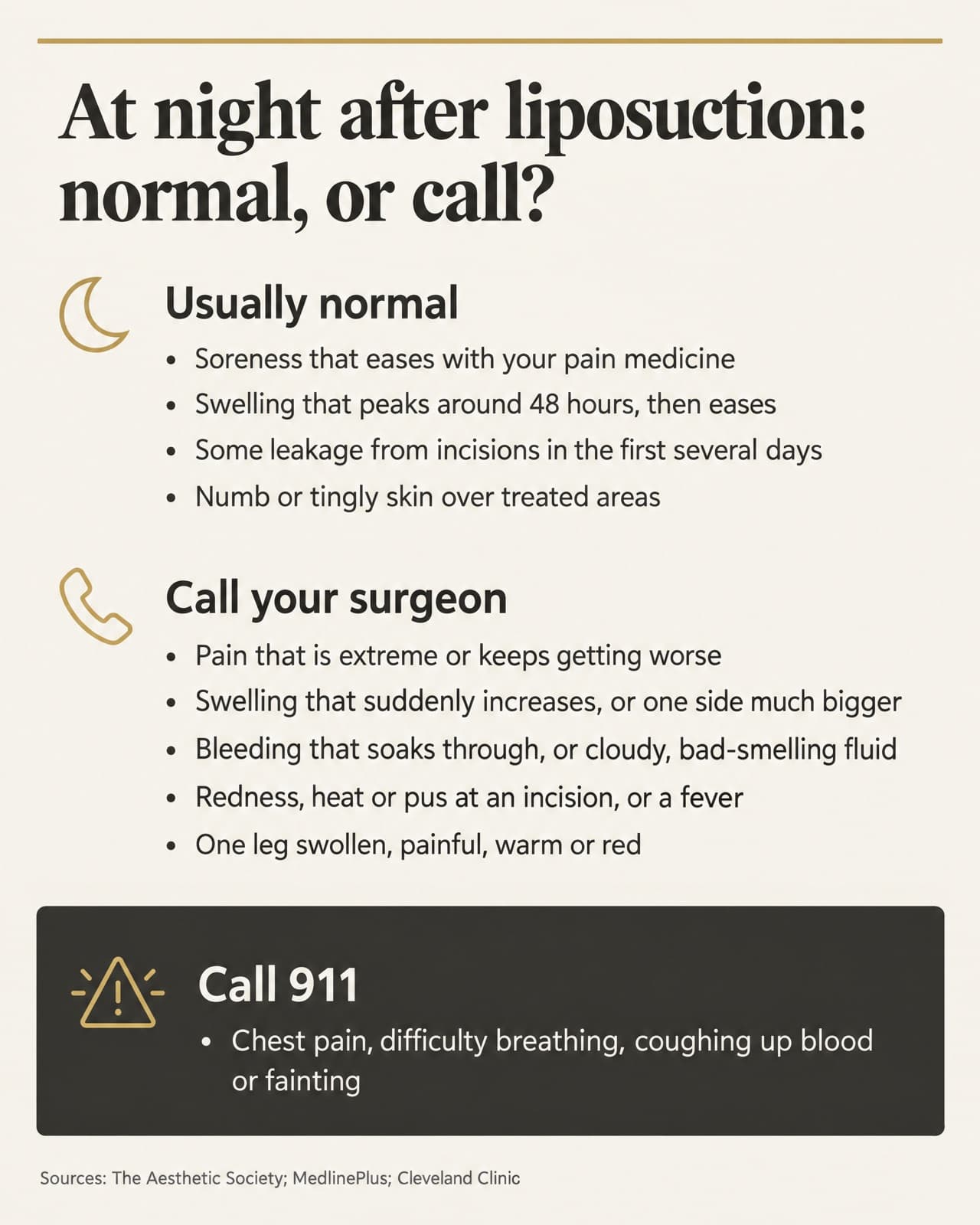
Some discomfort at night is expected, especially in the first few days. Swelling peaks around 48 hours after surgery, according to The Aesthetic Society, so the first couple of nights can be the toughest. Here is how to tell ordinary soreness from something that needs a call.
| Usually normal | Call your surgeon |
|---|---|
| Soreness and tightness that eases with your pain medicine | Pain that is extreme, keeps getting worse, or isn't helped by your medicine |
| Swelling that peaks around 48 hours, then slowly eases | Swelling that suddenly increases, or one side much bigger than the other |
| Some leakage from incisions in the first several days | Bleeding that soaks through, or fluid that turns cloudy or smells bad |
| Numb or tingly skin over treated areas | Redness, heat or pus at an incision, or a fever |
| Feeling hot in a snug garment | One leg swollen, painful, warm or red |
Call 911 or go to the emergency room for chest pain, difficulty breathing, coughing up blood or fainting. MedlinePlus lists those as emergency signs for someone with a blood clot in the leg, and it lists swelling, pain or tenderness, warmth and redness in a leg as signs of a clot there. Cleveland Clinic also advises contacting your provider for long-lasting or severe pain, swelling, fluid or blood leaking from the surgical site, a fever, or shortness of breath or chest pain. The Aesthetic Society says simply: "If the pain is extreme or long-lasting, contact your surgeon."
Don't wait until morning to report a sign from the "Call your surgeon" column because you don't want to bother anyone. Your surgeon would rather hear from you at night than find a problem late.
Planning ahead
If you are still deciding on surgery, the liposuction recovery section of our procedure page shows what the first weeks and months look like, and you can ask Dr. Victoria Karlinsky, MD, FACS about your aftercare plan, including sleep and garments, when you consider liposuction in Miami. If you are recovering now, our liposuction swelling timeline explains what to expect week by week.
Frequently asked questions
Can I sleep in a recliner after liposuction?
Yes, and many people find it easier than a bed for the first nights. The ASPS article on sleep after surgery suggests a recliner when you need to stay on your back with your head raised, because it keeps you in that position. Keep your legs moving now and then, walk when you get up, and make sure your garment isn't bunching at the hips.
Is swelling worse at night after lipo?
It can feel that way. Swelling often builds after a day of moving around, and you notice it when you finally lie down. Resting with the treated area raised, as The Aesthetic Society advises for the first few days, can help. If swelling is suddenly much worse, on one side only, or comes with redness, heat or fever, call your surgeon.
Can I take a sleep aid after liposuction?
Ask your surgeon before you take anything, including over-the-counter sleep aids, antihistamines or supplements. Some can add to the drowsiness from prescription pain medicine, and your surgeon knows what you were given. Often, taking your prescribed pain medicine on schedule, a comfortable setup and a short walk before bed do more for sleep than a pill.
Can I sleep with my partner after lipo?
It may be better not to for the first nights. The ASPS article on sleep after surgery suggests sleeping without your partner, children or pets at first, so no one rolls into a sore area or wakes you. A recliner or a separate bed for a few nights is a simple fix.
How do I sleep after chin lipo?
Keep your head raised on pillows or a wedge, as The Aesthetic Society's advice to rest and elevate the treated area suggests, and wear your chin strap as your surgeon directs. Sleeping on your back keeps pressure off the jawline. Our guide to chin lipo recovery covers the chin strap and the first weeks.
Why can't I sleep after liposuction?
A tight garment and an unfamiliar position play a part, and the ASPS article on sleep notes that "problems sleeping can be caused by the effects of anesthesia, pain or discomfort and the change to your normal routine." It usually improves as soreness fades. Taking pain medicine on schedule, practicing your position and keeping the room cool help. If pain keeps you awake despite your medicine, call your surgeon.
Sources
- The Aesthetic Society: Liposuction aftercare and recovery
- American Society of Plastic Surgeons: The importance of compression after plastic surgery (Daniel Y. Maman, MD, 2023)
- American Society of Plastic Surgeons: Eight ways to make liposuction recovery a breeze
- American Society of Plastic Surgeons: Could the secret to a better plastic surgery recovery be beauty sleep? (Sean T. Doherty, MD, 2023)
- American Society of Plastic Surgeons: Body contouring recovery
- Plastic and Reconstructive Surgery Global Open: The Use of Postoperative Compression Garments in Plastic Surgery, Necessary or Not? (Ormseth and colleagues, 2023)
- The Aesthetic Society: Butt lift aftercare and recovery
- MedlinePlus: Liposuction
- MedlinePlus: Deep venous thrombosis
- Cleveland Clinic: Liposuction
Not Sure Which Procedure Is Right for You?
Take our free 2-minute quiz to get personalized recommendations based on your goals, lifestyle, and budget.
Take the QuizStart Your Journey Today
Leave your name and phone number. We'll call you within 24 hours to discuss your goals.
Or call us directly
+1 (786) 305-8649Related Articles
Continue reading with these related posts
How to Fix Dents After BBL?
After undergoing a Brazilian Butt Lift BBL, some patients may notice dents or irregularities in the treatment area—an...

How to Sleep After BBL?
Recovering properly after your Brazilian Butt Lift requires careful attention to your sleeping position. How to sleep...
How to Reduce Itching After Lipo?
Itching after liposuction is common as skin and nerves heal. Here is what calms it, how to handle itching under your compression garment, what to ask before using creams or antihistamines, and when an itch or rash means call your surgeon.
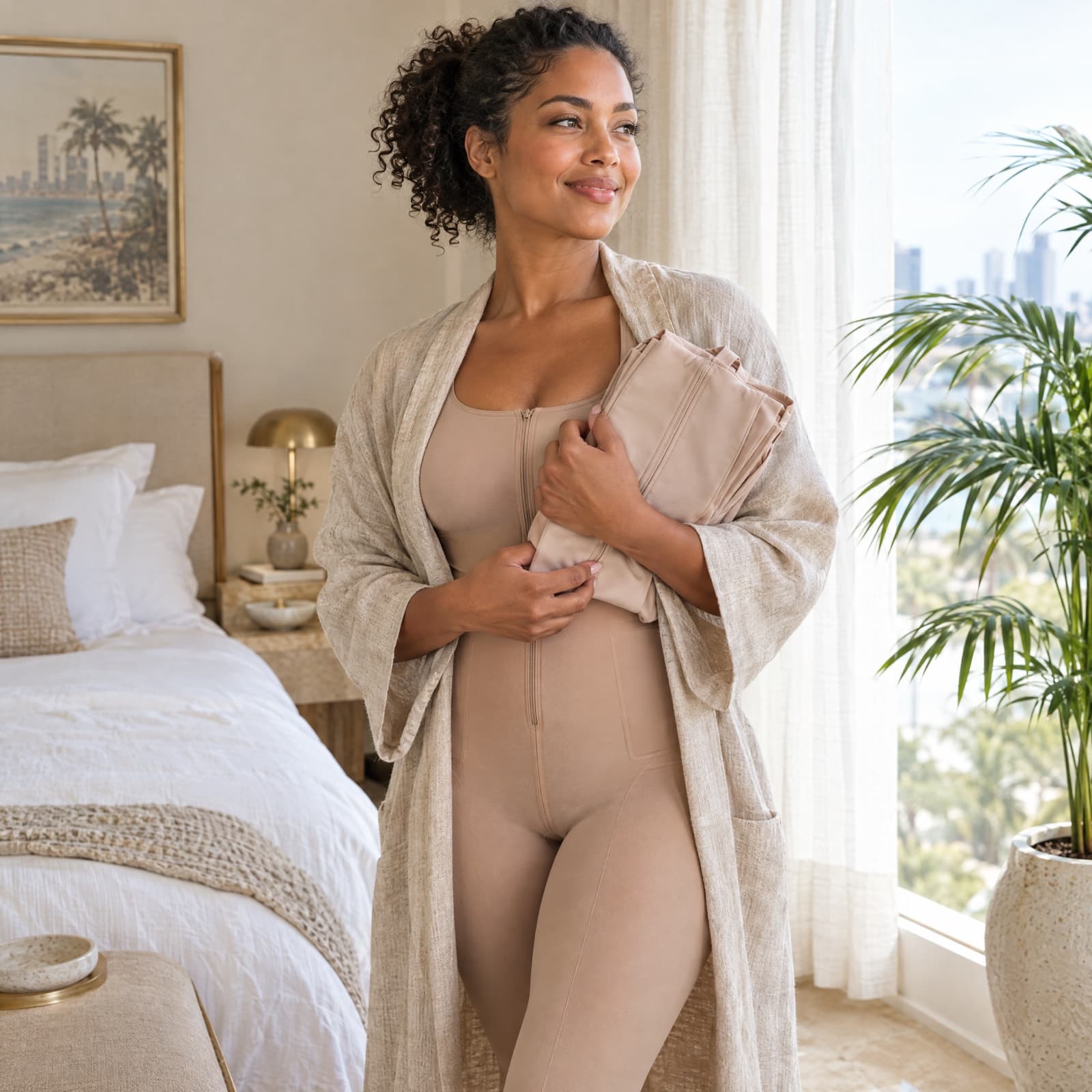
Do BBLs Stink? What BBL Smell Is and How Long It Lasts
A healed BBL doesn't smell. Odor during recovery usually comes from incision drainage and a sweaty compression garment. Here's what's normal, how long it lasts, how to prevent it and when a smell means infection, checked against ASPS and Cleveland Clinic.

What Is J-Plasma Lipo? Renuvion, FDA Status and Cost
J-Plasma lipo is liposuction followed by Renuvion, a helium plasma device that heats the tissue under the skin so it contracts. Here is what the FDA has and hasn't cleared, who it suits, how it compares with a tummy tuck, and what it costs.
How to Get Rid of Fibrosis After Lipo, Including at Home
Hard, lumpy areas after liposuction are usually healing tissue that softens with time. Here is what you can safely do at home, how fibrosis differs from a seroma or hematoma, and what the research says about treatment.
Related Procedures
Explore the procedures discussed in this article

Liposuction Miami
Liposuction in Miami, with Lipo 360 starting at $4,000. Every liposuction at Alluring is performed by Victoria Karlinsky, MD, FACS.

Brazilian Butt Lift (BBL) Miami
BBL in Miami starting at $5,500. Every BBL at Alluring is performed by Victoria Karlinsky, MD, FACS, who places the fat under the skin with ultrasound guidance, as Florida law requires.
Tummy Tuck Miami
Tummy tuck in Miami, from a mini at $3,000 to a full tummy tuck at $4,500. Every tummy tuck at Alluring is performed by Victoria Karlinsky, MD, FACS.
More Liposuction Articles

Liposuction After Ozempic: Are You a Candidate?
Liposuction can remove stubborn fat after GLP-1 weight loss once your weight is stable, but it doesn't tighten loose skin. Here's who is a candidate, when a tummy tuck fits better, and what current anesthesia guidance says about Ozempic, Wegovy and Zepbound.
Do BBLs Stink? What BBL Smell Is and How Long It Lasts
A healed BBL doesn't smell. Odor during recovery usually comes from incision drainage and a sweaty compression garment. Here's what's normal, how long it lasts, how to prevent it and when a smell means infection, checked against ASPS and Cleveland Clinic.
How to Reduce Itching After Lipo?
Itching after liposuction is common as skin and nerves heal. Here is what calms it, how to handle itching under your compression garment, what to ask before using creams or antihistamines, and when an itch or rash means call your surgeon.